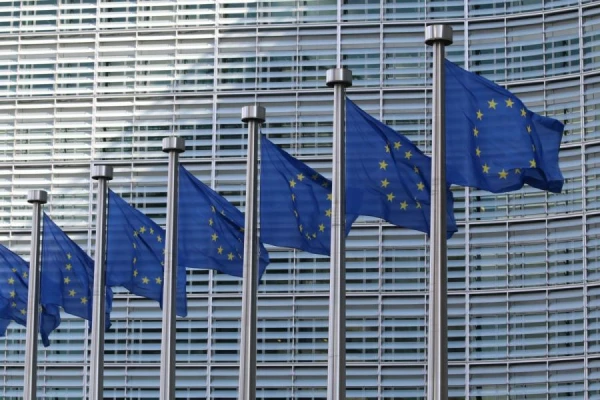
The impact of the conflict in the Middle East on the European economy will largely depend on how long and how widely it unfolds: if it can be stopped in a relatively short time, the impact will be smaller; however, in the case of a protracted conflict, stagflation is possible in Europe, said Valdis Dombrovskis, Executive Vice-President of the European Commission for an Economy that Works for People, in an interview with the LETA agency.
He noted that both the blockade of the Strait of Hormuz and the intense destruction of oil and gas extraction infrastructure in neighboring countries by Iran could have a significant negative impact on oil and gas prices.
"In this case, the European Union (EU) also faces a stagflation shock, where, on one hand, oil and gas prices are rising, which overall increases inflation, while on the other hand, economic growth slows down due to these high prices, as well as the effect of reduced confidence, supply chain disruptions, and more difficult access to financing," Dombrovskis said.
At the same time, he emphasized that the current rise in energy prices is far from being as significant as in 2022 when Russia invaded Ukraine. Nevertheless, the negative economic consequences could be quite serious, so it is important to de-escalate the conflict with Iran as quickly as possible.
He also pointed out that the European Commission is assessing possible solutions that should be undertaken now. EU member states also have mechanisms to exert influence, such as the possibility of reducing certain taxes on petroleum products and gas. However, it remains unclear how serious and prolonged the shock to the economy caused by rising oil and gas prices will be.
In response to a question about what the current situation might mean for Russia and its ability to continue the war in Ukraine, Dombrovskis acknowledged that since the Russian economy largely depends on fossil fuel exports, higher oil and gas prices mean higher revenues for the Russian budget. He also viewed the U.S. decisions to ease the conditions for purchasing Russian oil negatively.
"Regarding sanctions, we from the EU have clearly stated to the U.S. administration that we consider it a serious mistake to start easing sanctions against Russia now or, as we have recently heard, against Belarus. This only distances us from the goals we want to achieve in Ukraine - to achieve a stable and just peace for Ukraine, and ultimately also from the goals that the U.S. and Israel are trying to achieve in Iran, since, as we know, Russia supports Iran in its confrontation with the U.S. and Israel," Dombrovskis stated.