
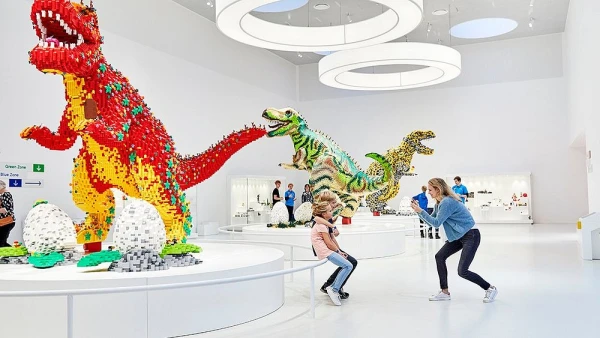
New bestsellers will be released this year.
Danish company LEGO reported a revenue increase of 12% — to 83.5 billion Danish kroner (about $12.9 billion) for the past financial year. Operating profit grew even more significantly — by 18%, reaching 22 billion kroner (approximately $3.4 billion). "The growth has been quite uniform. It was not driven by any one product or specific line — positive dynamics are observed in almost all areas," noted LEGO CEO Niels Christiansen in an interview with CNBC.
While the global toy market grew by only about 7% over the year, LEGO's sales increased by 16% during the same period. Since the pandemic, the company has consistently led the industry, gradually increasing its market share and filling store shelves with new products.
The secret of the manufacturer of the famous bricks lies in its ability to capture trends and an efficient supply chain.
LEGO has a wide range of licensed products — sets are created based on popular movies, TV shows, and video games. At the same time, the company is actively developing its own lines: for example, collections of floral compositions, artistic objects, and architectural models.
Last year, LEGO introduced the largest assortment in its history — over 860 sets were released, about half of which were completely new products.
By expanding its lineup, the company simultaneously attracts a new audience. For many buyers, their first encounter with the brand was, for example, the Botanicals series sets — plants, bouquets, and succulents made from building blocks. Customer interest was also fueled by collaboration with Epic Games: thanks to this partnership, LEGO is entering the digital space, and elements of the popular game Fortnite appear as real building sets.
Once inside the LEGO ecosystem, buyers begin to discover other sets. This includes not only children — adult construction enthusiasts today make up an important part of LEGO's audience and sales.
Industry experts note that LEGO began to consider adults as key customers significantly earlier than its competitors. This happened even before the term "kidult" emerged in the industry, referring to adults buying toys for themselves. According to research firm Circana, such buyers now account for 25% to 30% of all global toy sales.
"We strive to accurately cater to different interests of people — offering a variety of product types, assembly methods, and themes that resonate with different audiences," emphasized LEGO CEO Niels Christiansen.
One area of development is collaboration with Formula 1. Since last season, LEGO has been present at championship events, organizing various activities for spectators. These include showcasing full-size functional cars and awarding podium finishers with trophies made from branded bricks.
The range of Formula 1-themed sets is designed for different age groups: from Duplo for preschoolers to classic sets for assembly enthusiasts and the LEGO Technic series for more experienced builders. Additionally, as part of the partnership, in 2026 LEGO became a sponsor of one of the cars in the F1 Academy racing series.
However, the main factor that allows LEGO to outpace the entire toy industry appears much less flashy.
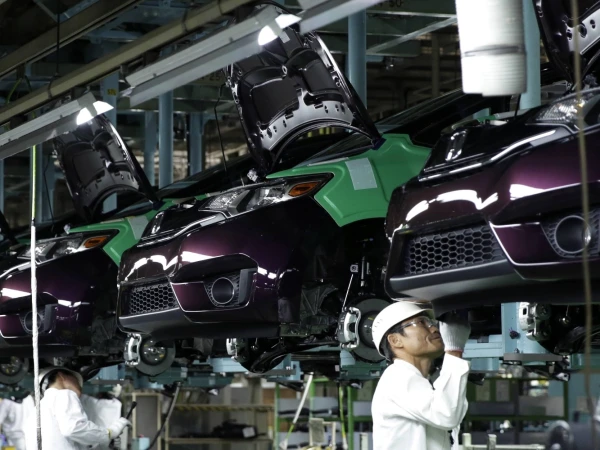
The company has built an extremely efficient supply chain that allows it to place production closer to key markets.
For example, the LEGO factory in Mexico supplies products to the Americas, while the facility in Hungary serves a significant part of Europe, the Middle East, and Africa. Recently, the company opened a new production facility in Vietnam to serve the Asia-Pacific region. Another factory is planned to be launched in the American state of Virginia in 2027.
According to CEO Niels Christiansen, the new facility in the U.S. will help the company meet the growing demand for LEGO products in the Americas.
Such a distributed manufacturing network makes logistics more efficient: delivery times are reduced and costs are lowered. Additionally, the company can flexibly adjust production volumes to regional demand, avoiding excess inventory.
The distributed network of factories also makes LEGO more resilient to external shocks. Unlike many competitors, the company does not rely on a single production region, making it easier to adapt to trade conflicts or disruptions in global supply chains.
"2025 turned out to be stronger than we expected, and this certainly sets a high bar for the future," noted Christiansen. "But the company currently has a very strong growth momentum. It has been maintained throughout last year and continues this year. We expect to keep growing, albeit at a slower pace. If growth reaches high single-digit percentages, that will be an excellent result."
In 2026, LEGO plans to release new sets based on popular franchises — Pokémon, The Lord of the Rings, and The Legend of Zelda. Additionally, the company will introduce a technological innovation — LEGO Smart Brick. This high-tech two-by-four brick, which will be used in some new Star Wars sets, is equipped with sensors: it responds to movement, plays sounds, and lights up during play.
"So I think that over the year we will have quite a few new products that will be in demand in the market," said Christiansen.













Leave a comment