
The overwhelming majority of households in Russia have become indebted.
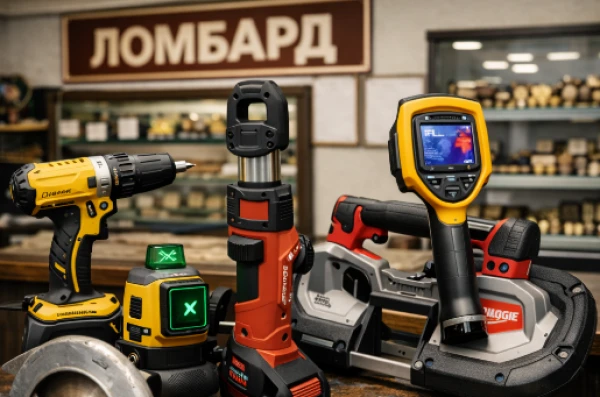
The financial bubble of households reached its limit in 2026. Russians are bringing their last tools to pawn shops to survive.
Survival statistics: by February 2026, overdue loans reached 1.8 trillion rubles (about 20 billion euros), and the refusal rate in regions hit a ceiling of 83%. Russians are massively switching to "biological security" through payday loans and are bringing household appliances to pawn shops to cover the cash gap in their family budgets. We explain what the era of financial segregation will mean for the economy.
The "Negative Balance" Trap
The Russian microcredit market has faced a frightening transformation: payday loans have turned into a tool for biological security. Real inflation and tax pressure turn minimum wage increases into dust even before the money hits the cards. According to consumer price monitoring, the cost of the basic survival basket has risen by 18% over the past year, while salary indexing in the public sector barely reached 7.5%. As a result, millions of working citizens find themselves in a state of permanent "negative balance," where to purchase a basic set of groceries, pay for transportation, or buy necessary medications, a person has to go into a mobile banking app for another microloan.
The average microloan amount in the "payday" segment has risen to 14,500 rubles — this is how much the average "cash gap" of an ordinary family is today, which has to be closed with borrowed funds for buying food and paying for transportation.
Not long ago, mobile banking seemed like a salvation: just press a couple of buttons and intercept the needed amount. In 2026, this fairy tale ended. For 8 out of 10 people, an attempt to take a loan in the app ends with an instant refusal. Robots connected to "Gosuslugi" can see all your income and debts in seconds. If you are already paying half your salary for loans, the "digital bouncer" will kick you out in less than a minute.
Even if you miraculously get a loan approved, you won't be able to withdraw it immediately. Authorities have introduced a "cooling-off period" — supposedly to protect against fraud. But in reality, this has killed the very idea of quick assistance. Now, after approval, the money "hangs" in the air: for 4 hours if the amount is small, and for a full two days if the loan is large.
Now even a regular SMS code is not enough — you need to turn your head in front of the smartphone camera and record a video. Some have old phones, some have poor internet, and some simply do not want to reveal their face in the database. As a result, those who need money "here and now" to close the budget gap ignore "smart" apps and go to the street — where signs of pawn shops and announcements of "cash money" hang.
The average loan amount at pawn shops today ranges from 12,000 to 15,000 rubles. This amount is almost identical to the average size of a "payday" microloan, confirming the thesis: people go to pawn shops not for business development, but for physical survival until the next paycheck from their employer. In conditions where legal microfinance organizations are bound hand and foot by limits on issuance, pawn shops become a "safe haven" for those who have been refused everywhere. But the price of this haven is high: families effectively lose their last possessions for 30–50% of their real market value, which ultimately locks them in a state of hopeless poverty.







Leave a comment