
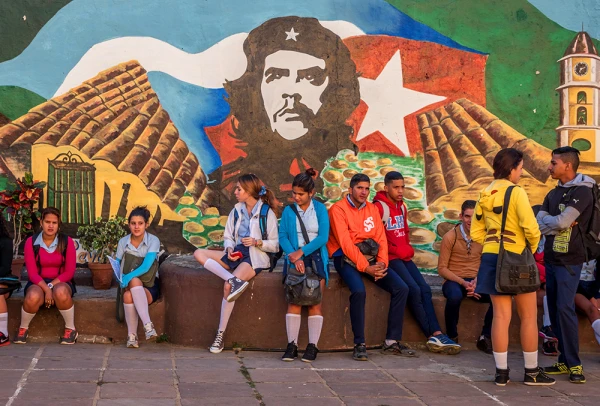
It hasn't been this bad since the 1959 revolution.
U.S. restrictions on fuel supplies to Cuba have severely impacted one of the key sectors of the country's economy — tourism, Bloomberg reports. According to industry workers, due to an acute shortage of gasoline, at least two major beach resorts on the island of Cayo Coco off the northern coast of Cuba will suspend operations.
According to an employee at the Mojito Cayo Coco hotel, the resort is closing because staff have no fuel to get to work. About 200 tourists are planned to be transferred to the Sol Cayo Coco hotel, located about 30 miles away.
An employee, who requested anonymity due to fears of possible reprisals, linked the situation to Donald Trump's sanctions policy and noted that many of his colleagues are already losing their jobs. The man stated that in his twenty years of work, the hotel has temporarily closed several times due to hurricanes, but this is the first time the resort has stopped operations for reasons unrelated to natural disasters.
The front desk at Sol Cayo Coco confirmed that the hotel will accept tourists transferred from Mojito and Tryp Cayo Coco. The total number of rooms at these two resorts is about 850. Attempts to contact Mojito and Tryp were unsuccessful: the administration is not responding to calls or messages. Melia Hotels, which manages the Tryp and Sol hotels, also did not provide comments.
On Friday evening, the Cuban government confirmed that a "plan to increase efficiency and consolidate facilities" is being launched in the tourism sector. These measures are part of a broader anti-crisis package that was approved after threats from the U.S. to limit fuel supplies. Authorities emphasized that thanks to the operation of some hotels, there is an opportunity to maintain the inflow of foreign currency revenue during the peak tourist season.
Airlines WestJet Airlines Ltd. and Sunwing Vacations, which bring hundreds of thousands of Canadians to Cuba each year, stated that they are closely monitoring the situation and will act according to the recommendations of the Canadian government.
"Cuban authorities have unilaterally decided to redistribute some tourists to hotels with higher occupancy rates to ensure continuity of service and maintain overall service quality," said a statement from Canadian airline and tour operator Transat AT Inc. "It has also been confirmed that these hotels continue to operate and meet their usual standards."
Earlier, Canada revised its recommendations for its citizens planning trips to Cuba, urging them to "exercise increased caution." The reasons cited include the energy crisis and shortages of essential goods.
In early January, Washington effectively cut off fuel supplies to the island from its key ally — Venezuela. Following this, Donald Trump threatened to impose tariffs on countries that continue to supply oil to Cuba.
In response, the government in Havana reduced public transport routes, shifted the workweek to a four-day schedule — from Monday to Thursday — and partially moved university classes online. In a televised address to the nation, authorities explained that the goal of these measures is to maintain the uninterrupted operation of vital sectors, including food supply, water supply, and healthcare.
Authorities also hope to accelerate the green transition and begin to utilize solar energy more actively. According to Cuba's energy union, on Friday evening, electricity generation was only sufficient to cover half of the peak demand, which is 3,100 megawatts.
Tourism remains one of the key sectors of the Cuban economy and the most important source of foreign currency. That is why authorities traditionally prioritize it and try to support it by all available means. However, the overall economic crisis — prolonged power outages, food shortages, and shortages of essential goods — is increasingly affecting this sector as well.
As a result of last year, the tourist flow decreased by 18% compared to 2024 and fell to its lowest level in the last two decades, excluding the COVID-19 pandemic period. Compared to the record year of 2018, when Cuba was visited by 4.7 million foreign tourists, the number of arrivals has decreased by 62%.











Leave a comment