By 2050, global nuclear power capacities will exceed current capacities by three times.
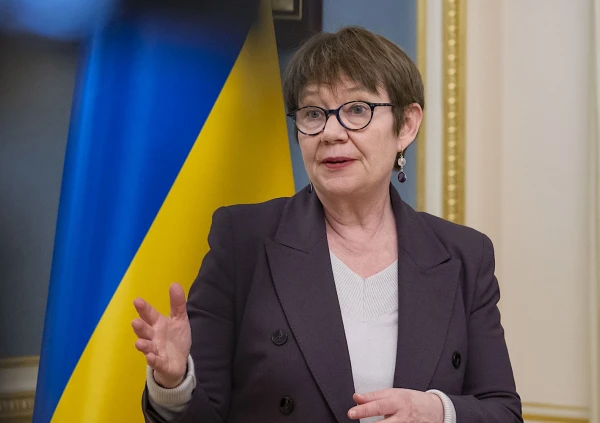
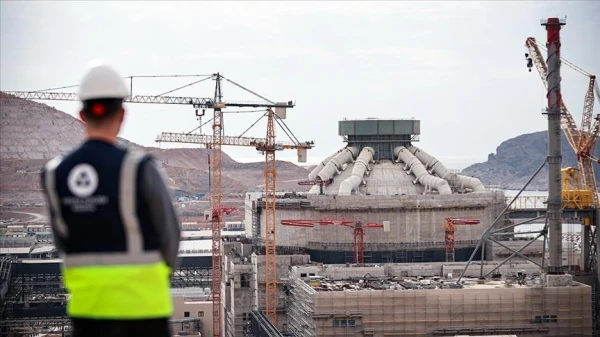
The Director General of the World Nuclear Association, Sama Bilbao y Leon, reminded that this year Turkey is expected to commission the first unit of the Akkuyu Nuclear Power Plant, noting that this plant will be a "turning point" for Turkey.
According to her, the plant will occupy an important place in electricity production in Turkey, adding: "However, Akkuyu is Turkey's first nuclear energy project that will make the country a part of the global nuclear industry. With Akkuyu, a serious localization process is taking place in Turkey. This means that many industrial players, manufacturing companies, and skilled labor will be able to play an important role in the global nuclear industry."
Akkuyu will have a positive economic impact at local, national, and then European, Middle Eastern, and North African levels: "Turkey is at the crossroads of many continents, and I believe that (the power plant) will play an extremely positive connecting role between all these regions."
By 2050, global nuclear power capacities will exceed current capacities by three times and reach over 1400 gigawatts.
The leaders of this growth will be China, the USA, France, Russia, and India, and it was also reported that besides these countries, many projects of various capacities are planned in other countries.
To implement these nuclear energy projects, not only the right political measures are needed, but also the acceleration of the development of real industrial strategies, financial instruments, and regulatory frameworks, as well as strengthening supply chains and ensuring a skilled workforce.
"In Europe, there has not been a large-scale loss of nuclear power capacity, but time has been lost. Moreover, we may have lost industrial potential and supply chain capacities. To take advantage of the opportunity that history offers us in nuclear energy and to realize it, we need to restore this potential to some extent. We could be at the same level as China or South Korea, but it is not too late, and we can catch up with these countries."