
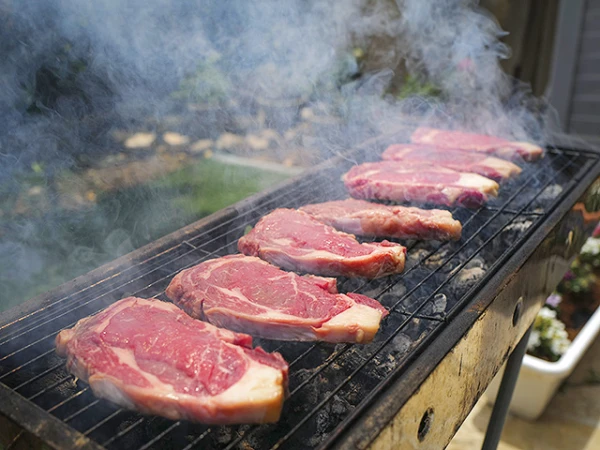
Greenhouse gas emissions would decrease by 5%.
A study has shown that the impact of meat consumption on nature could be quickly and relatively cheaply reduced if governments imposed a standard VAT rate on meat products – for beef, pork, lamb, and chicken. Depending on how the additional tax revenues are used, such a measure could cost EU households only €26 per year while reducing environmental damage by 3–6%.
Animal products contribute the most to the ecological footprint of diets in the EU: they account for nearly a quarter of greenhouse gas emissions, more than half of biodiversity loss and phosphorus pollution, as well as about three-quarters of water consumption.
Despite this, in 22 out of 27 EU countries, meat is subject to a reduced VAT rate compared to the standard rate. Essentially, this means that consumers do not pay for the environmental and social costs associated with meat production.
The Potsdam Institute for Climate Impact Research assessed part of these hidden costs and analyzed how two possible reforms – the abolition of VAT exemptions or the introduction of a carbon price for food – would affect prices, consumption, ecological footprints, and costs.
In an article published in the journal Nature Food, scientists established that the ecological footprint of meat is generally significantly higher than that of plant products in terms of climate impact, biodiversity loss, land use, and pollution. The only exception was water consumption. The difference in ecological costs is poorly reflected in store prices, as such calculations are complex. To address this discrepancy, the authors suggested starting with the simplest step – abolishing tax exemptions on the most harmful food product – meat.
These exemptions vary across countries. The largest is in Ireland, where meat is completely exempt from VAT at a standard rate of 23%. In the UK, raw meat is exempt from tax, while prepared meat dishes and processed products are taxed at a rate of 20%. The difference in VAT reaches 20 percentage points in Croatia, 15 in France, 12 in Germany and Italy, and 11 in Spain. In the EU, only Bulgaria, Denmark, Estonia, Latvia, and Lithuania apply the standard VAT rate to meat.
According to estimates, abolishing meat exemptions in the EU could reduce the environmental damage from diets by 3.48–5.7%, depending on the type of impact. For example, greenhouse gas emissions would decrease by 29.9 million tons of CO₂ equivalent per year, which is about 5% of the total volume. How much this would hit consumers depends on how the additional revenues are distributed. On average, household spending on food could increase by €109 per year. However, if the additional funds are returned to citizens in the form of payments, net expenses would be reduced to €26 per year.
An even more beneficial option for consumers would be a carbon tax on food of €52 per ton of emissions. This would reduce net expenses to about €12 per year and yield a greater environmental effect. However, the authors note that such a system requires more complex economic and political calculations, making a VAT change appear to be a more realistic option in the short term. In both cases, researchers believe that society as a whole would benefit significantly when considering the costs of reducing environmental damage.













Leave a comment