Tax increases do not save the budget but suffocate the economy: collections are falling instead of rising.
How oil prices, budget revenues, tax increases, and the state of affairs in civilian companies prove to experts that next year Russians will truly start paying for the military adventure.
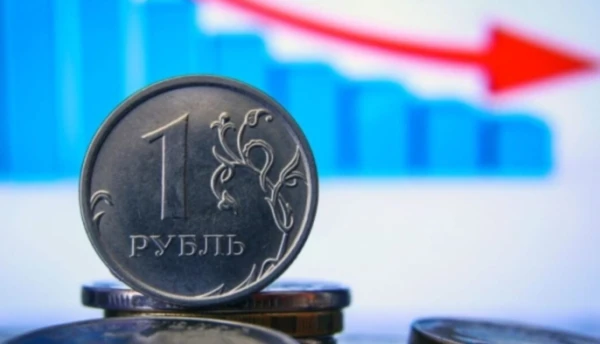
"This is not a collapse, but stagnation with high inflation," said American economist Anders Aslund in his recent article for Project Syndicate, describing the situation in the Russian economy. Indeed, by the end of 2025, it found itself at a point that few could have predicted two years ago: GDP growth, which held at around 4% in 2023–2024, dropped to between 0.5% and 1% in 2025; the liquid part of the National Wealth Fund significantly decreased; oil and gas revenues in November were almost half of the planned amount. And the tax increases do not save the budget but suffocate the economy: collections are falling instead of rising.
The Russian economy has fallen into a dangerous situation due to the accumulation of problematic loans, threatening its collapse. Even within the government of the aggressor country, there is recognition of the risk of a large-scale banking crisis and the level of non-payments in the corporate sector, which confirms the threats.
This was reported by the Foreign Intelligence Service of Ukraine.
The main problem is the hidden growth of debt obligations. Together with restructuring, the share of problematic loans exceeds 11%, about $131 billion. While a safe level for the stability of the banking system is 2–4%, anything above 10% indicates a crisis. A significant collapse is already expected in the second half of 2026.
Additionally, a sharp increase in the cost of servicing debt is a burden. In 2024, Russian companies paid only interest to banks amounting to $145 billion, which is 83% more compared to the previous year. In 2025, the amount was another $95 billion.
By the end of the third quarter of this year, every fourth company with loans had overdue payments. The total number of corporate debtors increased to 165,000 — 41,000 more than at the beginning of this year, and 100,000 more compared to 2022.
The following key sectors have been particularly affected: metallurgy, oil and gas, transportation. In particular, the railway announced a net loss for the first time in five years. A separate risk is defense loans: in 2022–2024, military enterprises received loans amounting to $202 billion, which could quickly become problematic assets.