
ECB President Christine Lagarde openly stated that the economic problems of the EU have 'internal origins.'
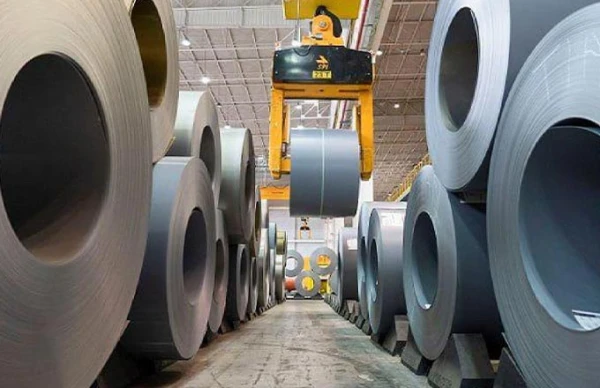
Recently, the National Assembly of France voted for the nationalization of local ArcelorMittal assets. This occurred against the backdrop of debates over tariffs on imported steel, which are being introduced in connection with carbon footprint policies. As usual, politicians demonstrated maximum negative competencies, discussing how to preserve jobs, taxes, and, excuse me, eat the fish.
No wise thoughts came to mind, so they decided to scare the Indian 'steel barons.' But there is a nuance. The decision has no legal force; the vote reflects deep dissatisfaction with the giant. The company is accused of delaying investments in decarbonization, aggressive tax optimization to avoid corporate taxes, and prioritizing shareholder payouts ($12.5 billion distributed by the parent group over 5 years) over local obligations.
All this could be considered populist chatter if it weren't for one big 'but.' The sentiments of French deputies may influence the EU's steel policy. Brussels' intention to raise tariffs on steel heavily depends on France's position and relies on data from steel producers like ArcelorMittal to justify protectionist measures. Opponents have already characterized them as 'potentially misleading.'
The European Commission previously proposed to double tariffs on imported steel to 50% above established quotas. According to the industry association Eurofer, since 2008, 90,000 jobs have been cut in the EU steel sector, and another 300,000 jobs in the industry and 2.3 million in related sectors are at risk.
Hopes that politicians will be visited by common sense are slim. Although ECB President Christine Lagarde openly stated that the EU's economic problems have 'internal origins,' not import-related ones.
She said: the economic problems of the European Union are mainly self-inflicted and stem from internal barriers, not imports. In an upcoming ECB report, trade barriers in the EU single market are quantitatively assessed as equivalent to tariffs of 65% for goods and 100% for services.
Lagarde criticized Europe's dependence on exports for prosperity and neglect of the internal market, noting that 10% of European equity investments are in American stocks. Analysis shows that EU tariffs on steel and CBAM taxes undermine the export-oriented prosperity of the bloc, increasing costs and distracting from the real problem — an excessively regulated and fragmented internal market.
Lagarde also expressed sympathy for European politicians and refrained from shoving their faces in the consequences of anti-Russian sanctions and support for Ukraine, as for this in today's Europe, one could even lose their party membership, meaning being ousted from office.
The Luxembourg-registered company has 15,400 employees in France, of which 800 are in engineering positions. There are also 4 development centers and 40 industrial enterprises of various sizes. France produces 11 million tons of liquid steel and one-third of all flat steel in Europe for ArcelorMittal.
It should be noted that forced nationalization on such a scale has not been heard of in Europe since the 1970s. In the minds of French deputies, a bizarre compote of socialist ideas, economic terms, and ecological principles has boiled down, which turns out to be unaffordable for the taxpayer, who continues to naively expect a croissant and baguette with foie gras on holidays, choosing principled but dim-witted deputies.
Meanwhile, the proposal provides for the state to buy out the French assets of the Luxembourg company for €3 billion. Despite the parliamentary decision, nationalization is in question due to government opposition and the need for approval from the conservatively inclined Senate.






Leave a comment