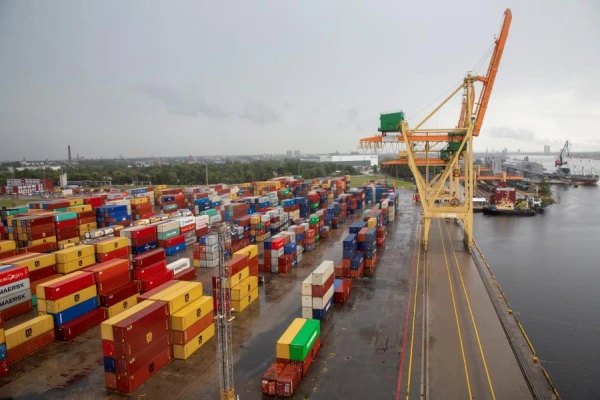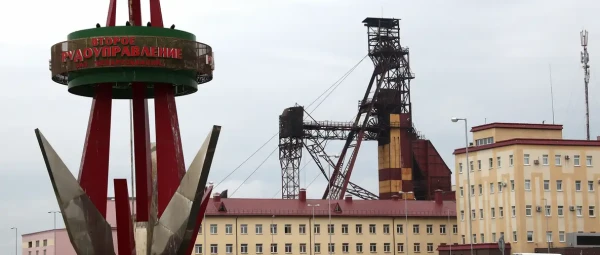
Today, supplies are going through Russia, but that is where the main competitor - 'Uralkali' - is located.
Potash is one of the most important export goods of Belarus. Until 2020, the country held leading positions in global market supplies. "We had up to 20%," says economist and academic director of the Beroc research center Lev Lvovsky. "Now the share has fallen to 6%. The Lithuanian sanctions hit the hardest, as supplies went through the port of Klaipeda. European sanctions are in second place, and American ones are third."
Economic observer and editor-in-chief of Plan B publication Olga Loyko emphasizes that potash export is a complex issue that cannot be resolved solely by American sanctions.
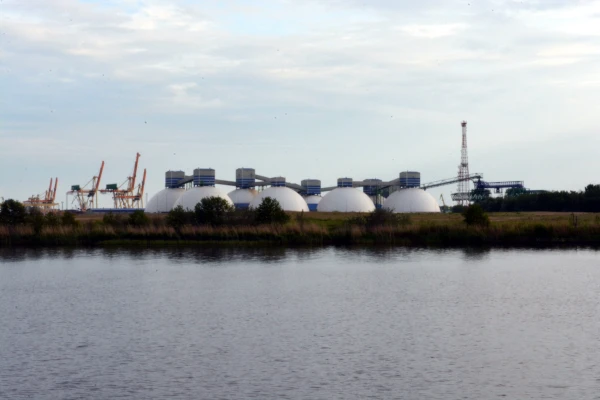
"European restrictions are more significant," she says. "A third of supplies went to the EU, and it was the most profitable market. Moreover, Belarusian potash was tied to Lithuanian transit: supplies through the port of Klaipeda are the most advantageous route, as there are capacities. 30 million dollars were invested in the terminal in Klaipeda at one time. The cost of potash extraction in Belarus is not low enough to ignore logistics costs."
Belarus officially closed data on key export items, including potash, after sanctions were imposed in 2021. "Our Niva" gained access to closed data, which shows that sanctions affected supplies. Thus, in 2021, "Belaruskalij" earned 3.06 billion dollars, in 2022 - 1.95 billion, and in 2023 - 2.44 billion dollars. The partial recovery in 2023 became possible after a new logistics route through Russia was established.
According to Lvovsky, American sanctions primarily affected transactions: banks were reluctant to deal with such payments, resulting in increased transaction costs. It also became more difficult to purchase equipment, leading to the use of intermediary firms.
According to the economist's estimates, lifting American sanctions could help "Belaruskalij" earn between 100 and 500 million dollars a year. Banks, in Lvovsky's opinion, will respond fairly quickly to changes: a simple cover letter referencing changes in American legislation will suffice. "This issue will be resolved in a month or two," the expert believes.
It may take much longer to regain positions in the global market, notes Olga Loyko. "Moreover, prices have dropped significantly," she emphasizes.
Experts interviewed emphasize that without the lifting of European sanctions, especially Lithuania's decision, it is impossible to restore previous potash supplies.
"The main problem is expensive logistics," says Lvovsky. "And this problem is not being resolved. Today, supplies are going through Russia, but that is where the main competitor of 'Belaruskalij' - 'Uralkali' - is located, which significantly limits Belarusian exports. Additionally, supplies are complicated by the occupation of Russian networks: military cargo is being transported by rail."
Olga Loyko believes that if there is a will, a way can be found to circumvent the restrictions: "Don’t want Belarusian potash to arrive in Lithuania? Fine, American potash will go there instead. It’s difficult to formalize this, but nothing is impossible. Moreover, it’s a debatable issue what constitutes European sanctions and what is the interpretation of the Lithuanian side. There are opinions that potash transit is possible even under current conditions. So if all parties - Belarus, Lithuania, and the USA - are interested, a legal way to formalize this will be found, and supplies will resume."
The chief advisor to the President of Lithuania on national security, Deividas Matulionis, stated that the transit of Belarusian potash could be linked to the placement of additional American military contingents in Lithuania - if fertilizers go to the American market, Lithuania will have to consider the interests of the USA in the future.
At the same time, Lithuanian Prime Minister Ingrida Šimonytė stated that the country will not ease sanctions against Belarusian fertilizers: "If we do not move forward and strengthen sanctions and a tough approach to the aggressor, it will be bad. The USA may exert pressure, but I think we will be unyielding here."
Šimonytė emphasized that she advocates for even stricter sanctions against both Belarus and Russia.