
Due to the unpredictability of U.S. foreign policy, global trust in dollar assets sharply declined.
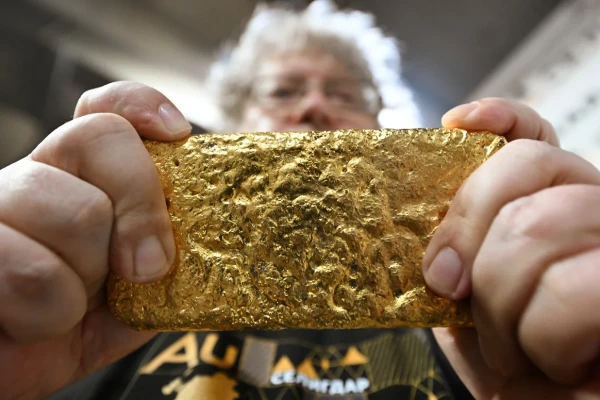
Bank of America has presented a ranking of the most effective investments for 2025. For the second consecutive year, gold has shown the best performance, rising 65% since the beginning of the year and outpacing investments in riskier stocks of emerging markets by twofold. In Russia, the purchase of the precious metal yielded less than 30% income, but even this result was enough to top the local ranking of best investments. In 2026, analysts expect continued growth and do not rule out reaching the level of $5,000, which implies an increase of another 14%.
For the second consecutive year, the ranking of the most effective investments compiled by analysts at the American bank Bank of America (BofA) has been led by gold. Over the nearly 12 months ending December 17, it has risen by almost 65%, more than doubling the result of 2024. The second and third places in the ranking were taken by the stock indices of developed countries excluding the U.S. and Canada (MSCI EAFE) and emerging markets (MSCI EM), which gained about 30% over the incomplete year. In fourth place, with a result of 15.7%, was the American index S&P 500. Rounding out the top five best investment decisions were high-yield bonds (Global High Yield), which provided a return of 10.2%. The remaining assets in the ranking — investment-grade bonds, US Treasuries (UST), commodities, cash or money market funds, as well as real estate investment trusts (REITs) — yielded investors 3.5–10%.
The price of gold has only risen more significantly once in the last half-century — in 1979 by 126%, reaching $512 per ounce. That surge was linked to rising global inflation amid the energy crisis caused by the Iranian revolution, as well as increased geopolitical risks due to the start of the Soviet military campaign in Afghanistan. "High inflation, geopolitical uncertainty, and speculative excitement formed a powerful trend. The price of gold made a historic leap: from $226 in 1979 to a peak above $850 in January 1980," notes Maxim Molderf, CEO of the precious metals purchasing service Moneymatika.
The increase in the price of gold in 2025 was driven by a combination of fundamental and speculative reasons. Early in the year, the market saw that the U.S. economy was slowing down, and the scope for tight Fed policy was limited by the scale of the enormous budget deficit and the need to refinance large volumes of loans. In such conditions, as noted by Astero Falcon portfolio manager Alena Nikolaeva, expectations of lower rates began to form in advance, even before actual decisions were made, and it was these expectations that laid the foundational demand for gold as a hedge against future Fed actions and declining real yields.
In the early spring months, geopolitical factors led by the tariff war initiated by U.S. President Donald Trump with major trading partners also influenced prices. In such conditions, the risks of fragmentation of the global economy increased, which would inevitably lead to rising inflation, traditionally hedged against by gold. Additionally, due to the unpredictability of U.S. foreign policy, global trust in dollar assets sharply declined, and central banks, primarily in developing countries, intensified the replacement of U.S. government bonds in their reserves with physical metal. According to the World Gold Council (WGC), over the nine months of 2025, global central banks purchased 633 tons of gold for their reserves. As a result, in early April, the price of gold reached $3,500 per ounce for the first time in history, having gained over 30% since the beginning of the year.
After such a rally, the market took a natural pause, and for four months, from mid-April to mid-August, prices remained within a narrow corridor of $3,120–3,300 per ounce. This respite was aided by a pause in the implementation of tariffs taken by the U.S., as well as the start of negotiations by the White House with key trading partners. During this period, as Alena Nikolaeva notes, the market temporarily stopped pricing in a sharp and rapid reduction in rates by central banks. Inflation data stabilized, and the dollar and real yields calmed somewhat. However, since the U.S. debt problems had not gone away, the budget deficit remained persistently high, and there were no fundamental reasons for a reversal in gold market prices.














Leave a comment