This solution is often called "too long" in Estonia, and therefore has not been brought to systemic policy for years.
Euribor is falling, mortgages are getting cheaper, the market is reviving – but for those trying to buy their first apartment, this often means not salvation, but a new wave of competition. The problem is not in the percentages: the main barrier is the entry ticket. And as long as Estonia pulls everything to Tallinn, keys will become more expensive than hopes, predicts journalist and author of the media project "Real Baltics" Andrei Demenkov.
Every new drop in Euribor is presented as good news: mortgages will become cheaper, which means housing will become more affordable. But in reality, this relief is primarily for those already inside the system. For those trying to buy their first apartment, the joy of falling rates too often looks like someone else's holiday: the path to their own housing does not become shorter.
The Market Has Revived, But Not for You
When the interest burden decreases, demand returns to the market. People start looking at listings again, are ready to talk to banks again, and entertain the thought that "maybe we can manage it." For those who have already taken out a loan, this is also a breath of fresh air: payments become smaller, there is a chance to pay off the principal faster or at least stop living from paycheck to paycheck. But for the "first apartment" the logic is different. Market revival and housing affordability are different things. For a buyer who is still standing at the entrance, a rate decrease often does not turn into a new opportunity. It becomes a signal: competition is back. Those who were already closer to buying enter the market: with a down payment saved, family support, or an existing asset that can be sold and "added to." And those who are still gathering the starting capital remain spectators in a race where the entry fee is not an exam, but a payment for the right to participate.
The most unpleasant part of the story is that the market can quickly eat up the benefits of a rate decrease. As soon as the payment becomes a bit more bearable, demand drives prices up or at least keeps them from falling. As a result, what was going to interest rates yesterday is today going into the cost of the apartment. And the first-time buyer is not better off: they still cannot gather the starting capital.
Keys Are More Expensive Than Interest Rates
The interest rate is important, but it is not the main filter. The main filter is the entry ticket.
First, the down payment. It needs to be brought in cash, and this is where most plans break down. Not because people do not want to save, but because it is becoming increasingly difficult to do so. Rent, utilities, food, transportation, children's expenses, taxes – all of this eats away at savings potential. As a result, young households fall into the classic trap: to save for a down payment, they need to live cheaper. But cheaper often means living worse or further away – and still paying a lot.
Second, the risk policy of banks. The rate may decrease, but the requirements for income quality do not disappear. Against the backdrop of uncertainty, banks become more cautious: they value stable incomes, clear contracts, and a minimum of gray areas. And if part of the income is not considered or is deemed too unstable, the family may suddenly "not qualify," even if they feel quite capable of making payments. This is especially painful for young professionals and families with children: society encourages them to build a future, but they often lack the resilience to pass all the filters.
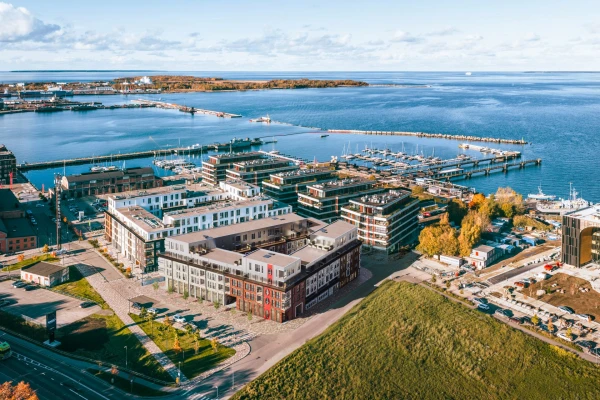
Third, the supply of housing does not keep up with demand where people actually need to live. Tallinn has been discussing building density, parking, planning timelines, approvals, and neighborhood wars around each construction site for years. In words, everyone supports affordability, but in practice, any densification meets resistance, and time becomes a separate tax: the longer we build, the more expensive the final square meter becomes.
Hence the socio-political effect that cannot be underestimated. We are producing a generation of people who see a simple signal: everything is reviving, but for them personally, nothing is changing. This hits trust in the country and its future much harder than any debate about macro figures. Because the first apartment is not just square meters. It is a marker that you have entered normal adult life, that you have a foundation, that your efforts are converting into results. When this marker is pushed back to an indefinite "later," the state does not just get disappointed people, but people who stop believing in the meaning of a long game.
Relieve Pressure from the Capital
There is a solution that is often called "too long" in Estonia, and therefore has not been brought to systemic policy for years: regional development. As long as normal jobs, career growth, and some quality services are concentrated in Tallinn and Harjumaa, demand pressure will arise precisely there. Rates may fall, construction may increase, but if people still need to go to the capital, the pressure on the capital market will not disappear.
Meanwhile, within the country, the gap in housing prices is colossal. In small towns and counties, housing can sometimes be very cheap. And if a person has the opportunity to stay in their hometown without losing quality of life and income, they will not rush to Tallinn and push themselves into a mortgage marathon at the limit of their capabilities. This is one of the most effective solutions precisely because it does not feed the overheated demand in the capital but distributes it across the country.
<iframe width="560" height="315" src="https://www.youtube.com/embed/-8QmXQ9yeKs?si=hhywLw-E0qODm4Wx" title="YouTube video player" frameborder="0" allow="accelerometer; autoplay; clipboard-write; encrypted-media; gyroscope; picture-in-picture; web-share" referrerpolicy="strict-origin-when-cross-origin" allowfullscreen></iframe>