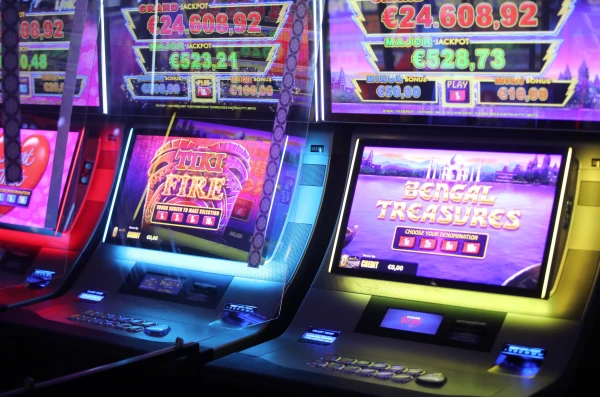
In the first nine months of this year, state budget revenues from gaming machines and casino tables decreased by nearly 2 million euros compared to the same period last year, the Society of Organizers of Licensed Gambling in Latvia (OOLLAI) reported to LETA, citing data from the Lottery and Gambling Supervision Inspection (INLAI).
Last year, revenue amounted to 22.01 million euros, while this year it is 20.07 million euros.
At the same time, tax revenues from interactive games increased by 1 million euros. OOLLAI notes that, as a result, the Ministry of Finance's forecast for planned revenues from the licensed gambling sector will not be met this year by approximately 1 million euros.
The Executive Director of OOLLAI, Liga Lice, stated that the government's and Saeima's intention to unexpectedly raise gambling tax rates from January 1 of next year will lead to additional reductions in budget revenues. According to the society's calculations, after the tax rate increase in 2026, at least 20 gambling halls may close, and the number of gaming machines will also decrease. As a result, tax revenues from this segment will decrease by approximately 2.5 million euros, rather than increase as forecasted by the Ministry of Finance.
The society emphasizes that the increase in tax rates is being conducted without consultations with the industry, and the interests of investors and entrepreneurs are not taken into account, ignoring the principles of proper legislation and governance. The legal bureau of the Saeima highlighted that such a tax increase could be viewed as inconsistent with the principles of the rule of law. All gambling organizers that are part of OOLLAI are foreign investment enterprises, and such actions by the state can significantly undermine investors' trust in the business environment of Latvia.
Furthermore, OOLLAI notes that over the past 20 years, the number of gambling halls in Latvia has decreased by more than 70% - from 327 in 2005 to 169 in June 2025. With the reduction in the number of land-based gambling establishments, the share of idle properties is increasing, and the number of jobs is decreasing. Under the current tax regime, the land-based gambling sector is shrinking annually by 12-13%, as players increasingly transition to interactive entertainment.
At the same time, the online gambling sector in Latvia retains the highest share of the shadow economy among the Baltic states. For players to choose legal operators, the regulation defining the framework for their activities must be balanced. Legal operators must be able to compete with the illegal market, which remains very large in the online sector, notes OOLLAI.
The society points out that over the past three years, due to the shadow market of online gambling, approximately 7 million euros have not been received in the Latvian budget annually.
The attractiveness of the legal industry is diminished by excessive regulation: a complete ban on advertising, unfair application of personal income tax, and limited opportunities for introducing new products.
As reported, on September 22, the government approved an increase in excise taxes on alcohol and tobacco, as well as gambling taxes starting next year.