
Kyiv has consistently destroyed the enemy's missile systems.
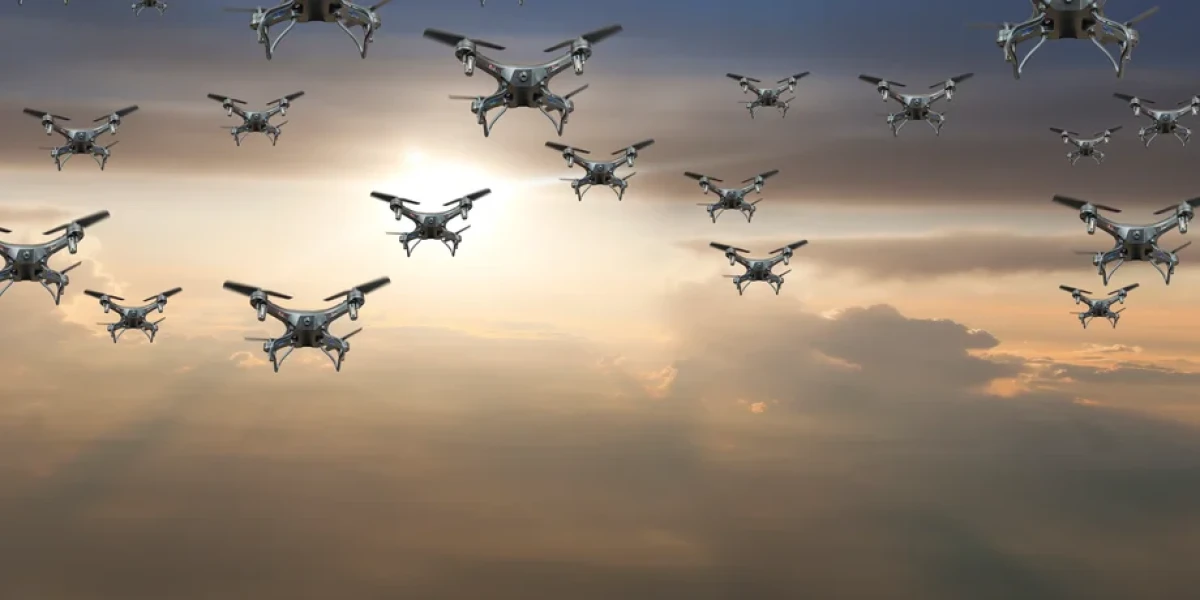
Massive attacks by Ukrainian drones on Russian territory have exposed problems in the Russian air defense system (ADS), which is increasingly forced to respond in conditions of chaos and resource shortages. This is stated in an analysis by CNN, citing military experts who note that Ukraine's strategy is to exhaust and overload Russian air defense with a large number of drones.
A telling example is the Ukrainian attack on Moscow. It is noted that when numerous Ukrainian drones began approaching the Russian capital, Russia's response resembled a chaotic attempt to cope with the situation rather than a well-planned strategic defense.
Footage verified by CNN journalists and analyzed by experts shows military personnel firing portable surface-to-air missile systems from the shoulder right on a traffic-congested highway. In another video, journalists noticed how a Russian air defense missile hit an oil tank. Arms expert at the Stockholm International Peace Research Institute, Marcus Schiller, stated that this was "Russia's own goal," which ended with a mushroom cloud of smoke and the massive upper part of the tank flying into the air.
According to Schiller, "Russia has a whole list of outdated systems that are not 100% reliable." At the same time, he says, Ukraine has been continuously improving its strike capabilities "for many years now." Senior analyst at McKenzie Intelligence Services, Stu Ray, also emphasized the chaotic nature of Russian air defense operations.
The video capturing the use of portable surface-to-air missile systems on a busy highway indicates a hasty, improvised, and frankly unprofessional response to the attack. The complete lack of control over vehicle movement and the use of military equipment in close proximity to civilian cars and people only confirms this assessment," he stated.
Journalists recalled that at the beginning of the war, Russia concentrated its air defense systems on the border with Ukraine and along the front line, "but Kyiv's strategy was to attack numerous different targets in the occupied territories of eastern Ukraine and inside Russia, forcing Moscow to disperse its air defense systems and create a weaker and more sparse defense network."
Moreover, Ukraine has been striking at the air defense launchers themselves, as well as radar detection systems, trying to weaken Russia's defensive capabilities. According to the Ukrainian Defense Forces, since the beginning of this year, they have destroyed 166 Russian air defense assets, and since the start of the full-scale invasion in 2022, more than 1432.
Military science researcher at the Royal United Services Institute (RUSI) in London, Thomas Withington, also pointed out that Russian air defense systems were not designed to deal with drone attacks, but to shoot down military aircraft, ballistic and cruise missiles.
"Russian air defense simply does not meet its purpose, this is absolutely clear. It is not equipped to detect, track, and combat this type of attack, and unless a large-scale redesign is carried out, nothing will change," Withington said.
He emphasized that international sanctions have limited Moscow's ability to acquire the technologies needed to create new systems capable of countering such attacks.
"Even if you manage to increase production, you are simply increasing the production of missile systems that still won’t do their job," he added. However, experts note that Russian air defense likely still shoots down a significant portion of Ukrainian drones. Last week, Russian military officials claimed they shot down 216 Ukrainian drones across the country.
Commander of the Ukrainian Drone Forces, Robert Brody, in his analysis of Moscow's air defense system, stated that as of mid-May, there were still over 100 air defense launchers and more than 50 mobile air defense systems "Pantsir" in the Russian capital.
But when Ukraine launches more than 100 drones in a single attack, some of them are likely to break through the defense, even if it is well fortified, the publication emphasized. According to Withington, modern drones can also penetrate the defense system because they are harder to track than larger missiles or aircraft.
"They may appear on radar, but there is a huge difference between detecting something on radar and achieving what we call 'quality target tracking'," he explained. According to him, hundreds of drones advancing from different directions require enormous coordination from Russia's integrated air defense system, but "this is not happening properly."
Repeated large-scale long-range attacks by Ukraine have led to speculation that Russia may also be exhausting its air defense ammunition supplies. Experts warn that it is difficult to assess the state of Russian defensive missile stocks, as this information is not made public. But stocks will inevitably decrease if Ukrainian strikes continue to be large-scale and frequent.
"Regarding the frequency and severity of Ukraine's attacks against Russia, all options are bad for Russia. I think the military is probably now pondering which option is the least bad in trying to cope with what they are facing from Ukraine," Withington added.










Leave a comment