"The Law and Justice party and the president are obsessed with everything related to Germany."
Europeans are defending themselves against the threat of Russian aggression. Poland, the only NATO member bordering both Russia and Ukraine, has been striving to strengthen its defense for over four years, despite Moscow's invasion of neighboring countries. Overall, a strong anti-Russian consensus has formed in the country. However, there are nuances. The internal political struggle has led conservatives-nationalists to resurrect anti-German rhetoric. Therefore, the defense alliance with Germany in Poland is accompanied by disputes.
The future of American troops on the continent has come into question. The U.S. has altered transatlantic solidarity and has become an unreliable partner. As a result, Poland, which has long oriented itself towards the U.S., has been forced to strengthen its commitment to agreements with European allies. Now, the defense ministers of Poland and Germany are set to sign agreements in Warsaw, timed to the 35th anniversary of the 1991 Treaty of Good Neighborliness. At that time, it opened a new chapter in relations after the Cold War and the bipolar world. Poland was a satellite of the USSR and a member of the Warsaw Pact—an anti-NATO military bloc.
Since then, much water has flowed under the bridge. Relations between Warsaw and Berlin improved after the pro-European Donald Tusk returned to power. This followed years of tension in relations during the rule of euroskeptic, right-nationalist governments in Warsaw.
According to representatives from Warsaw, the agreements reached on Wednesday will be based on the existing framework program from 2011. It covers cooperation in the Baltic Sea, infrastructure, and cybersecurity. They will not include provisions for mutual security that go beyond existing NATO and EU commitments.
Polish media reported plans to conclude a more ambitious pact. However, Tusk's government opted for a trimmed-down version, anticipating resistance from the nationalist president Karol Nawrocki and his conservative party, Law and Justice (PiS). Poland has a specific dual power structure that partially paralyzes pragmatism.
"It is well known that the Law and Justice party and the president are obsessed with everything related to Germany. Therefore, of course, he will veto it," said Foreign Minister Radek Sikorski to Polish media this month, referring to Nawrocki.
Polish nationalists have long fueled deeply rooted suspicions towards Germany in a country that suffered greatly during World War II. Although in the new century, this appears to exploit the prejudices of the less educated part of society. Tusk is considered a Germanophile.
Defense Alliance: Cooperation in the Baltic Sea
Nawrocki is a populist conservative, a typical ally of American leader Donald Trump. He has yet to ratify the treaty signed with the United Kingdom. Although it would seem that if anyone needed it, it would be Poland.
Warsaw considered the agreements with London and Paris to be historic and signed them at the heads of state level. The German agreements will only be signed at the ministerial level.
Nevertheless, the agreement provides for the activation of military coordination between neighbors for closer cooperation in the Baltic Sea, in the area of space cooperation, critical infrastructure, and cybersecurity.
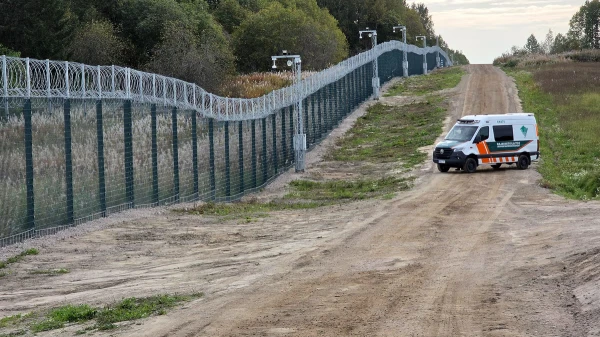
This may also pave the way for helping Poland strengthen its eastern borders.
Piotr Szymanski, a researcher at the Warsaw East European Studies Center, stated that these agreements will be important, considering "NATO's heightened vigilance, including efforts to protect critical underwater infrastructure and monitor the shadow fleet."
Polish Jealousy
While the agreements will be signed in Warsaw, Foreign Minister Sikorski will be in Berlin for talks with his German counterpart Johann Wadephul.
As reported by the Polish Ministry of Foreign Affairs, both sides will hold "political consultations dedicated to bilateral policy, security, and defense policy, which will reaffirm their commitment to continue supporting Ukraine."
This meeting took place a few days after Tusk criticized allies. They did not involve Poland in the recent negotiations on Ukraine in London. It is important for Tusk to show that Poland has significant weight in Europe. Allies are not taking this into account.
"I told him that from Poland's point of view, any agreements in which Poland did not participate will not be observed by us. They will not be binding for us." This was said by Tusk, according to him, in a phone conversation with Friedrich Merz after the London negotiations.
Warsaw has also critically responded to proposals from some EU countries, including Germany, to renew dialogue with the Kremlin to end the war in Ukraine. Poland has a strong army and minimal illusions about Putin's negotiability.
The Polish-German agreements were reached ahead of the NATO summit in Ankara next month. There, Europeans intend to act in concert. The presence of the U.S. on the continent is expected to be a central point of negotiations.
The reduction of U.S. capabilities will mean an increased role for Poland and Germany. This was stated by Poland's Deputy Defense Minister Pawel Zalewski. The defense alliance is becoming a forced inevitability.
<iframe width="560" height="315" src="https://www.youtube.com/embed/2cHtgvf7df4?si=qX8CEihfOtVqHWHf" title="YouTube video player" frameborder="0" allow="accelerometer; autoplay; clipboard-write; encrypted-media; gyroscope; picture-in-picture; web-share" referrerpolicy="strict-origin-when-cross-origin" allowfullscreen></iframe>