Authorities received over 116,000 responses, with a significant number being negative.
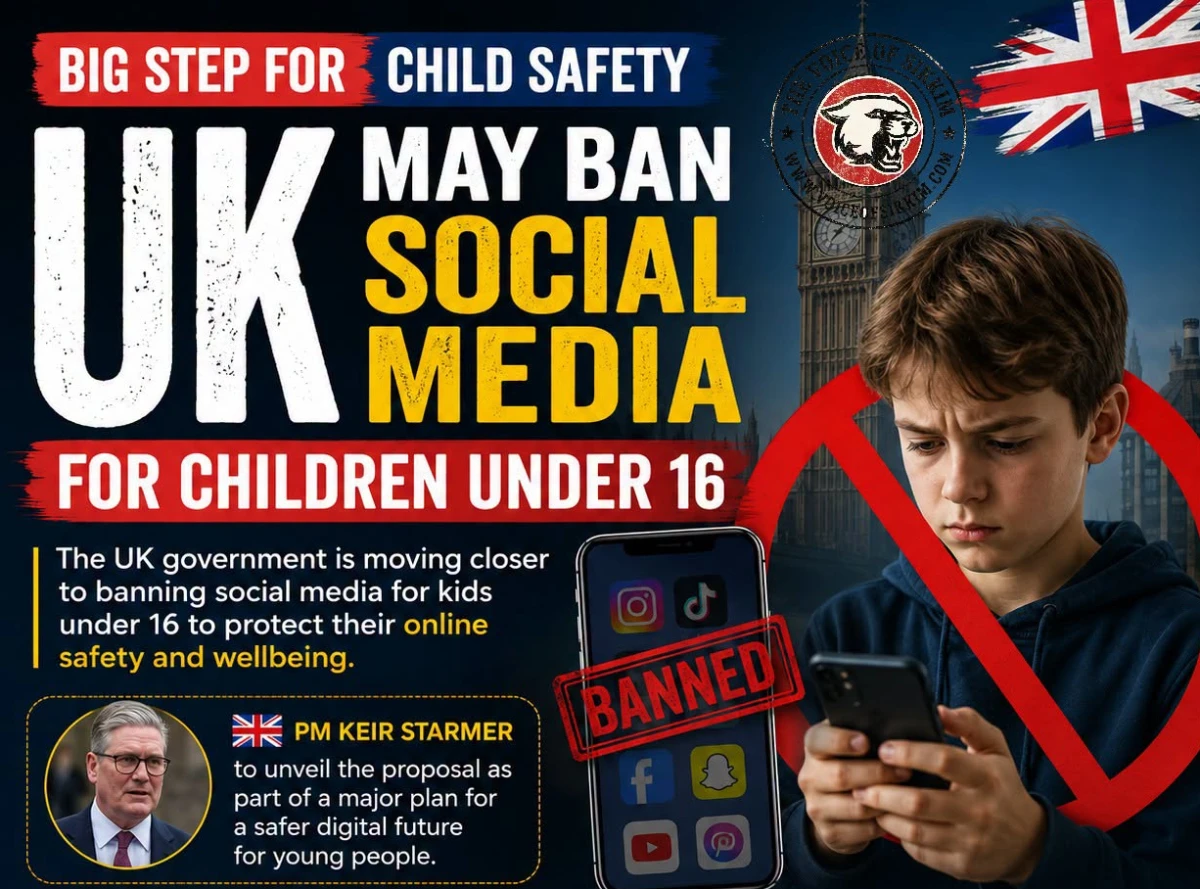
The prospect of a ban on social media for children looms over the United Kingdom. However, more and more experts, human rights advocates, and digital security specialists warn that in the pursuit of protecting minors, the authorities may initiate mechanisms whose consequences will be far greater than the stated goals.
The idea of restricting children's access to social media has been discussed in the country for several years. The impetus came from several high-profile stories related to the harmful influence of digital platforms on teenagers. Despite the fact that the UK has nearly completed the implementation of the extensive Online Safety Act, passed in 2023, the government acknowledges that issues of child protection online remain unresolved. "It is still very difficult to understand what such a ban will look like in practice," says Alan Woodward, a professor of computer science and cybersecurity at the University of Surrey.
The final parameters of the initiative have not yet been presented, although certain restrictions are already actively being discussed. In March, the government launched a nationwide public consultation on how to change children's interactions with smartphones and social media. Among other things, citizens were asked whether the UK should follow Australia's lead and introduce an age restriction on the use of social media.
The consultations concluded last month. Authorities received over 116,000 responses. Participants were invited to express their views on a wide range of measures: from limiting live broadcasts and geolocation sharing to mandatory disabling of infinite scrolling features and automatic content playback.
More stringent age verification mechanisms were also discussed — for example, facial recognition technologies or digital IDs, as well as new recommendations for mobile phone use in schools and simplified parental control tools.
Last week, UK Prime Minister Keir Starmer announced yet another initiative. Device manufacturers, including Apple and Google, are expected to be required to install or activate software on gadgets to detect and block explicit images. Such restrictions can only be lifted after the user's age has been verified.
The government warned that if tech companies do not comply within three months, they may face a direct legal obligation to equip all devices sold in the UK with such mechanisms. Otherwise, they face fines and even criminal liability. The specific parameters of future regulation have not yet been disclosed, but it is expected that the requirements may extend not only to operating system developers but also to other participants in the supply chain, including retailers.
The British plans have already faced criticism from the United States. Washington warned that such measures would create an "disproportionate regulatory burden" for American companies and could affect freedom of speech.
However, UK Technology Minister Liz Kendall dismissed these concerns. According to her, the US warning does not "bother me at all." "I am confident that companies will continue to invest in the UK. What matters to me is what serves the interests of British parents and families," she stated.
How It Will Work
So far, no tech company has proposed software capable of automatically blocking images of nudity in the manner described by British authorities. However, Apple has already begun implementing age verification mechanisms for iPhone and iPad users accessing certain apps and services in the UK.
Google, for its part, added a feature to its Messages app last year that automatically recognizes and blurs images of nudity. It is expected that the new restrictions will also affect the field of artificial intelligence.
Initially, AI-based chatbots were not subject to the Online Safety Act, but the situation changed after the Grok chatbot, developed by Elon Musk's company, was used to create millions of explicit sexual images, predominantly depicting women.
"It seems to me that the government itself does not fully understand where it is heading with all these initiatives," says Jaslin Chaggar, senior legal advisor at the British human rights organization Big Brother Watch.
Speaking on the Media Storm podcast, she noted that the authorities have formulated the desired outcome but have not yet found a technical solution to achieve it. "The logic is roughly this: tech companies, figure it out yourselves. And if it doesn’t work, we’ll just pass this task to digital identification companies and make them work out the details."
In response to journalists' inquiries about the status of the initiative, a representative of the UK Department for Science, Innovation and Technology responded evasively. "We do not comment on speculation regarding future announcements," he emphasized.
The department stressed that it intends to act quickly while striving to make future measures effective, enforceable, and genuinely capable of enhancing children's safety. An official government response following the consultations is expected to be presented in the summer.
The Idea Gains Popularity
Over the past year, the idea of banning social media for minors has significantly strengthened its position in British politics. At the beginning of the year, it was supported by more than 60 Members of Parliament.
Amid growing concerns about online safety, the government has also proposed granting ministers virtually unlimited powers to amend the Online Safety Act — a vast and highly heterogeneous legislative framework that has been implemented for nearly three years.
In March, authorities conducted a six-week experiment involving children and teenagers. Researchers studied their reactions to four different restriction regimes for platforms such as Snapchat, Instagram, and TikTok.
Among the options considered were a complete ban on social media, limiting usage to one hour a day, a nighttime curfew blocking access, and no restrictions at all.
As Technology Minister Liz Kendall stated at the time, the results of the experiment were intended to serve as "evidence for the government's next steps."
Starmer himself has repeatedly referenced Australia, where a ban on social media for children was introduced last December. Australian legislation defines a social network as a platform that allows interaction between two or more users and the publication of their own content.
"Certainly, the state must respond to the situation when large tech corporations prioritize profit over children's safety. But we are concerned that such a complex task as changing the digital environment is being addressed in a fire-fighting manner by the authorities," says Big Brother Watch representative Matthew Coulson.
At the same time, critics accuse the government of advancing the initiative not so much for safety reasons as for political ones. Starmer, who recently opposed such restrictions, is now facing serious internal political pressure. His opponents suggest that the ban on social media could be an attempt to leave a significant political legacy.
An additional blow to the government came from a series of resignations. Last month, four ministers, including Minister for Citizens' Protection Jess Phillips, left their posts, citing too slow progress in online safety. At the same time, more than 80 MPs called for the Prime Minister's resignation.
What Could This Lead To?
Opponents of the ban warn of consequences that could extend far beyond the stated fight for children's safety. These concerns have already been voiced in Australia and are now increasingly arising in the UK. The main issue concerns digital surveillance.
Critics argue that if platforms are required to verify the age of underage users, they will effectively have to verify the age of everyone without exception. This means a gradual abandonment of anonymity on the internet and the emergence of new risks of personal data leakage.
"Age verification sounds simple and politically very advantageous," says cybersecurity expert Alan Woodward.
However, in practice, this means the need to identify every user on the network.
Documents, bank cards, or biometrics could be used to verify age. AI-based systems capable of determining age by appearance are also being discussed. But even such technologies can be easily circumvented, for example, through makeup or other means of disguise.
According to Woodward, attempts to extend similar checks to VPN services, which many use to bypass restrictions, turn the situation into an endless "cat-and-mouse game."
A similar system already partially exists. The Online Safety Act requires age verification for access to pornographic websites. "Such measures create new risks for both adults and children," warns Coulson. According to him, there are no guarantees that platforms will properly delete and protect the personal data they collect.
There are grounds for such concerns. Over the past year, Discord reported a potential leak of over 70,000 user photos. Users of the Tea app, designed to enhance dating safety, also faced the publication of their personal data and images in the public domain.
"The price of entry to the internet is identity checks. The elimination of anonymity online is something that authoritarian regimes could only dream of. The right to privacy is important for everyone, but such measures will hit political activists, journalists, and people facing persecution and control particularly hard," says Coulson.
Woodward notes that proponents of such initiatives often say, "I have nothing to hide, so I have nothing to fear."
"This is an extremely naive position. History shows that once such technology appears, governments repeatedly begin to use it more broadly than originally intended," says the expert.
Concerns were also expressed by the Children’s Commissioner for Scotland, Nicola Killian. There, fears are that the ban may not solve the problem but merely push teenagers into less regulated segments of the internet. Other critics point out that restrictions will deprive young people of the opportunities that social media provide, including finding like-minded individuals.
The discussion unfolds against the backdrop of similar measures being considered by other countries, including France, Greece, and Indonesia.
Is There an Alternative?
Skeptics point out that such restrictions work poorly even where they have already been implemented. According to studies, 61% of Australian children and teenagers still have access to social media.
Moreover, there is a risk that the ban will not teach teenagers to use the internet safely. Sooner or later, they will still gain access to digital platforms but will be less prepared for it.
"We do not honestly talk enough about what these platforms actually represent," says Velislava Hillman, a lecturer at Goldsmiths College and founder of the EDDS research institute. "They are not created for communication or friendship. They are profit-extraction machines."
In her opinion, when comparing the potential opportunities of social media with the associated risks, the latter significantly outweigh the advantages and continue to grow.
At the same time, Hillman believes that the very idea of a ban oversimplifies the problem: "The entire discussion is built around the assumption that children must necessarily use these platforms. But this is not the case at all. Humanity existed perfectly well before the advent of social media."
Big Brother Watch also believes that the authorities are choosing the wrong direction. "We are waiting for broader proposals from the government; however, the current plan represents a step back in terms of the right to privacy. We do not need total identity checks on the internet, but a change in culture: a conversation about at what age children should be given devices, what devices they should use, and how actively parents use existing control tools," says Coulson.