
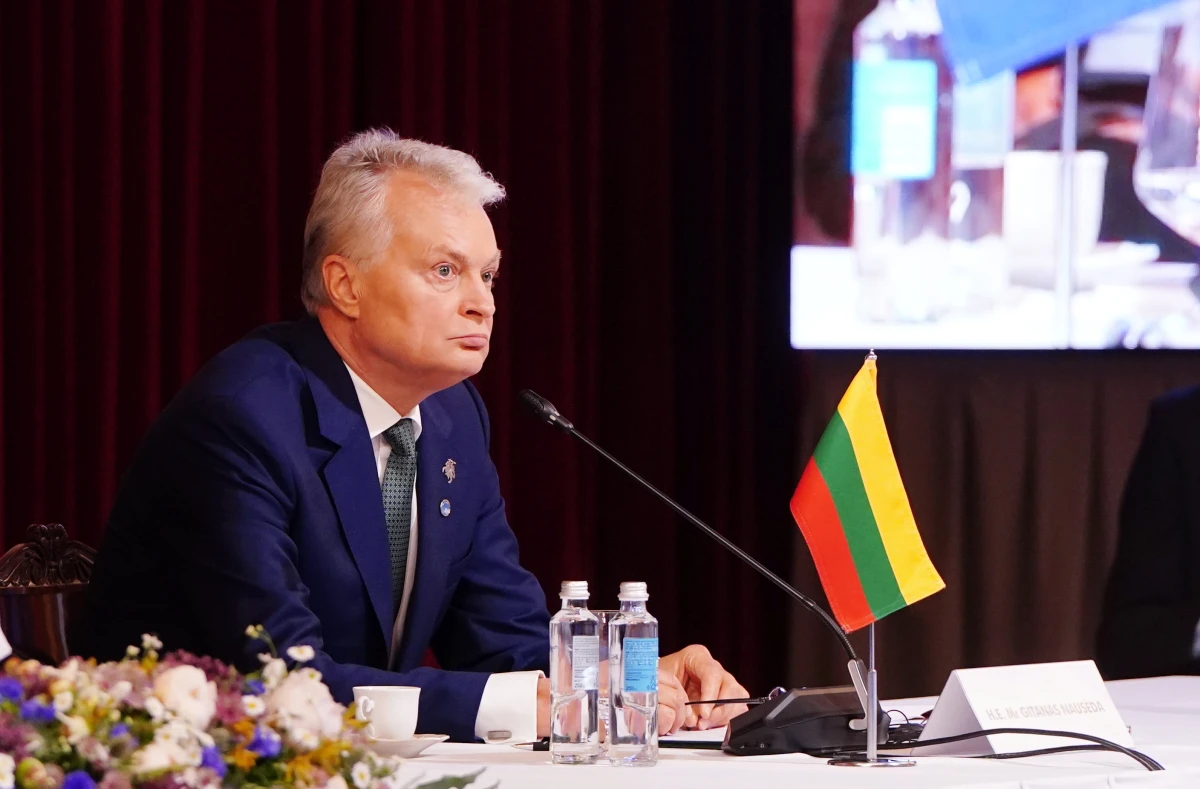
Lithuanian President Gitanas Nausėda stated that the country needs to simultaneously stimulate birth rates, support the return of emigrants, and tighten immigration policy. In his opinion, the mass influx of foreign labor cannot solve the long-term demographic problems of the state.
In his annual address to the Seimas, Lithuanian President Gitanas Nausėda focused on issues of demographics, migration, and the future of the country.
The head of state stated that Lithuania must maintain its national identity and should not rely solely on immigration as a means to compensate for population decline.
“Whatever happens, Lithuania must remain Lithuanian,” Nausėda emphasized.
According to him, the country needs a stricter immigration policy, including tighter control over the issuance of work permits to foreigners.
At the same time, the president called for more active encouragement of the return of Lithuanians living abroad. Among possible measures, he mentioned the development of education for the diaspora in the Lithuanian language and creating more favorable conditions for the return of young families with children.
One of the main long-term problems of Lithuania, Nausėda noted, is low birth rates. In his opinion, this issue is today as important for the country's future as the income levels of the population or business access to financing. The president also urged for greater attention to be paid to supporting families with children and fostering a positive attitude towards large families.
In fact, it is about finding a balance between two tasks: providing the economy with the necessary workforce while simultaneously ensuring that demographic problems are not solved solely through external migration.
Nausėda criticized the previous center-right government, stating that in recent years, the authorities have relied too heavily on attracting economic migrants. At the same time, the president emphasized that he is not against immigration as such. According to him, foreign workers are needed in the Lithuanian economy; however, uncontrolled migration growth cannot replace a systematic demographic policy.
To improve the situation, the head of state proposes expanding tax benefits for families with children, improving housing accessibility, and developing regions by providing quality public services, including healthcare.
The demographic issue remains one of the most sensitive for Lithuania. The country has been facing low birth rates, an aging population, and emigration for many years, which affects both the labor market and the long-term development of the economy.
According to Nausėda, demographic problems can only be solved by combining measures to support families, stimulate the return of emigrants, and implement a more thoughtful immigration policy. These issues, he said, will determine the future of Lithuania in the coming decades.








Leave a comment