
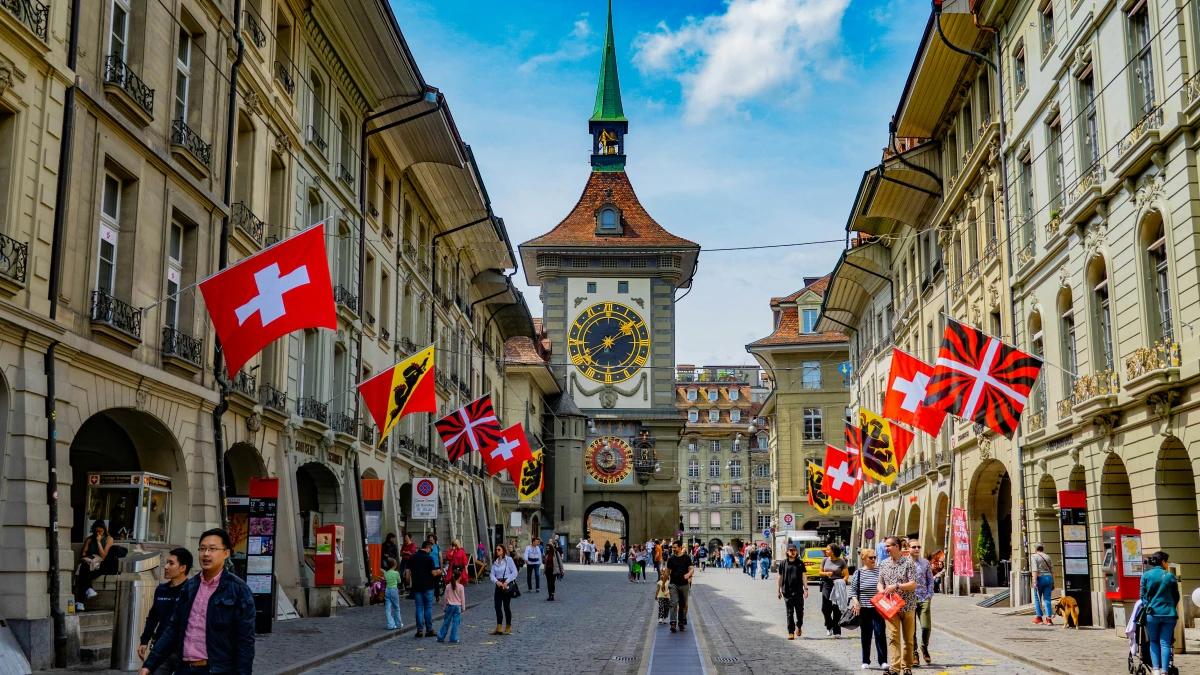
On Sunday, residents of Switzerland are voting on an initiative that proposes to limit the country's population to ten million people. If the proposal is accepted, the authorities will have to tighten migration policy, and in the long term, one of the key agreements with the European Union may be called into question.
A referendum is taking place in Switzerland initiated by the national-conservative Swiss People's Party (SVP), proposing to legislatively limit the permanent population of the country to ten million people.
The question has become one of the most controversial in recent times. The government, the majority of parliamentary parties, business organizations, and trade unions oppose the initiative; however, polls show that society is almost evenly divided between supporters and opponents of the proposal.
Currently, about 9.1 million people live in Switzerland. Nearly a third of the population consists of people born outside the country. Many of them have come from European Union states.
According to the initiative, by 2050, the permanent population of the country should not exceed ten million people. If the number of residents reaches 9.5 million before this deadline, the government will be obliged to take measures to curb population growth.
This may involve changes to the rules for granting asylum, family reunification, and issuing residence permits. Additionally, the authorities will be required to review certain international agreements.
The most serious consequence is related to the agreement on the free movement of people between Switzerland and the EU. If the country's population does reach ten million people by 2050, the government will have to abandon this agreement.
For Switzerland, the issue goes far beyond demographics. The free movement agreement is linked to a number of other treaties that ensure Swiss companies' access to the European market. Therefore, the authorities warn that the consequences could affect the economy and the labor market.
Supporters of the initiative believe that the country is already experiencing increasing pressure on infrastructure, housing, transportation, and natural resources. In their opinion, limiting population growth will help maintain quality of life.
Opponents respond that the country's economy largely depends on foreign workers. This is especially true for healthcare, construction, hospitality, and the scientific sector, where a shortage of personnel is already being felt today.
At the same time, the Swiss are voting on another sensitive issue — civil service reform.
The government proposes to make it a less attractive alternative to military service. In recent years, the number of young people choosing civil service over the army has been steadily increasing, reaching a record 7,211 in 2025.
The new rules provide for an increase in the mandatory service period and the introduction of additional requirements for program participants. The authorities explain this by the need to maintain the strength of the armed forces amid rising international tensions.
Polls show that society is almost evenly split on this issue as well: supporters of tightening the rules are only slightly more numerous than opponents.
The results of both referendums could have a significant impact on Switzerland's migration policy and its relations with the European Union in the coming years.















Leave a comment