
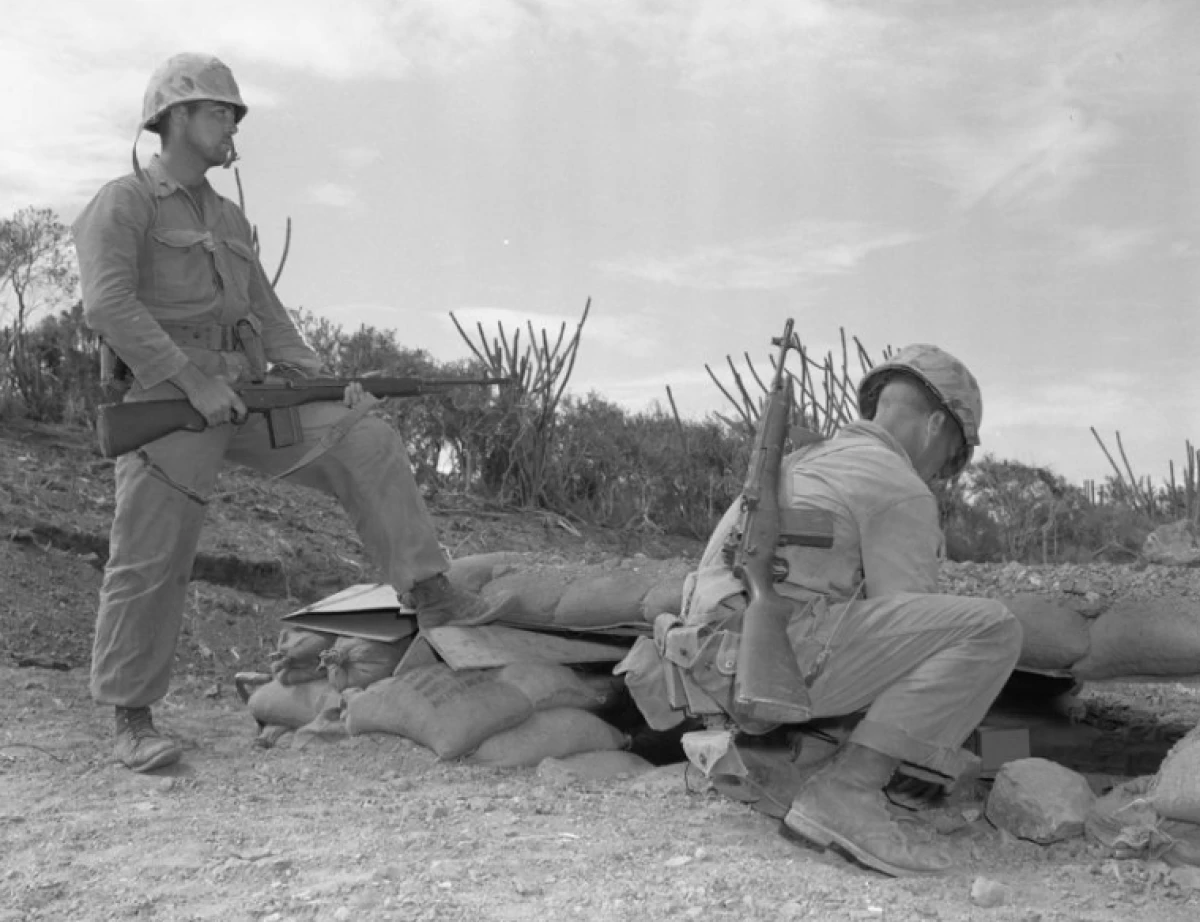
The U.S. is actively seeking pretexts to justify possible use of force.
After the U.S. Air Force conducted an operation to abduct Nicolás Maduro from his own bedroom, Cuba found itself cut off from its main oil supplier - Venezuela. At the same time, Washington intensified pressure on other oil importers that directly or indirectly supply energy resources to Havana. The island of freedom has been facing fuel shortages for several years, but the measures of Trump's second administration have escalated the situation to its limits. In several areas of Cuba, electricity is unavailable for most of the day, and there are disruptions in water supply, public transport, hospitals, schools, agriculture, and industry.
Meanwhile, Washington and Havana began negotiations. The U.S. demanded that the Cuban authorities implement economic and political reforms, release political prisoners, and expand civil liberties with the prospect of free elections. However, by the end of May, the negotiations had effectively stalled, and the collapse of the Cuban regime that Trump had anticipated did not occur.
Now Washington is seeking new levers of pressure on the island, which has remained one of the most troublesome thorns in American foreign policy for decades. Last week, several authoritative foreign publications reported that a U.S. military operation, if not inevitable, is quite likely.
The Pentagon has been amassing troops and weaponry in the region for several months, necessary for a possible military operation against Cuba, and Donald Trump has not ruled out the possibility of an invasion of the island, according to the American publication Politico. Currently, the largest U.S. naval group outside the Middle East is in the Caribbean. To initiate the operation, only the president's final approval is needed, the publication notes.
In May, according to Politico, an aircraft carrier strike group led by a Nimitz-class aircraft carrier entered the Caribbean Sea. Along with it, several destroyers and cruisers armed with guided missiles capable of striking ground targets arrived in the region. In recent months, American reconnaissance planes and drones have also regularly appeared around Cuba.
Meanwhile, off the coast of Virginia, an amphibious group led by the USS Kearsarge is preparing for a new deployment. It carries about 2,500 Marines and may replace some ships that will soon return home.
The forces amassed near Cuba allow Washington to consider various options for action. However, for a full-scale ground invasion, the Pentagon would need additional troops, the publication noted. Moreover, the fleet's capabilities are limited by the blockade of Iranian vessels in the Persian Gulf, in which American naval forces are also involved.
At the same time, Politico emphasized that there is not much time left for a possible operation. Some of the largest ships sent to the region last summer have been at sea for almost ten months, whereas they usually spend six to seven months on combat duty. Further extending their service would create excessive strain on the crews, American military officials believe.
Meanwhile, the U.S. is actively seeking pretexts to justify possible use of force against Cuba, writes Daniel Mendiola, a professor of Latin American history and migration studies at Vassar College, in an article for the British newspaper The Guardian. On May 20, a federal court in Florida charged former Cuban President Raúl Castro. He is suspected of involvement in the destruction of two civilian aircraft operated by U.S. citizens in 1996. At that time, Castro was serving as Cuba's Minister of Defense, and the planes were shot down by Cuban military forces. The indictment includes one count of conspiracy to murder U.S. citizens, two counts of destruction of aircraft, and four counts of murder.
According to Mendiola, the appearance of the indictment was not unexpected. After the Trump administration struck Caracas and captured Venezuelan President Nicolás Maduro in January, signs emerged indicating that Cuba could be Washington's next target. Before the operation against Venezuela, U.S. authorities also charged Maduro in federal court in New York.
"The indictment against Castro seemingly confirms these suspicions. However, the question remains what will follow next. Will American troops conduct a similar operation in Cuba involving bombing and capturing one of the country's leaders? Will a full-scale invasion of the island begin? Or will the threats of such actions be enough to secure concessions that at least in the short term satisfy the officials of the Trump administration?" Mendiola questions.
In the author's opinion, the charges against Castro are not actually aimed at protecting civilians from state violence. "In any of the scenarios mentioned, the civilian population of Cuba will suffer enormous losses," Mendiola emphasizes.
According to the American news site Axios, the Trump administration is preparing for the possible collapse of Cuba's "totalitarian government" as early as this summer. The publication notes that U.S. authorities are developing new options for military response specifically in case "chaos reigns on the island." The president has not yet authorized an invasion and would prefer to achieve a peaceful transition to a "free Cuba," the publication emphasizes.
It is possible that the buildup of American forces in the region is intended not so much to prepare for an invasion as to increase pressure on the Cuban authorities and persuade them to negotiate on terms favorable to Washington. "This is classic Trump. Throw the opponent off balance. Apply pressure, observe the reaction, increase pressure, look at the reaction again, and increase pressure once more," one of the U.S. president's advisors stated to the publication.
Another senior American official assured that the U.S. does not plan an intervention in Cuba. "All options are being considered, but no invasion is currently planned or expected. However, when the president gives the order, we will be ready for anything," he stated.
Axios also presents arguments against the idea that the indictment of Raúl Castro is preparation for an operation similar to the Venezuelan scenario. According to representatives of the Trump administration and his advisors, there are three important differences between Cuba and Venezuela.
First, the U.S. has not yet determined who could lead a temporary government in Havana in the event of the current regime's collapse. In Venezuela, this role was played by Vice President Delcy Rodríguez.
Second, capturing Raúl Castro, like Nicolás Maduro, would not lead to a sharp reorientation of Cuba towards the U.S. Castro has not been in charge of the country for a long time. He ceased to be president in 2018 and stepped down as First Secretary of the Communist Party of Cuba in 2021.
Third, the embargo against Cuba is enshrined in U.S. legislation. It can only be lifted if political prisoners are released, free elections are held, and other civil rights are ensured on the island. Therefore, Trump will not be able to quickly normalize relations with a new government with a single executive decision, as was the case in Venezuela.
"The problem is that Congress also has a say," one official stated. He noted that influential conservative congressmen could hinder the lifting of the embargo.
Analysts believe that imminent military actions against Cuba are unlikely and fraught with many risks, writes the British newspaper Financial Times. However, the likelihood that Donald Trump will order some strike against the island is growing as Washington seeks to demonstrate its readiness to use force to increase pressure on Cuba.
This is evidenced, among other things, by the increase in the number of American reconnaissance flights around Cuba. Gathering intelligence often precedes military operations. At the same time, analysts do not rule out that Washington is using such flights as another means of pressure on Havana, FT notes.
The publication also expressed skepticism regarding the version that an operation against Cuba would be similar to the operation to overthrow Maduro in Venezuela. Executing such a plan again would be much more difficult due to the lack of a surprise effect, Financial Times notes. While in January the idea of capturing a political leader of another country seemed almost unbelievable, now the Cuban authorities know what to expect from Washington.
"You have to be crazy to think that Raúl Castro is not being moved from place to place right now," said Chris Simmons, a former employee of the U.S. Defense Intelligence Agency who dealt with Cuba.
Another option for Washington is to strike the Cuban armed forces and incapacitate them. According to military experts, American aviation and missiles could easily suppress the resistance of the Cuban army, which is no longer comparable in strength to the army of the Cold War era. Among the main problems of the Cuban army, experts cite a severe shortage of spare parts, insufficient training of pilots, and limited capabilities for missile and air defense.
However, even if the U.S. successfully conducted a military operation against Cuba, they would not have simple answers to the political question of what to do next, the publication writes. The fact is that in Cuba, unlike Venezuela, there is no equivalent of Delcy Rodríguez, who is ready to cooperate with Washington, nor of María Corina Machado, who opposes the regime – there is simply no opposition in the country that the U.S. could rely on. "This is a much more cohesive regime than in Venezuela. If anything, it resembles Iran more than Venezuela," Financial Times quotes one senior American official.
Moreover, the collapse of the current political system in Cuba would create a new headache for Washington. If the regime collapses, the U.S. may have to take responsibility for stabilizing the state in Cuba. They would have to restore the Cuban economy and rebuild the country's political system to prevent a political vacuum at their own borders.
If the U.S. does not resort to military intervention, Trump will continue to intensify economic pressure on Cuba, trying to persuade Havana to agree to terms favorable to him. Some experts believe that this summer, as temperatures and humidity in Cuba begin to rise, and life under the fuel blockade becomes significantly more complicated, protests may flare up.
According to several former employees of the U.S. Defense and Intelligence agencies, the buildup of U.S. military power is likely a bluff, an attempt to force Havana to make concessions during negotiations, rather than real preparation for an attack. "The administration is trying to convince Cuba that we are going to invade its territory," said René Novacoff, a former U.S. intelligence officer.
In Havana, U.S. actions to blockade the island have been labeled an attempt to provoke a humanitarian crisis in the country, and the charges against Raúl Castro have been described as fabricated. This was stated by Deputy Foreign Minister of the Republic Joséfina Vidal during parliamentary hearings in the National Capitol. Her words were reported by the official party organ of the Central Committee of the Communist Party of Cuba, Granma:
"The danger of military aggression against Cuba is growing every day. There are no justifications that could justify an attack on our country, which will definitely lead to destruction and the death of Cubans and Americans. Cuba does not want conflict. We have been and will always be a country of peace," said the deputy minister.
Cuban authorities also emphasized that they will not allow interference in the internal affairs of the country and criticized the U.S. for its dishonesty. Foreign Minister Bruno Rodríguez warned that any military actions would lead to a "bloody slaughter" in which thousands of Cubans and Americans would die.



Leave a comment