
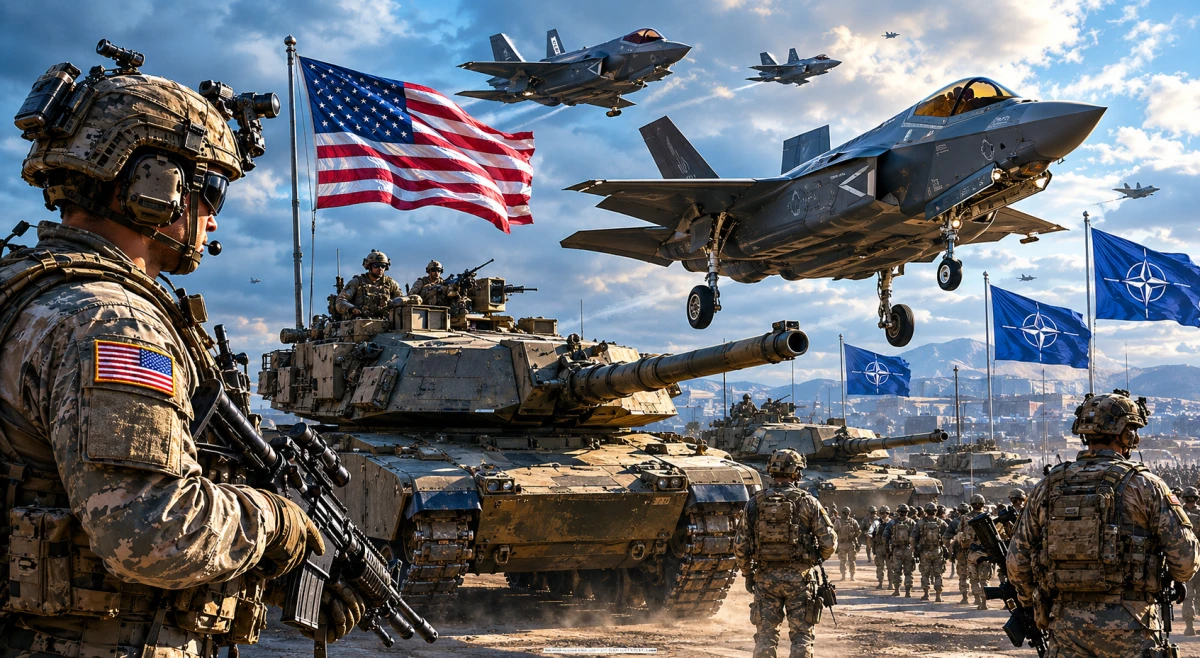
Washington intends to significantly reduce its military contribution to NATO and transfer much of the responsibility for Europe's security to the European countries themselves. According to Spiegel, the U.S. has already warned allies about plans to reduce participation in the alliance's collective defense system and expects European states to quickly begin compensating for future gaps.
According to Spiegel, at a closed briefing at NATO headquarters, a representative of Pentagon chief Pete Hegseth informed allies about the U.S. plans to reconsider its participation in the so-called "NATO force model."
The publication reports that Washington intends to reduce the number of fighter jets by about a third, decrease the presence of strategic bombers, and refrain from providing submarines. There are also discussions about reducing U.S. involvement in providing destroyers, reconnaissance and strike drones, as well as refueling aircraft.
At the same time, the United States has made it clear that it will maintain nuclear deterrence in Europe but wants European allies to take on the main burden of conventional defense of the continent.
The Donald Trump administration believes that European countries have already increased military spending and are capable of ensuring most of the region's security on their own.
As Spiegel notes, the scale of possible changes came as a surprise to Brussels. European diplomats expected a more gradual reassessment of the U.S. role in NATO.
Part of the American capabilities will be difficult to replace. For example, Europe may partially compensate for the shortage of fighter jets with deliveries of F-35s, but there are virtually no equivalents to American strategic bombers and aircraft carriers among European countries.
According to the publication, a concept of "NATO 3.0" is being promoted among Trump’s circle, under which European states are expected to take on almost all conventional defense of the continent in a short time frame.
By early June, alliance allies must present proposals for replacing American capabilities, and Washington hopes to discuss a new burden-sharing model at the NATO summit in July.
U.S. plans could represent one of the most significant changes within NATO in recent decades. Europe is increasingly facing the necessity of ensuring its own security, while Washington seeks to redistribute resources to other global priorities — primarily the Indo-Pacific region and the Middle East.








Leave a comment