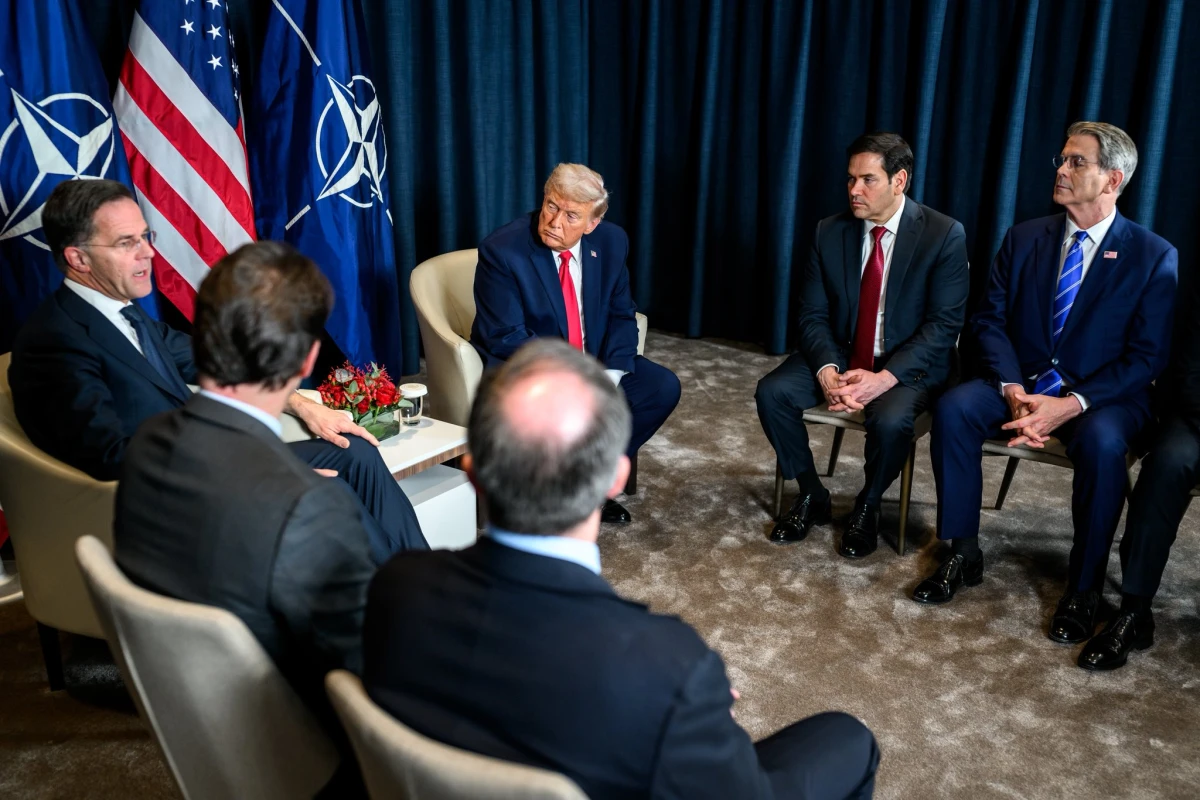
The U.S. will provide NATO with significantly fewer key military resources, including fighter jets, ships, drones, refueling aircraft, and strategic bombers, as reported by Der Spiegel.
The U.S. intends to significantly reduce its military contribution to NATO. This was reported by Der Spiegel magazine on Tuesday, May 26. According to the publication, at the end of last week, a representative of Pentagon chief Pete Hegseth informed high-ranking officials from other alliance member countries at NATO headquarters about the upcoming cuts. Washington will provide the North Atlantic Alliance with significantly fewer key military resources, including fighter jets, ships, drones, refueling aircraft, and strategic bombers. Specifically, the contribution of American fighter jets is set to decrease by one-third.
The reduction is being prepared within the framework of NATO's 'force model.' Under the previous burden-sharing system, the U.S. provided about half of the alliance's military potential. Now Washington is demanding a redistribution of resources (burden shifting). Pentagon envoy Alexander Veles-Green presented specific figures reflecting U.S. plans to the political directors of NATO countries on May 22.
Now Washington expects proposals on which European countries will be able to replace the U.S. in areas where supplies will be reduced ahead of the planned Force Sourcing Conference in June.
Greenpeace: Even Without U.S. Contribution, European NATO Countries Exceed Russia
Meanwhile, according to a study by Greenpeace, even without U.S. contributions, European NATO member countries surpass Russia in key military categories. Even without the United States, European countries (along with Canada) have a significantly larger combined military budget, more major weapon systems, and a greater number of military personnel than Russia.
In 2025, European allies and Canada collectively allocated about $626 billion (around €540 billion) for these purposes. Russia's expenditures amounted to about $190 billion (€163 billion).
According to the authors of the study, European superiority is particularly evident in the area of combat aircraft. European NATO countries and Canada possess 2,215 combat units, while Russia has 1,064. The same applies to ships (143 versus 34) and artillery (15,896 versus 5,976).
"Europe has enormous defense resources. According to the latest research, this is true even if the U.S. were to exit NATO," the authors of the publication emphasized. However, they noted that Europe's security policy suffers from a lack of coordinated actions.
U.S. Reduces Number of Combat Brigade Groups in Europe to Three
Earlier, on May 19, it became known that the U.S. would withdraw one of its four combat brigade groups from Europe, the Pentagon reported. This step will reduce the number of American troops in the region to the level of 2021.
A combat brigade group is the main tactical unit of the U.S. Army capable of conducting operations independently, with the personnel of an infantry brigade group numbering 4,000-4,500, and an armored brigade group up to 5,000. In recent years, the U.S. has deployed about 100,000 soldiers and officers in Europe. Of these, more than 65,000 were stationed in the region permanently, while the rest were on a rotational basis.