
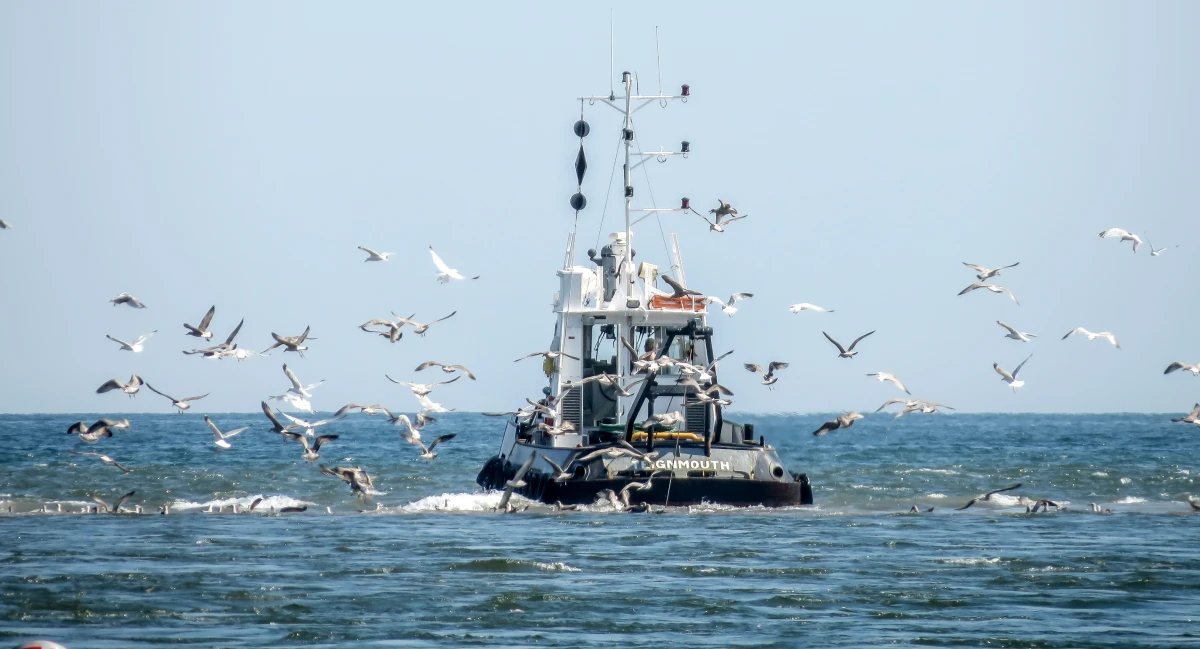
The European Parliament, concerned about the state of fish stocks, calls on the European Commission to conduct a comprehensive assessment and, if possible, amend the multiannual management plan for the resources of the Baltic Sea, as the previously set goals have not been achieved.
The Parliament emphasizes that the implementation of the management plan has not yet yielded results, and the ecosystem and fish stocks of the Baltic Sea need assistance for recovery. To halt the further decline of fish stocks, the European Commission and EU member states must urgently analyze the allocation of catch quotas and their possible impact on fish stocks. Since fish stocks are recovering slowly, greater caution should be exercised when calculating the total allowable catch. Targeted fishing of certain species and trawling for fishmeal and fish oil must be stopped, and fishing in marine protected areas should be restricted.
A new approach must be balanced and take into account both ecological and socio-economic factors. The European Commission and EU member states should also strive to improve the situation of fishermen engaged in small-scale coastal fishing.
Any decisions should be based on the best available scientific data. A greater role than before should be assigned to the International Council for the Exploration of the Sea (ICES), which should assist in determining sufficiently cautious catch quotas and in assessing the consequences of abandoning the use of ranges exceeding maximum sustainable yield. EU member states and the European Commission must ensure that ICES has access to the latest catch data. Furthermore, thorough genetic mapping of the populations of certain commercially important fish species, such as sprat and herring, is necessary.
According to the Parliament, Russia is irresponsibly and irrationally exploiting the fish stocks of the Baltic Sea while ignoring scientific recommendations. The Parliament condemns Russia's unilateral actions in setting catch quotas, as well as the growing presence of the Russian shadow fleet in the Baltic Sea, as this poses a significant risk of oil spills and other environmental disasters.
During the plenary session, the initiative report was supported by 337 deputies, while 178 voted against and 44 abstained.
"For many years, the management of the resources of the Baltic Sea has been conducted irresponsibly, and the policies pursued so far have not yielded results. This cannot continue. The Baltic Sea will not survive another round of empty promises and delays; we must help the sea's ecosystem recover. Millions of people in eight coastal countries are waiting for real action from politicians. The Parliament has finally listened to them," said rapporteur Isabella Lövin from Sweden.
The state of the Baltic Sea has been steadily deteriorating over the past decades, and it is now facing serious environmental problems: warming waters, decreasing salinity, eutrophication due to nutrients from agriculture and wastewater, as well as the spread of invasive alien species. At the same time, maritime transport, fishing, and the construction of wind farms have intensified, damaging habitats and spawning grounds for fish, leading to declines in certain species, such as cod.










Leave a comment