While Egyptian pharaohs built pyramids in Giza, another ancient culture created massive burial complexes in the heart of the Sahara. Archaeologists have discovered 260 previously unknown structures in eastern Sudan that may be linked to a vanished civilization of nomadic herders from the "Green Sahara" era.
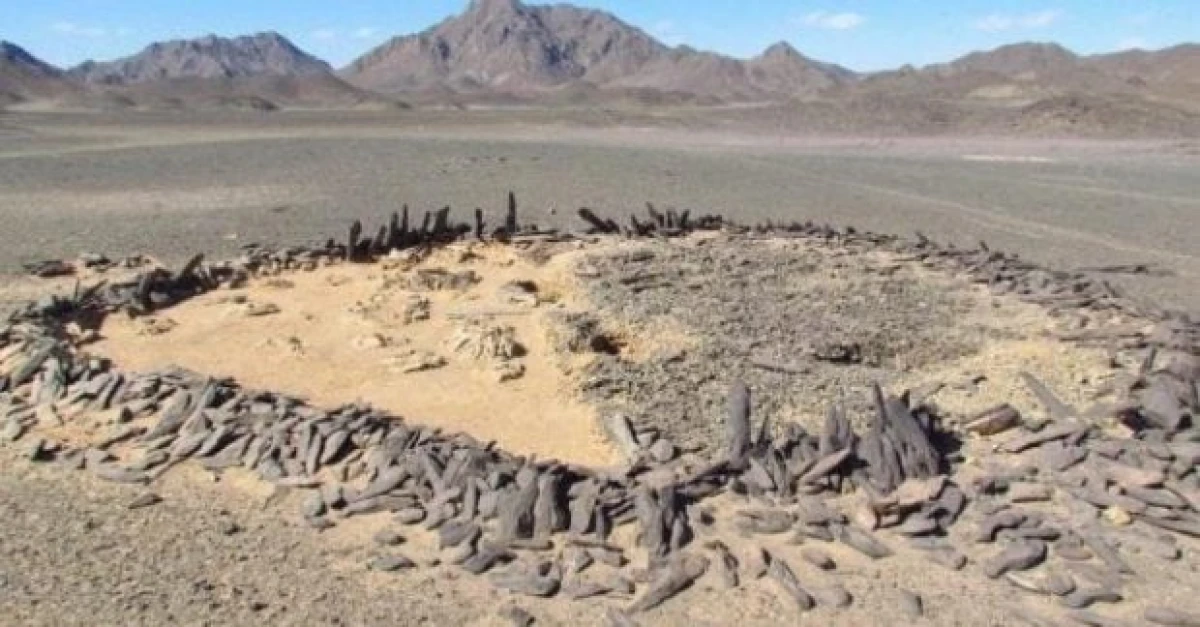
The structures are round communal graves, some reaching 80 meters in diameter, filled with skeletal remains of people and animals such as cows, sheep, and goats.
While Egyptian pharaohs were building their pyramids on the sands of Giza, another culture was quietly burying its dead in majestic monuments on the other side of the desert. This is reported by IFLScience.
It is noted that for thousands of years these monuments remained unknown in one of the harshest landscapes on Earth, but new research is finally bringing them to light.
An international team of archaeologists discovered 260 previously undocumented structures deep in the Eastern Desert, a corridor of the Sahara wedged between the Nile River and the Red Sea in eastern Sudan. They found them not by traversing the harsh terrain of endless dunes, but by studying a vast amount of satellite imagery. Their research is published in the African Archaeological Review.
The structures are round communal graves, some reaching 80 meters in diameter, filled with skeletal remains of people and animals such as cows, sheep, and goats. Many of them are surrounded by a low outer wall, and in the very center of the ring lies one person.
Interestingly, since these structures have not yet been thoroughly investigated by archaeologists on-site, exact details such as the time of their construction are not immediately obvious. However, due to strikingly similar structures discovered over the last century known as the Atbay burials, researchers believe they were built around 4,500 to 6,500 years ago.
Who Was Buried There
As in other Atbay burials, the people buried here were likely nomadic herders who grazed livestock across the region. Therefore, it is not surprising that most of the monuments are located near ancient water bodies, dried riverbeds, and oases.
They were created at a time when the Sahara was undergoing dramatic changes. The desert exists in a cyclical rhythm, transitioning from arid desert to lush savanna approximately every 21,000 years. The last of these "Green Sahara" periods occurred about 15,000 to 5,000 years ago, precisely during the era when these monument builders thrived.
Importantly, as the green pastures receded and the sands advanced, this culture seemingly vanished. And this is not the first time such a thing has happened. In the Tenere Desert, another remote corner of the Sahara, a group of archaeologists discovered a mysterious site known as Gobero, consisting of 200 human skeletons as well as thousands of artifacts. Again, this site appears to have been abandoned when the Sahara was engulfed by drought around 5,000 years ago. The article states:
"Today, the Sahara may seem lifeless, but these sites prove that it was once a thriving arena for countless human cultures, the histories of which we are just beginning to piece together."
It is noted that the Eastern Desert is currently engulfed in a new gold rush, attracting people, money, and weapons deep into what was once a desolate region. The study showed that at least 12 ancient structures have already been damaged due to mining and vandalism. As the thirst for gold intensifies, the destruction will only escalate.
In the editorial's view, the discovery in the Sahara once again highlights how little humanity knows about the ancient civilizations of Africa. These burials serve as a reminder that today’s barren desert was once home to advanced cultures, and modern climate changes could permanently erase traces of the past if archaeologists do not manage to study and preserve them.