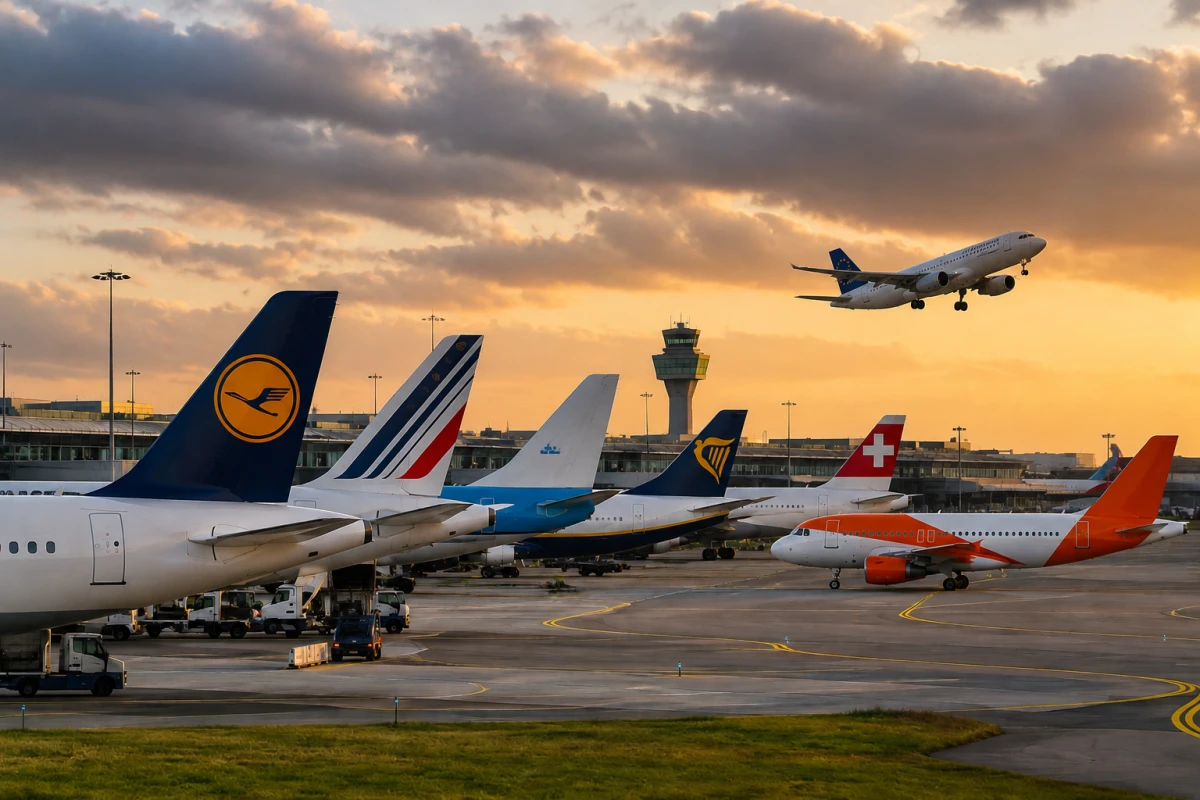
The European Commission warned carriers that they are not allowed to demand additional fuel fees from passengers after ticket issuance. The statement was prompted by the scandal surrounding the low-cost airline Volotea, which began charging customers extra due to rising fuel prices.
The EU warned that airlines must not charge passengers additional fuel fees after they have already purchased tickets.
This was stated by European Commission representative Anna-Kaisa Itkonen, as quoted by AFP, reports Eurointegration.
This statement came amid criticism of the Spanish low-cost airline Volotea in France, where an investigation is underway after it demanded customers pay fuel fees after purchasing tickets.
The airline's director in France, Gilles Gosselen, defended this measure.
"The legality of our system has been confirmed by three independent law firms specializing in air transport and consumer law. This measure is transparent, it is temporary and works both ways, both for increases and decreases," Gosselen told AFP.
This statement was made against the backdrop of significant difficulties in the aviation sector due to high energy prices caused by the war in the Middle East.
At the same time, the European Commission warned that such measures are unacceptable.
"Airlines can adjust their published rates according to the situation, but adding a fuel surcharge to the ticket price after it has been purchased cannot be justified," Itkonen emphasized.
Any changes after booking may "raise questions regarding unfair commercial practices under EU law," she added.
In a document published on Friday regarding the energy crisis affecting the aviation sector, the EU stated that "any retroactive price changes are excluded."
"Airlines cannot include provisions in the contract allowing them to raise the ticket price above the level announced at the time of purchase simply because fuel turned out to be more expensive than they anticipated," the European Commission stated.
The only exception is package tours, if the seller clearly indicated in the contract that price changes related to fuel are possible.
In such cases, increases of up to eight percent are allowed, but if it exceeds that, the customer can agree or has the right to cancel the booking.
It was reported that British airlines received the green light from the government to cancel or combine flights to save aviation fuel during the summer season.
In Brussels, it was emphasized that airlines can change rates only before the ticket sale, and any attempts to raise prices retroactively may be considered a violation of consumer rights, bb.lv reports. Against the backdrop of the energy crisis and rising fuel prices, the EU made it clear: the financial problems of carriers should not be passed on to passengers after booking a flight.