In an interview with Euronews from Bogotá, the wives of Colombians who went to a foreign war share how their husbands ended up in the Armed Forces of Ukraine and what happened to them.
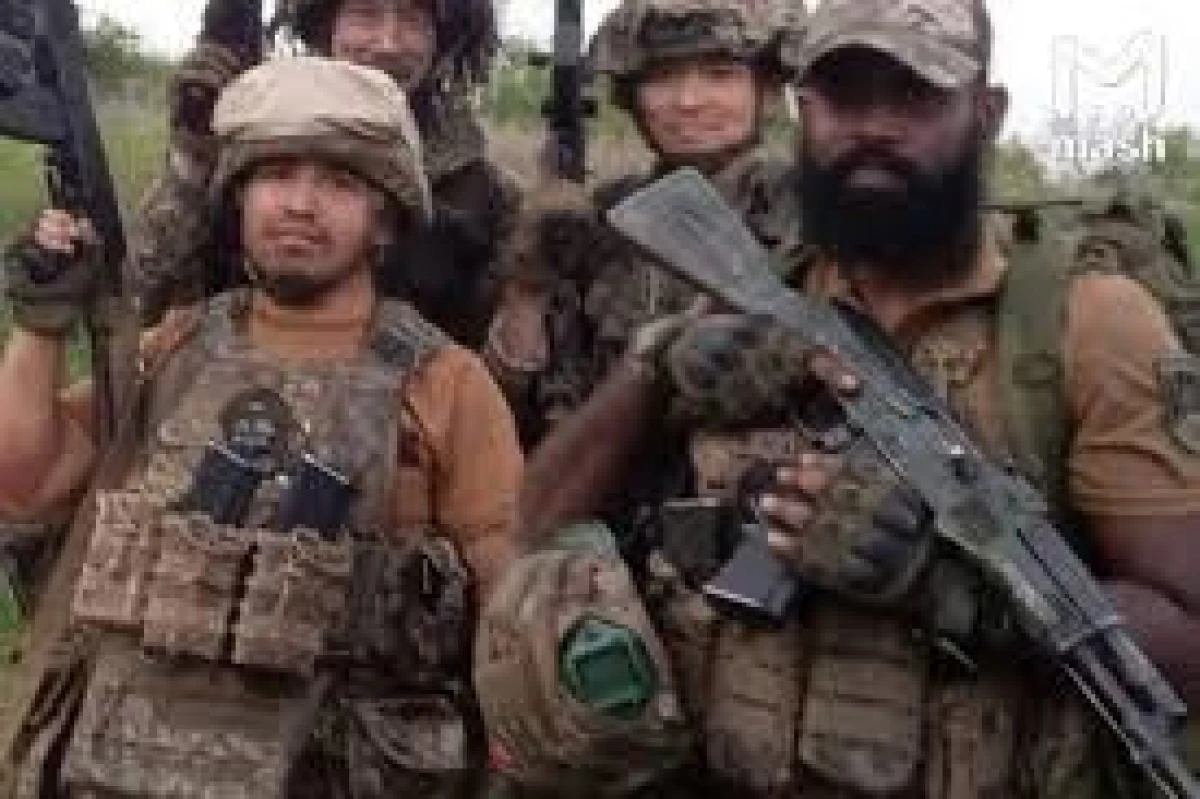
In September 2025, an unexpected fratricidal confrontation occurred on the front lines in Ukraine between... Colombian military personnel. Relatives of Colombian men who went to fight in the ranks of the Armed Forces of Ukraine told our channel about what happened.
Saray Vera has not heard from her husband, John Edward Villarreal, for many months; he went missing after a bombing. The woman does not lose hope that her husband is alive...
And this is not an isolated case. According to UN estimates, thousands of Colombians are currently participating in foreign conflicts. The vast majority, human rights activists note, go to fight for financial reasons.
"For my husband, it was a matter of money," confirms Saray Vera. "I know people whose husbands and children went to Russia because they were offered more. I told him not to leave."
She said her husband was offered a base salary of 12 million Colombian pesos per month, which is about 2,800 euros, plus a NATO bonus of 7 million. "Compared to what he could earn in Colombia, this is a lot," she confirms.
Mireya Pineda also sent her husband abroad for work. She recounts that the "few job opportunities" in Colombia pushed Pablo Puentes to join the Armed Forces of Ukraine as a medic after he went to Poland for a position as an ambulance driver. "I will go, work for three months, six months, and then I will return and we will buy a house," were the words with which her husband set off to another continent.
The couple has two children: an 11-year-old boy and a 6-year-old girl. Maria Pineda does not know if they will see their father again: Pablo was captured by the Russians and sentenced to 28 years in prison in the Russian Federation.
Reputation of Colombian Soldiers
These are just two examples from the growing number of cases where Colombians decide to take up arms and risk their lives in conflicts that are foreign to them. According to estimates (source in Spanish) from the UN, "more than 10,000 Colombians may have been recruited into armed conflicts in various parts of the world through both legal and illegal means."
Human rights activists and observers note that the outflow of men to conflict zones is primarily related to financial instability in the country. Furthermore, Colombians are considered good soldiers abroad. "Colombian soldiers are valued as good fighters," confirmed Carlos Ramirez, coordinator of the NGO La Voz De Los Que No Están, whose task is to search for compatriots missing in combat. According to him, this reputation does not always reflect reality. Military service in Colombia is mandatory, but for recent high school graduates, for example, it lasts only a year. "All Colombians have military ID; it is a kind of pass for leaving the country. But not everyone who has it has real combat experience," notes Ramirez.
Such was the case with Puentes, says Maria Pineda: "Pablo completed military service right after school; he was 18 years old. And such young men are not taken to real combat zones. Since then, he has not picked up a weapon."
Deceived or Not?
In Puentes' story, there is another characteristic feature - deception. The man's troubles, according to his wife, began with an "acquaintance" who told him about a job as a driver in Poland. However, when Puentes arrived in Poland, it turned out that he was not expected there. Soon he saw an advertisement for a medic for the Armed Forces of Ukraine...
"Then he went there, arrived at a battalion, I don't remember which area, where there were many Colombians," the woman recounts. The last time he was in contact was on January 3, 2025. "Take care of the children. I don’t know if we will see each other again," said her husband.
Maria Pineda conducted her own search. She filed missing person reports with the ombudsman, the Red Cross, the Ministry of Foreign Affairs, the prosecutor's office, and the police. At the same time, she wrote on social media, in groups searching for missing persons. On January 15, she saw a photo on one of the Russian websites, where Pablo was marked as "in captivity."
A few days later, a video from a Telegram channel confirmed this information. Pablo was captured while trying to hide in an enemy trench during an offensive. In July 2025, he was sentenced to nearly 30 years in prison. "And this is him, who never liked to sit still," laments his wife.
In the case of Villarreal, who signed a contract with the Armed Forces of Ukraine relying on Google Translate, the situation is different. His wife admits: her husband knew he was going to the front. "My husband knew he was going to fight, but I think, to some extent, he was deceived, lured, and he believed it," she reflects.