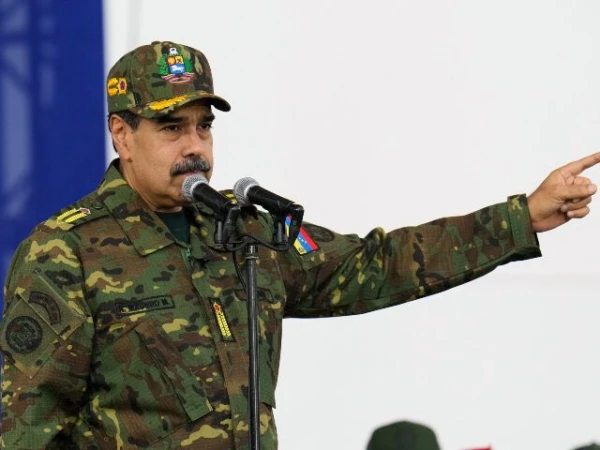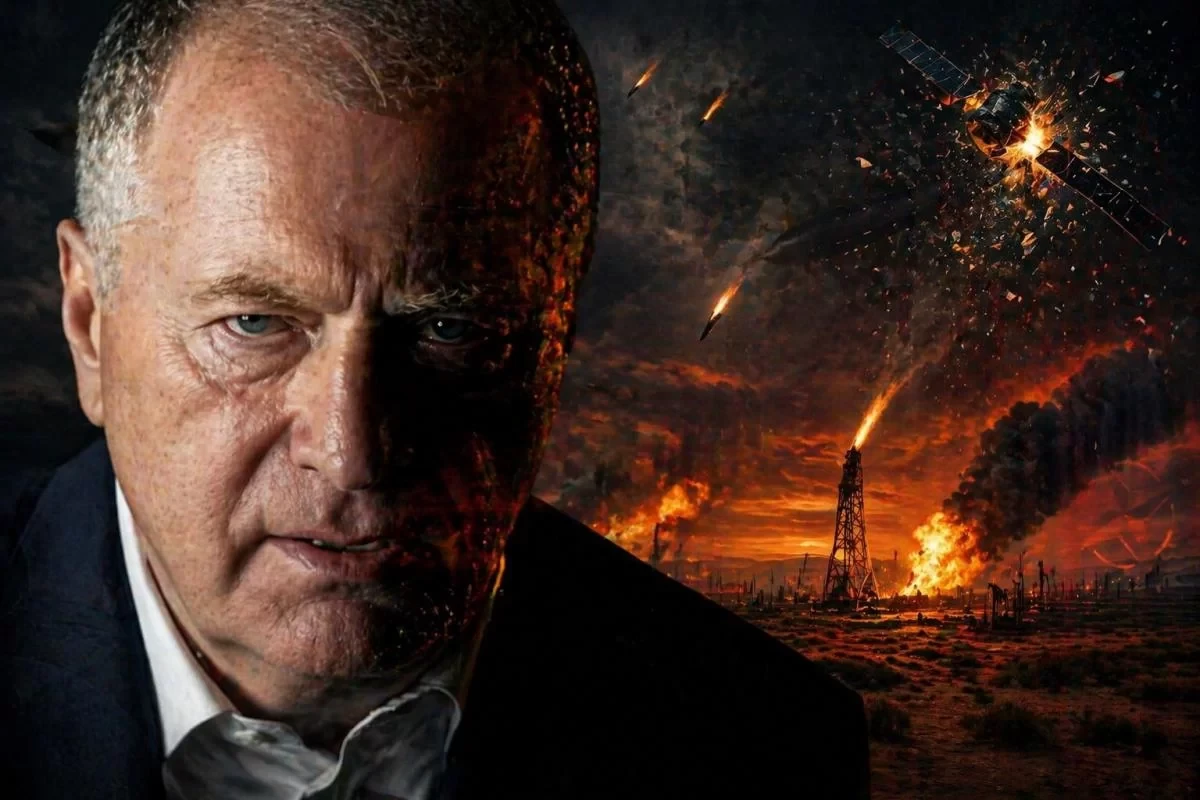
During his lifetime, Vladimir Zhirinovsky was often considered an eccentric showman, but today this politician is perceived as a true visionary. It seems he calculated geopolitical scenarios decades ahead with astonishing accuracy. We analyze his most alarming predictions that have already come true and look into the future he marked for 2026–2027.
Strategy, Not Mysticism: Where the Politician Was Right
Zhirinovsky repeatedly stated that his remarkable "predictions" are not a mystical gift, but the result of deep analysis, extensive knowledge of Eastern cultures, and precise calculations. He explained to his opponents: "Today you think I am speaking incomprehensibly — I am speaking with a perspective of 20–30 years."
History confirms his correctness, despite some calling him "Vovanga" and others still actively debating his significance in politics. The undeniable fact remains: the geopolitical logic of this figure was truly impeccable.
Zhirinovsky was convinced that the main focal point of tension would always be concentrated in the East, rather than in European countries. He detailed the mechanism that the West would use to weaken its geopolitical rivals.
Many years ago, the politician predicted that an attack on Iran would cause a sharp rise in oil prices, reaching $200 per barrel. This, in his opinion, would simultaneously undermine the economies of China and the European Union.
He warned: "With one shot, America kills two birds: it weakens Brussels and Beijing." Current events related to the escalation in the Persian Gulf, threats to Tehran, and ongoing attacks on infrastructure remarkably align with his predictions.
Why Russia Had to Turn East
In the 1990s and 2000s, Zhirinovsky's calls for Russia to pivot towards Asia and the Middle East were seen as outdated. While liberals actively spoke about European values and "McDonald's," Zhirinovsky firmly asserted that the West would never become a reliable partner. He persistently repeated: "Russia's task is to go to the Middle East."
Today, we observe a significant increase in trade relations with Asian countries, and Zhirinovsky's concepts of the New Silk Road are almost verbatim echoed by the leader of China.
The Darkest Prophecies
The most alarming predictions of the politician pertain to the period of 2026–2027. Zhirinovsky claimed that by this time, the diplomatic opportunities of the world would be completely exhausted, and the use of brute force would replace the negotiation process.
According to his calculations, a key conflict would erupt as early as 2027. Moreover, the epicenter of global chaos would not be Ukraine, but the Middle East.
He grimly warned: "Iran is not Vietnam and not Kosovo. The most terrible events will happen here." According to his logic, Washington, seeking to write off enormous debts and maintain its power, would provoke a situation using the most powerful types of weaponry.
The Scenario of Nuclear Bargaining and the End of Satellites
Despite his frightening statements, Zhirinovsky did not foresee the onset of a total nuclear winter. He believed that the main battlefield would be outer space.
The politician warned: "The Third World War will begin when they start hitting orbital satellites. People won't even be able to use their navigators."
Today, as the threat of escalation in the region has reached its peak since the Cold War, Zhirinovsky's predictions no longer seem like fantasies. Too much of what he said 10–15 years before the events has come true with astonishing accuracy.
If his analytical conclusions are correct, then the darkest chapters of world history have yet to be written — they are merely waiting for their hour, marked by the year 2027.