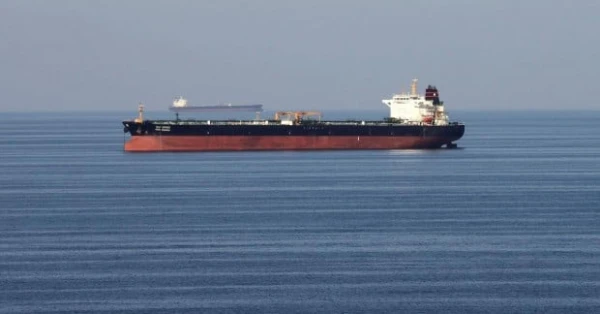
In the context of the confrontation with Iran, the United States may derive unexpected profits and strategic advantages by relying on a long-forgotten law of prize courts. However, as Forbes warns, this legal tool can benefit not only Washington but also other parties.
The confrontation with Iran opens up the opportunity for the U.S. to gain significant profits and strategic advantages through the so-called law of prize courts. This legal mechanism has not been used since World War II, but is now becoming relevant again.
However, as Forbes notes, there is an important nuance: such a convenient moment can be exploited not only by the United States. The law of prize courts is a set of maritime law and rules of armed conflict that regulates the capture of neutral or enemy merchant vessels.
It applies exclusively to civilian merchant vessels, unlike military ships or enemy aircraft, which are automatically considered military prizes upon capture. It is important to note that the application of this law is limited to the period of armed conflict.
Forbes provides a specific example of the application of this law: on April 19, the U.S. seized the Iranian vessel M/V Touska, which violated the American blockade of Iranian ports. After the detention, vessels can be brought to a port controlled by the warring side for thorough inspection and consideration of the case in a prize court.
This court is supposed to establish the legality of the capture. In the case of a positive decision, the vessel and its cargo are recognized as a prize, and ownership rights are transferred to the capturing state.
In the United States, federal district courts have jurisdiction over prize courts; however, such judicial instances have not been established since 1956. If the resolution of the dispute proves impossible, the state has the right to destroy the captured vessel, ensuring maximum safety for passengers and crew beforehand.
Consequences of Applying the Law
The United States is likely seeking to demonstrate to its opponents a determination to aggressively defend its rights as a warring party in maritime conflicts. Activating the law of prize courts would also serve as a clear warning to neutral merchant vessels heading to Iranian ports about the inadmissibility of violating the American blockade anywhere in the world.
Prize legislation could prove to be a very effective tool for the U.S. in a potential future conflict with China. Beijing is actively developing its merchant fleet, creating dual-use vessels capable of performing military tasks.
China possesses the largest merchant fleet in the world by tonnage and is critically dependent on maritime supplies of energy resources and raw materials. Prize legislation would allow for the capture of Chinese merchant vessels, wherever they may be, beyond neutral waters.
However, the revival of prize and booty laws could significantly impact the further development of the conflict. Forbes points out that Iran may begin to use the terminology of "prize" and "booty" when intercepting vessels, which would significantly complicate the U.S. information campaign to justify the legality of its actions.
The application of prize law in the current confrontation between the United States and Iran also opens up the prospect for China to use similar laws against the U.S. in the event of a possible military confrontation. This creates a precedent that could be turned against the initiators themselves.
The U.S. War in Iran: Key Aspects
After more than a month of intense fighting, Iran and the U.S., with the mediation of Pakistan, reached an agreement in early April for a two-week ceasefire. Subsequently, the United States extended this regime indefinitely.
However, hopes for a diplomatic breakthrough in the conflict are gradually fading as the negotiation process has stalled. Tehran and Washington are showing minimal willingness to soften their positions and conditions.
Moreover, both sides have initiated a dual blockade of the Strait of Hormuz. Iran has been attacking any vessels attempting to pass through this route without its permission since the beginning of the conflict.
For its part, the U.S. has imposed its own maritime blockade of Iranian ports since April 13, actively intercepting ships heading to or leaving Iran.