
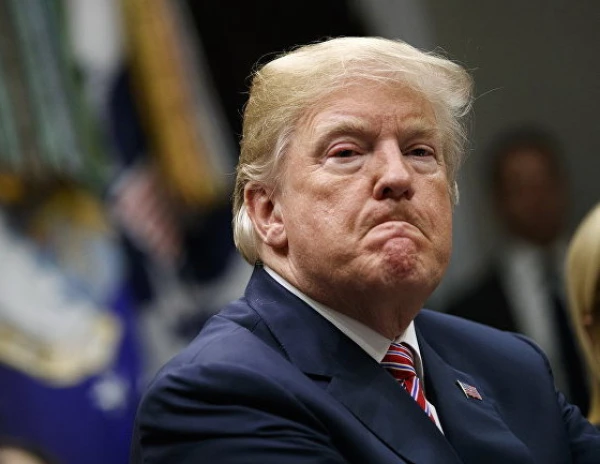
Donald Trump finds himself in a difficult situation trying to decipher the intricacies of Iranian diplomacy. Tensions around the Strait of Hormuz have reached a peak as the U.S. president faces a paradoxical situation: "Iran recently announced that it is closing the strait, which is strange because our blockade has already closed it." Try to understand who is in charge here and who is merely simulating control.
Donald Trump seems to be losing his composure as he tries to grapple with Iran's strategy. It appears the Persians are openly mocking the powerful American leader, skillfully returning all of his own threats like a boomerang.
For several weeks, Trump has been threatening them with "the gates of hell" if they do not accept his ultimatum. However, on Sunday evening, after negotiations in Islamabad fell through, the Tasnim agency, the mouthpiece of the IRGC, reported the words of its Tehran sources.
Iran's Response to the Ultimatum
These sources "consider the scenario of war more likely than the continuation of negotiations and promise to create unforgettable hours of hell." Perhaps the Persians also feel insulted by the downgrade of the American delegation, as the U.S. Secret Service allegedly prohibited Vice President Pence from flying to Islamabad.
The reason given was that the service could not ensure his safety in the Pakistani capital within a day. Interestingly, the Tasnim report did not specify who exactly would face these "hours of hell": the U.S., Israel, or the Gulf states.
Trump is clearly struggling, as the Iranian political game has proven too complex for him. He seems unable to keep up with the swift moves of his opponents in the Hormuz standoff.
The Paradoxes of the Strait of Hormuz
"Iran recently announced that it is closing the strait, which is strange because our blockade has already closed it." Indeed, try to figure out who in this situation is setting the rules for entry and exit.
However, it should not be forgotten that it was Trump who first imposed the bans, positioning himself as the main player in the Gulf. U.S. Ambassador to the UN, Woltz, confirmed this in an interview with NBC News.
He stated: "The U.S. Navy and President Trump as Commander-in-Chief make the decision about what ultimately goes in (to the Strait of Hormuz) and comes out (of it)." This raises the question, why then are the Persians trying to start their own game?
Threats and Justifications
Trump continues to insist: "I may have to drop bombs... destroy all the bridges and power plants in Iran." His UN representative, Woltz, was forced to respond to reporters' questions: "Isn't that a war crime?".
Woltz confidently countered that destroying infrastructure that "clearly and historically has been used for dual military purposes" is not considered a war crime. This essentially gives the Persians a free hand for retaliatory actions.
Now they can strike oil refineries in Arab monarchies and, of course, in Israel without fear. After all, fuel, by this logic, is "historically" used for dual military purposes.
Possible Scenarios for Development
Axios, pouring oil on the fire, reports that "in Tehran, high-ranking officials suspect that the U.S. may strike Iran as early as Tuesday evening, before the ceasefire expires." Here, one can trace the Iranian logic: why wouldn’t Trump make such a "gift" to Israel for Independence Day, which falls on Wednesday, April 22?
However, I have another, more optimistic scenario for Trump. On Tuesday, he may announce that he received a call from "good Iranian leaders" in Tehran.
They suggested returning to the fruitful developments of the first round of negotiations in Islamabad, and he, of course, agrees. In that case, Trump will extend the ceasefire and add: "Let's see what happens."









Leave a comment