
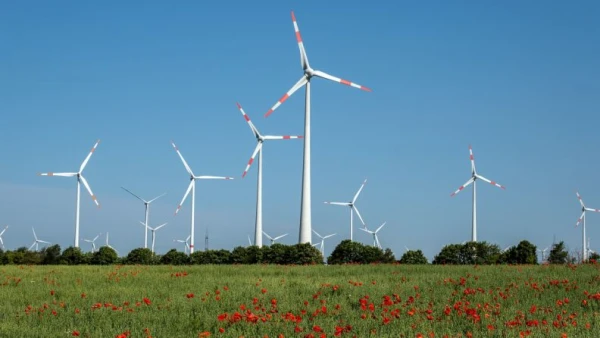
By 2030, the state could save nearly seven billion cubic meters of natural gas.
The German government has adopted an action program to mitigate the effects of climate change (German: Klimaschutzprogramm 2026), presented by Federal Minister for the Environment, Carsten Schneider. The program includes 67 measures aimed at further reducing CO2 emissions by more than 25 million tons by 2030. "This program will give a new impetus for climate protection, which will reduce our dependence on expensive and unreliable oil and gas imports," said Schneider.
In total, by 2030, Germany could save nearly seven billion cubic meters of natural gas and about four billion liters of gasoline. Upcoming tenders are planned to include approximately 2,000 more wind turbines than previously anticipated. A new subsidy program for the purchase of electric vehicles is also being launched, aimed at around 800,000 units, and additional support is provided for industrial enterprises transitioning to modern climate technologies.
Furthermore, 23 measures are aimed at restoring forests, peatlands, and soils for more effective climate change mitigation. An additional eight billion euros will be allocated for the implementation of all new initiatives over the next four years.
In the first half of 2024, the share of "green" electricity in Germany has already reached 58-61.5%, marking a record high in the history of observations. The foundation consists of onshore and offshore wind energy (over 38% in the first quarter of 2024), followed by solar energy (photovoltaics) and biomass. In eastern Germany and Hamburg, the share of renewable energy sources already covers about 75% of needs.












Leave a comment