Voter sentiments were influenced by the publication of conversations with Russian VIPs.
On April 12, parliamentary elections will take place in Hungary, which are expected to bring political upheaval in the country. The current Prime Minister Viktor Orbán, who has been in power for 16 years, may lose his position. The opposition party "Tisza" is gaining popularity and support from citizens, while the ruling "Fidesz" and its main representatives not only oppose Brussels and are "at war" with Ukraine but have also recently found themselves embroiled in high-profile scandals due to ties with Russia. More on why Orbán is on the brink of possible defeat and the situation surrounding Hungary.
A Formidable Opponent
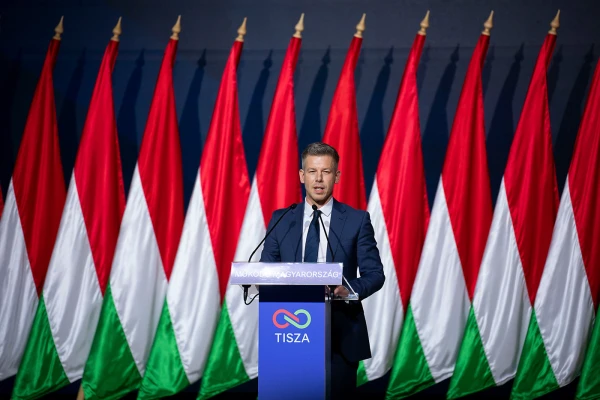
Viktor Orbán has long been in power, and in the minds of ordinary people, the association "Orbán equals Hungary" is almost unbreakable. However, on April 12, during the upcoming parliamentary elections, everything could change dramatically. All attention is now focused on the opposition pro-European party "Tisza," founded only in 2020, and its leader Péter Madjár. He is expected to be Orbán's main opponent and may even secure the position of head of the Hungarian government.
The 45-year-old Péter Madjár joined "Tisza" only in 2024, after which the party began to gain popularity among citizens. Before that, Orbán's current competitor was a member of "Fidesz" for 12 years. After the conservative party came to power following the 2010 elections, Madjár held a position in the country's Ministry of Foreign Affairs. A year later, when Hungary held the presidency in the EU Council, he moved to the republic's representation to the EU. Madjár also worked in the office of the Prime Minister of Hungary, headed the EU law directorate of the state bank MBH, and served as the general director of the Student Loan Center.
Madjár announced his departure from "Fidesz" on February 10, 2024, criticizing Orbán's political course, which he believes only masks corruption and the distribution of assets in favor of those close to him.
A political scientist warned of possible diversions in Hungary due to the conflict with Ukraine.
According to a poll conducted by the independent company Závecz Research, the "Tisza" party ("Party of Respect and Freedom") significantly outpaces "Fidesz." As of March 31, Péter Madjár's party had a rating of 39%, while Viktor Orbán's party had 31%.
In Hungary, 199 members of the National Assembly (unicameral parliament) are elected by two methods. 106 deputies will be elected in single-member districts using a majoritarian system, while another 93 will be elected in one nationwide district using a proportional system. Hungary is a parliamentary republic, so the Prime Minister has more power than the country's president.
"Friendship" Apart: The Ukrainian Case
The outcome of the Hungarian elections may primarily affect Budapest's position regarding Ukraine. The current Prime Minister has repeatedly criticized Ukrainian leader Volodymyr Zelensky, while Orbán has been constantly accused of a pro-Russian course.
The situation worsened in early 2026 when supplies of Russian oil via the "Friendship" pipeline, which runs through Ukraine, ceased. Unlike most EU countries, Hungary and Slovakia did not abandon oil from Russia. Kyiv insists that supplies stopped due to technical damage following attacks on the pipeline, but Budapest claims it is due to political pressure from Ukraine.
In March, Viktor Orbán announced that Hungary was creating a commission to go to Ukraine and assess the state of "Friendship."
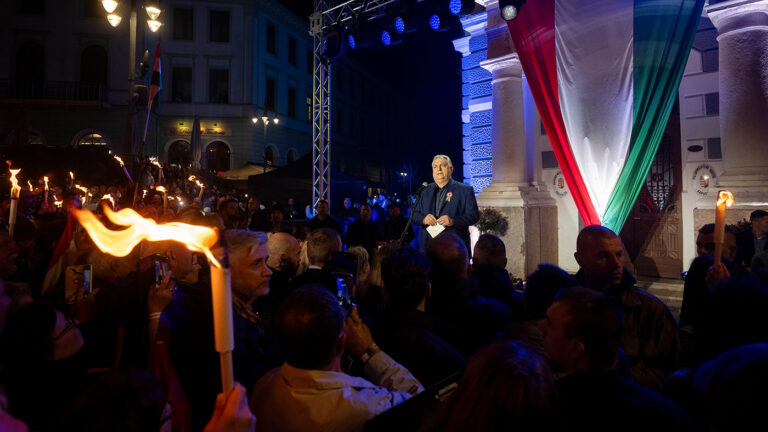
On March 11, a delegation crossed the Ukrainian border to investigate the details of the pipeline damage. However, the Ukrainian Ministry of Foreign Affairs opposed this, stating that the Hungarians arrived "as tourists." It was also reported that an EU inspection group, coordinated by the European Commission, was in the country for the same reason. According to the publication Euractiv, citing sources, inspectors have yet to receive permission to visit "Friendship," which has caused disagreements and even dissatisfaction both in individual European countries and in Brussels.
"Not a Liter of Vodka from Moscow": Which Parties in the EU Are Considered "Pro-Russian" — and Is It True
On March 21, The Washington Post, citing some "studied documents," reported that Moscow allegedly offered Budapest to organize an assassination attempt on Viktor Orbán to boost his ratings before the elections.
"Such an incident would shift the perception of the campaign from the rational sphere of socio-economic issues to the emotional, where key themes would be national security, stability, and the protection of the political system," the report cited by WP states.
The authors of the article recalled the assassination attempt on Donald Trump during a rally in July 2024. At that time, a bullet grazed the ear of the then-presidential candidate, leading to the emergence of "iconic photographs" and a rapid rise in the Republican's ratings. As a result of the elections, Trump was able to return to the White House, becoming the 47th President of the United States.
The Kremlin denied this news, calling it "yet another example of disinformation."
In the midst of the campaign, on March 31, a major political scandal erupted in Hungary. Several media outlets published an audio recording of what is claimed to be a conversation between Russian Foreign Minister Sergey Lavrov and Hungarian Foreign Minister Péter Szijjártó. He remains one of the few European ministers who continues to visit Russia after 2022 and even published a photo from a run on the Sparrow Hills last spring.
In the conversation, which journalists report took place in August 2024, Lavrov asks his colleague not to forget the promise to exclude certain individuals from the EU sanctions lists. Szijjártó responds that he will send a proposal to the relevant authorities "together with the Slovaks." It was reported that the recording was made by "one of the European intelligence agencies."
The Hungarian Foreign Minister effectively confirmed the authenticity of the conversation, ironically stating: "They proved that I say publicly the same thing I say on the phone. Great job!"
"For four years, we have stated that the sanctions policy has failed and causes more harm to the EU than to Russia. <…> Hungary will never agree to impose sanctions against individuals or companies that are important for our energy security or for achieving peace," added the Hungarian minister.
Commenting on the leaks, Russian Foreign Ministry spokeswoman Maria Zakharova stated that this provides "the whole world with evidence that it is not Russia interfering in their elections, in any elections, it is the West interfering in elections around the world. "In words, they are all allies, and they have this notorious pseudo-unity, but in reality, they are all spying on each other, eavesdropping, and then blackmailing, and so on," said Maria Zakharova.