
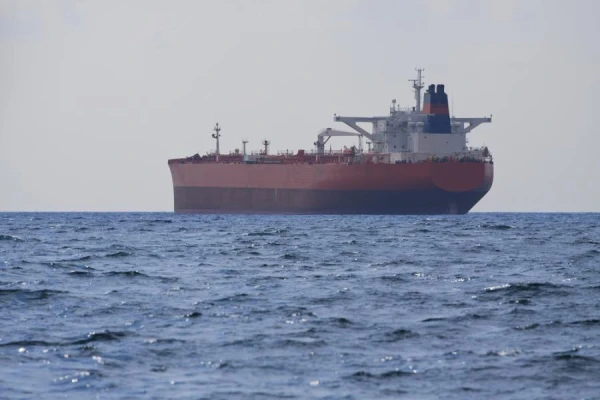
The price of Russian Urals oil reached $116 per barrel. This is twice the price set in the Russian federal budget, Bloomberg reports. However, oil export volumes from Russia are decreasing due to Ukrainian strikes on ports.
Amid the crisis related to the war between the U.S. and Israel against Iran, prices for Russian oil have reached a maximum in the last 13 years, Bloomberg reported on Tuesday, April 7, citing data from Argus Media.
Thus, the price of Urals crude oil, used as a price benchmark for Russian oil exports, reached $116.05 per barrel on April 2 at the port of Primorsk. This is double the price of $59 set in the Russian federal budget for the current year. The stated price does not include transportation costs, Bloomberg notes. At the port of Novorossiysk, the price of Urals oil reached $114.45 per barrel on April 7, according to Argus Media analysis.
Prices are rising, but export volumes from Russia are falling due to shelling
"Unexpectedly high oil revenues are easing financial pressure on the Kremlin, which continues its war against Ukraine," Bloomberg writes. The agency also reminds that the Ukrainian Armed Forces have recently been actively attacking the infrastructure in Russia for oil export and processing. In particular, this concerns ports on the Baltic Sea coast, through which about 40% of Russian oil produced at sea is exported. These attacks lead to disruptions in loading and a reduction in Moscow's revenues from raw material exports.
For example, the Baltic port of Primorsk, where a record oil price has been recorded, is subjected to powerful attacks. As previously reported by Finnish border guards, the volume of exports from there has sharply decreased, with only a few tankers approaching the terminal. Oil facilities in Novorossiysk are also regularly shelled.
Rise in global oil prices due to the blockade of the Strait of Hormuz
Due to Iran's blockade of the Strait of Hormuz, the volume of oil entering the global market has effectively decreased by 20%. Donald Trump demanded that Tehran lift the blockade, threatening to destroy key Iranian infrastructure if it did not comply. The deadline he set expires on the night of April 8.
"This evening, an entire civilization will perish, and it cannot be brought back. I do not want this to happen, but it probably will," Trump wrote on Truth Social on April 7. "However, since there has been a complete and total regime change, and now it is dominated by other, smarter, and less radical minds, perhaps something revolutionary and beautiful can happen. Who knows?" he added.
After the death of Iran's Supreme Leader Ayatollah Ali Khamenei, his son Mojtaba Khamenei became his successor in this position. Trump criticized this decision, calling Khamenei Jr. a "weakling," and his rise to power the worst scenario.







Leave a comment