
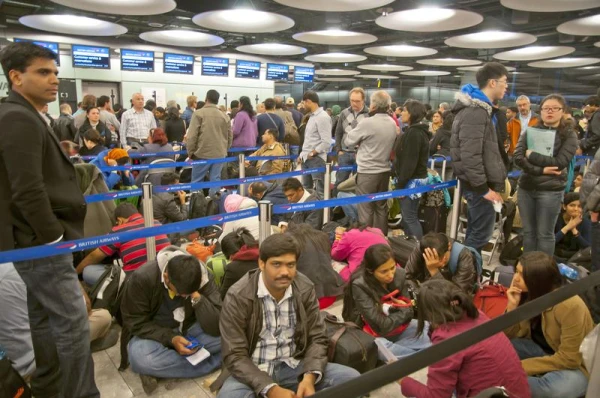
The new EES system will be fully implemented on April 10 and may significantly modernize control in the EU, but it will not be without initial disruptions.
Traveling to Europe in the coming days may change significantly. The EU Entry-Exit System (EES), which began phased implementation on October 12 last year in 29 European countries, will be fully operational starting April 10, 2026.
This means that passport stamps will be replaced by electronic entries for arrivals and departures, as well as for cases of denied entry for short-term travelers from non-EU countries.
Biometric data, such as facial images and fingerprints, and personal data from the travel document you use will also be recorded.
The new system is being introduced to modernize EU border and migration control, reduce crime and fraud, and detect security threats earlier.
According to the European Commission, since the system's implementation began, over 24,000 individuals have been denied entry due to expired or counterfeit documents or because they could not convincingly justify the purpose of their trip. More than 600 individuals have been identified as posing a security threat to Europe.
Planning a trip to Europe in the coming months? Here’s what you need to know.
Who does the EES apply to and who is exempt?
The EES applies to citizens of non-EU and non-Schengen countries traveling to Schengen zone or EU countries for short trips of up to 90 days within a 180-day period.
This rule applies, in particular, to citizens of the United Kingdom, as well as travelers exempt from the need for a visa, regardless of whether they are traveling for tourism or business. The system also affects property owners in EU countries if they do not have a residence permit.
However, Ireland and Cyprus are exempt from using the EES, where manual passport checks will still be conducted.
Certain categories of travelers are also exempt from the EES.
These include citizens of EU and Schengen zone states, as well as holders of long-term visas or residence permits from these countries, including citizens of third countries.
Additionally, family members of EU citizens who have a resident card from one of these countries, as well as local residents with valid small border movement permits, are exempt.
The system does not apply to members of train and air crews on international flights, as well as military personnel and their families traveling under the Partnership for Peace programs or for NATO purposes.
Separate exceptions may also apply for one-day stops of cruise ships that start and end outside the Schengen zone.
Citizens of Andorra, San Marino, Vatican City, and Monaco will also not have to register in the EES.
Will there be delays at airports due to the introduction of the EES?
In the first months of the system's full operation, significant delays at airports are likely to occur, despite the EU's promise to show flexibility in case of excessive summer queues.
"During peak hours, waiting times now regularly reach two hours, and some airports report even longer queues," stated the airport association ACI Europe and the airline association Airlines for Europe (A4E) in a joint statement (source in English).
One of the main reasons for the new delays is that starting March 31, all passengers from non-EU countries will be required to register in the EES.
Previously, border services could fully or partially suspend EES procedures during peak flow periods, but this option will disappear after April 10.
This means that after April 10, travelers will likely need to arrive at the airport about one and a half to two hours earlier than usual to account for possible delays due to the EES.
However, in the medium term, queues are likely to decrease as EES processes become more streamlined.
In the meantime, airport and airline associations continue to seek from the European Commission the right for border services to partially or fully suspend EES operations for the entire summer season of 2026.
Is a biometric passport required for the EES?
A biometric passport is not mandatory for using the EES; it is only needed for those who want to check in and go through control faster via self-service terminals.
Holders of regular passports will need to approach border control staff for initial registration and provide a photograph and fingerprints.
This data will be stored for three years, significantly speeding up subsequent checks. Travelers who refuse to provide biometric data will automatically be denied entry.
Children under 12 do not need to provide fingerprints, but they will also be photographed.
Do you need to register in the EES in advance?
Pre-registration in the EES is not required; all data is recorded upon crossing the border upon arrival in the EU.
The registration procedure depends on whether you have a biometric or regular passport, as described above.
For those who want to go through control faster, another option is available.
The official EU app Travel to Europe, created specifically to work with the EES, allows third-country citizens to upload a biometric photo and passport data in advance, 72 hours before arrival, to expedite border control.
However, it does not replace the mandatory conversation with a border service officer.
Currently, the app is available only in some countries, such as Portugal and Sweden, but it is planned to be rolled out across the EU in the future.
The app can be downloaded from Google Play and the Apple App Store, after which the user needs to fill out an entry form and take a selfie for identity verification.














Leave a comment