
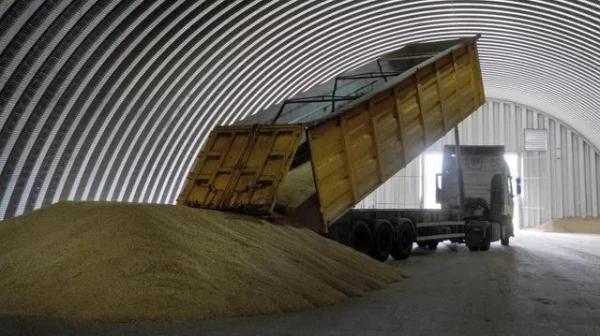
The UN reported a second consecutive monthly rise in global food prices. The conflict in the Middle East is driving up energy and fertilizer prices, threatening future harvests and yields despite stable market supplies.
The rise in energy prices amid tensions in the Middle East has led to an increase in global food prices - they have been rising for the second consecutive month, according to data published on Friday by the Food and Agriculture Organization of the United Nations.
The latest FAO index, reflecting monthly changes in global prices for a basket of food products, is now about 1% higher than in the same period last year. This shows that geopolitical tensions are raising production and transportation costs and are once again increasing pressure on global food markets.
"The main issue we are facing right now is the impact of the conflict on energy and fertilizers. That is, effectively, the (increased) cost of producing the next harvest, not the food we have today, but the food we need tomorrow and the day after," said David Georges Robert Laborde, director of the FAO's agricultural economics division.
Laborde warned that if the Middle Eastern conflict continues, it will affect farmers.
Since a significant portion of the world's fuel and fertilizers passes through the Strait of Hormuz, he noted that a long-term closure of the strait would force farmers to make difficult decisions regarding planting.
Energy Commissioner: "We Will Not Return to Normalcy with the Arrival of Peace"
"The more farmers are exposed to (higher prices), the less they will plant or they will use fewer fertilizers, and in this case, they may get a smaller harvest, which could lead to rising food prices," he said. "Up to a third of the fertilizers traded worldwide pass through the Strait of Hormuz. This is 20% of natural gas, and natural gas is actually used to produce fertilizers in countries that import natural gas."
The FAO's director of agri-food economics emphasized that the rise in global food prices is less than it was after the start of Russia's full-scale invasion of Ukraine in 2022 because markets remain well supplied after high harvests in major producing regions.
"Before the crisis, we expected a decline in commodity prices due to very good harvests in the U.S. and Asia, as well as high stock levels. That is why the current crisis is not leading to a sharp rise in prices, unlike in 2022 when the war in Ukraine began," he said.
Although the current situation is more stable, according to Laborde, uncertainty remains regarding future prices, "especially regarding the cost of fertilizers and the potential impact of El Niño, which could lead to droughts."










Leave a comment