
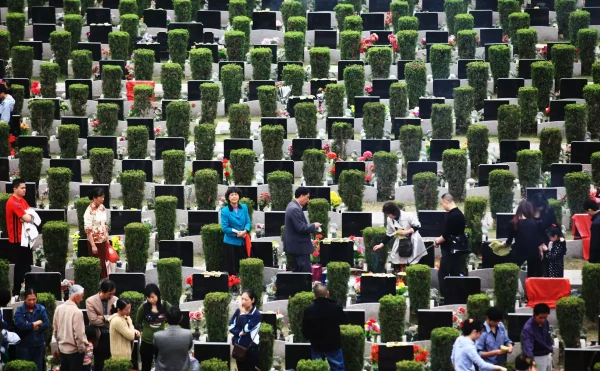
Authorities explained that using residential premises for storing ashes violates public order.
Chinese authorities have just made an unusual decision: citizens are now prohibited from conducting burials in multi-story residential buildings.
What is this about? Funerals in the PRC are far from cheap. In terms of funeral costs, the country ranks among the top five alongside the USA, Japan, Germany, and the Netherlands. On average, one has to spend 37,500 yuan (4,708.65 EUR), which constitutes 45% of the average annual salary in China. In Shanghai or Beijing, the cost can even reach up to 100,000 yuan (12,556.40 EUR). A similar amount is spent on renting a niche for an urn - and that for no more than 20 years.
At the same time, however, a collapse in the real estate market is occurring in the Middle Kingdom, leading to a decrease in housing prices. According to the National Bureau of Statistics of China, average apartment prices have dropped by almost 4% over the year, and in provincial towns, one can buy a small apartment for 30,000 yuan (3,766.92 EUR). It turned out that it is now more profitable to acquire extra square meters than to bury a person. Many Chinese have figured out that they can conduct a loved one’s final journey without leaving home. By purchasing an additional one-bedroom apartment, they turned it into a sort of family columbarium, storing urns with the ashes of the deceased there. There are also those who sell spaces for urns in such apartments much cheaper than in traditional funeral complexes.
Now, with the new version of the "Rules on Burial and Cremation" coming into force, such practices have been banned. Authorities explained that using residential premises for storing ashes violates public order, as well as the peace and moral-psychological state of neighbors. As an alternative, it has been proposed to reinter the ashes under trees or scatter them over the sea. There is even a possibility of providing a subsidy for this procedure.
However, many experts have received the new law with skepticism. They say it won’t work: families, especially those with pronounced clan traditions and owning multiple properties, will try to circumvent the ban. But in the PRC, as is known, control is strict. And a cheap "home cemetery" subject to fines can become super expensive.














Leave a comment