Global investments in infrastructure — dams, reservoirs, and desalination plants are increasing.
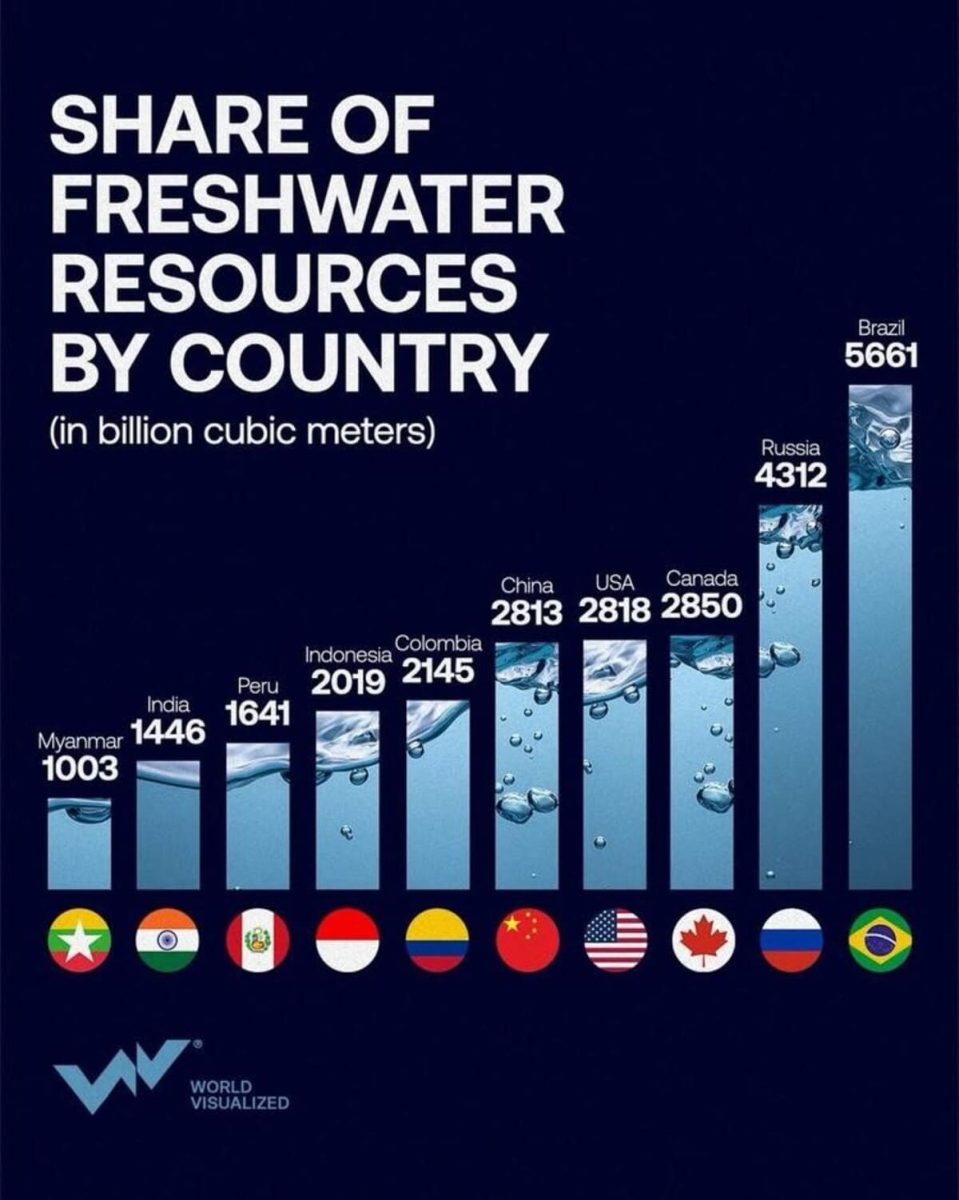
Brazil has the largest freshwater resources in the world, followed by Russia — this highlights the stark imbalance in global water distribution at a time when water scarcity is becoming an increasingly serious issue for policymakers and governments.
According to World Bank data, Brazil has approximately 5,661 billion cubic meters of freshwater, making it the most "water-rich" country. Russia ranks second with about 4,312 billion cubic meters, while Canada, the United States, and China also rank among the leaders in freshwater resources.
The concentration of significant water reserves in a limited number of countries points to a growing global problem: in some regions, water is abundant, while in others — often where demand is highest — it is critically lacking.
Following Brazil and Russia are Canada (approximately 2,850 billion cubic meters), the United States (about 2,818 billion cubic meters), and China (around 2,813 billion cubic meters).
Next on the list are Colombia (2,145 billion cubic meters), Indonesia (2,019 billion cubic meters), and Peru (1,641 billion cubic meters), reflecting the important role of tropical climates and major river systems in providing water resources.
India, despite having significant total freshwater reserves — about 1,446 billion cubic meters — experiences acute water stress due to its large population and growing demand. Myanmar, with 1,003 billion cubic meters, is also among the countries with the largest absolute reserves.
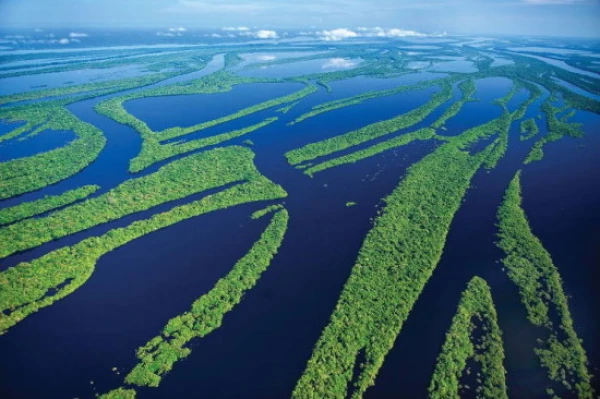
However, even countries with large resources can face local shortages due to uneven water distribution or a lack of infrastructure for storage and purification. For instance, in Brazil, most of the freshwater is concentrated in the Amazon Basin, far from major cities like São Paulo.
Similarly, despite Russia's vast reserves, a significant portion is located in sparsely populated Siberia, limiting water availability for industry and cities.
The World Bank warns that if current trends continue, by 2030, global water demand could exceed supply by 40%. The main factors are population growth, urbanization, and agricultural expansion.
Climate change further exacerbates the situation, affecting precipitation patterns and increasing the frequency of droughts in regions already experiencing water shortages — such as South Asia, the Middle East, and parts of Africa.
China and India, among the countries with the largest absolute freshwater reserves, are also among those experiencing the most water stress per capita — reflecting pressure from their large populations and rapid industrialization.
More governments are viewing water resource management as a strategic task. Investments in infrastructure — dams, reservoirs, and desalination plants — are increasing, as are efforts to improve water use efficiency in agriculture, which accounts for about 70% of global freshwater consumption, according to World Bank data.
<iframe width="560" height="315" src="https://www.youtube.com/embed/on2RSm88okQ?si=CW_pz86jljHRji2g" title="YouTube video player" frameborder="0" allow="accelerometer; autoplay; clipboard-write; encrypted-media; gyroscope; picture-in-picture; web-share" referrerpolicy="strict-origin-when-cross-origin" allowfullscreen></iframe>