
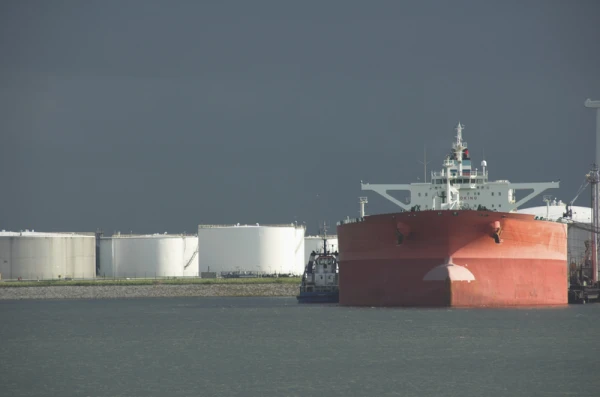
The rise in oil prices due to the war between the U.S. and Israel with Iran has sharply increased the revenues of the Russian budget. The U.S. has lifted restrictions on 100 million barrels of Russian oil.
The sharp rise in global oil prices amid the war between the U.S. and Israel against Iran is bringing the Russian budget about $150 million in additional revenue daily, The Financial Times (FT) reported on Thursday, March 12, citing calculations from industry analysts. According to their estimates, by the end of March, Russia could receive a total of $3.3 to $4.9 billion in excess revenues, assuming the average price for Russian oil grades is between $70 and $80 per barrel. For comparison, in February, it was around $45.
Sumit Ritoli, a leading analyst at Kpler, called Russia the "main winner" in the new war in the Middle East. Kirill Dmitriev, the special representative of the President of Russia, commented on the FT publication on the social network X, stating that what is happening is "only the beginning of the largest energy crisis in history."
Easing of Restrictions Against Russia
Following the FT article, U.S. authorities announced a temporary easing of sanctions on Russian oil imposed due to the war in Ukraine, allowing shipments if oil and petroleum products were loaded onto vessels before March 12. According to Kpler, as reported by The Bell, as of March 6, there were about 130 million barrels of Russian oil on tankers, a significant portion of which was delayed in transit due to sanctions.
Dmitriev clarified that the lifting of all U.S. restrictions applies to about 100 million barrels of Russian oil that are in transit.
Global Oil Prices Remain High
Despite the U.S. allowing the purchase of Russian oil, the situation in the energy markets remains tense. On Friday, March 14, the prices of North Sea Brent crude oil slightly decreased and continue to hover around the $100 per barrel mark. The American WTI grade fell by 0.8 percent to $94.93 per barrel. Over the week, Brent and WTI rose by nine and seven percent, respectively. Since the beginning of the war against Iran, fears of long-term supply disruptions have pushed prices up by more than 40 percent.
In an effort to ease turbulence in the oil market, the U.S. Department of Energy announced on March 11 the release of 172 million barrels from the strategic reserve - as part of a collective agreement among 32 countries that are members of the International Energy Agency (IEA) to release a total of 400 million barrels onto the market.
However, experts doubt the effectiveness of these measures. According to LSEG analyst Emril Jamil, these are short-term solutions that do not address the supply problem. Haitong Futures analyst Yang An considers the restoration of normal shipping in the Strait of Hormuz to be more important. The near-complete halt of shipping in the strait between Iran and Oman amid the war has been the main reason for the sharp rise in oil prices. About one-fifth of the world's oil supply passes through the Strait of Hormuz.














Leave a comment