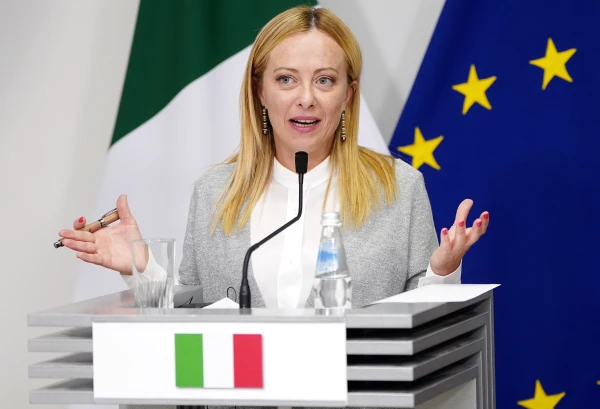
Italian Prime Minister Giorgia Meloni, commenting on the situation in the Middle East, stated that the U.S. and Israel's operation goes beyond international law.
Italian Prime Minister Giorgia Meloni clarified the government's position regarding the ongoing conflict in Iran and the Middle East region. She confirmed that Italy does not intend to participate in it, and that the executive branch, while maintaining contacts with leaders of the Gulf countries, is working towards de-escalation.
Meloni also discussed the current coordination of actions with Germany, France, and the United Kingdom regarding the movement of vessels through the Strait of Hormuz and the impact of the situation on trade and energy.
Particular attention in her speech was given to the use of military bases, which, as she explained, like in the case of other European countries, is regulated by international treaties.
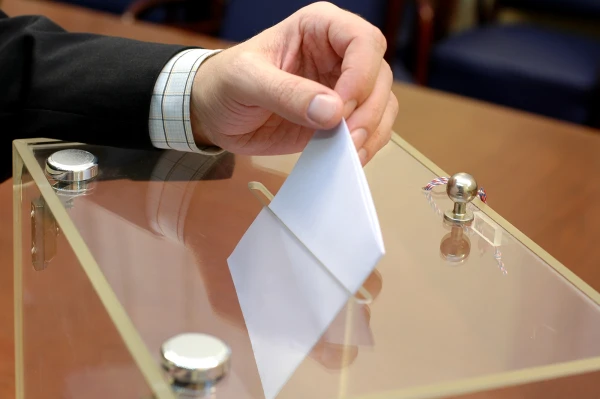
At the end of the debates in the chamber, with 102 votes in favor, the Senate approved the majority resolution, as reported by the Prime Minister.
Use of Military Bases "Only by Agreement"
In her address to the Senate, Meloni defined Italy's position regarding the U.S. and Israeli military operation against the Iranian regime, placing it in an international context. The head of government noted the increase in "unilateral interventions conducted outside the framework of international law."
The Prime Minister, however, excluded any participation of Italy in the conflict: "I want to say right away, to avoid misunderstandings, Italy is not participating and does not intend to participate."
Meloni also reiterated that Italy will continue to adhere to existing agreements regarding the use of military bases on national territory.
"I believe that all European partners adhere to what is stipulated in the agreements," she said, reminding that the Spanish government also confirmed that "outside of a bilateral agreement with the United States, the bases will not be used."
Any other requests, she noted, will be considered in accordance with institutional procedures: "The decision in such a case will be made by Parliament," and at present, "no requests have been received."
Condemnation of the Mass Killing at the Minaba School
In her speech, Meloni also firmly condemned the attack on the girls' school in Minaba, southern Iran. As a result of the attack, dozens of schoolgirls were killed.
"On behalf of the government, I express my strong condemnation of the mass killing of girls that occurred at the school in Minaba," she said, expressing solidarity with the families of the young victims.
Meloni also demanded that light be shed on this incident as soon as possible, to identify those responsible for the tragedy, and called for the protection of civilians during military operations.
Strait of Hormuz
Giorgia Meloni confirmed that discussions regarding the situation in the Strait of Hormuz are ongoing. In recent days, the Italian government has intensified diplomatic efforts with its European partners, including France, Germany, and the United Kingdom.
One of the most delicate dossiers concerns the security of the strait, a strategic hub for global energy transportation. According to reports from Downing Street, the leaders agreed on "close cooperation" to ensure freedom of navigation in this area.
Among the options being discussed is the possibility of guaranteeing military protection for vessels passing through the strait. However, the government in Rome wants to avoid making any abrupt moves on this topic.
"In recent days, we have communicated several times with Chancellor (of Germany) Merz, Prime Minister Starmer (of the United Kingdom), and President (of France) Macron," Meloni said, "to exchange assessments on the development of the crisis and to coordinate appropriate national response measures in the face of global consequences both economically and in terms of security, including energy and food security. We intend to maintain this connection to timely calibrate common strategies and spare no effort, in agreement with regional partners, in promoting initiatives to restore stability in the region."
Guido Crosetto: "A Multilateral Approach is Necessary"
Defense Minister Guido Crosetto emphasized that the crisis in the Strait of Hormuz goes beyond national borders and affects the entire global economy. "The Strait of Hormuz is a global problem that will affect all world economies," he said in the corridors of the Senate meeting, explaining that the strait is crucial for the transit of energy sources and goods, especially for China, more than for Italy or the European Union.
Furthermore, Crosetto stressed the need for a multilateral approach: "It is not an Italian ship that will solve the problem in the Strait of Hormuz, but Italy, which could become one of the players uniting the forces of the whole world to address the issue related to the possibility of importing energy sources from around the world."
According to the minister, the solution must be found using international tools, such as the UN and other multilateral mechanisms, emphasizing that this issue is one of the first opportunities to revive the multilateral approach that has often been neglected in recent years.