Russia's economy has exhausted its growth potential. The results of 2025 indicate the beginning of stagnation. Some Russian business media recently expressed such assessments. DW spoke with economics professor Igor Lipsitz about what is happening with the finances of Russians four years after the start of the full-scale war in Ukraine and whether the government has managed to reorient trade from the EU to Asian countries.
There Are No Grounds to Expect an Economic Revival in Russia
Against the backdrop of ongoing negotiations for a possible ceasefire between Russia and Ukraine, the question arises about what will happen to the sanctions. According to Igor Lipsitz, even in the most favorable scenario, there are currently no grounds to expect a revival of the Russian economy, as quoted by Deutsche Welle. "Russia has lost a significant number of active qualified personnel - from 600,000 to 1 million people," he says. For serious economic growth, prepared specialists are needed, not low-skilled labor engaged, so to speak, in snow removal. Therefore, with such a personnel shortage, it is difficult to talk about full-fledged growth. Moreover, the rupture with Europe, which possesses technologies and competencies, is a fatal problem for Russia.
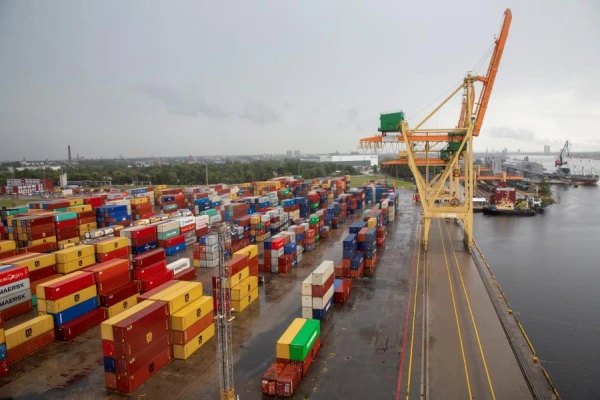
Throughout modern history, the EU has been Russia's main trading partner. After the start of the full-scale war against Ukraine, the authorities began to talk about a "great pivot" and a reorientation towards the East - primarily towards China. However, according to Igor Lipsitz, no serious preparations for global changes were actually made until February 24, 2022. The transition was largely shock and situational.
"The reorientation towards the East was, of course, urgent and largely emergency in nature. And, in essence, it did not work out very well. Russia cannot fully replace Europe and other developed countries with China. China is primarily not interested in developing the Russian economy," the scholar believes.
European Companies Changed Business Culture in Russia
European companies - unlike Chinese ones - came to Russia with different approaches to interaction. They changed both the structure and the corporate culture of business, notes the economist.
"Look, for example, at Kaluga - until recently, it was a fairly quiet and not wealthy city near Moscow. European car manufacturers came there, and the city changed," says the DW interlocutor. "I myself went there to give lectures - it was already a completely different city. Car factories, Volkswagen and other enterprises. A different atmosphere, different people. Even the expressions on people's faces were different: people earned well, worked in modern production. There was a feeling of a kind of European outpost near Moscow. Now these companies have left, and Chinese manufacturers are not building factories. They supply finished cars but do not invest in creating production capacities. There were attempts by the Russian government to negotiate, but the Chinese side responds politely, showing no real interest in localizing production."
Igor Lipsitz is convinced that neither Putin nor his inner circle believed that Western companies would begin to independently curtail cooperation and close enterprises. "What was the idea? Europe is weak, Europeans are greedy, selfish, they will not refuse our oil and our gas. It is not profitable for them. This was a deep conviction, I have no doubt. That is, Putin simply did not expect such a long war and such a sharp reaction from the West," notes the economist.
The Country of 'Pre-Poor'
According to Rosstat, the share of residents with incomes below the poverty line is 6.5%. Igor Lipsitz believes that about 10% of Russians can be classified as poor, although the actual situation is even worse.
"In Russia, there is a special term, quite amusing - 'pre-poor'. These are people who seem to be able to find money for food but can hardly buy anything other than food. Therefore, we see that even overall food sales in the Russian market are starting to decline, as well as non-food goods. For clothing and footwear, the decline is almost a third over several years. Previously, Russians bought an average of about 16 items of clothing a year, including underwear. Now it is about 11. People simply wear old clothes, do not update their wardrobes because they have no money. It is especially hard for those with children - the situation there is almost catastrophic," notes the scholar.
According to a study by the Higher School of Economics, about a quarter of the population of Russia falls into the 'pre-poor' category.
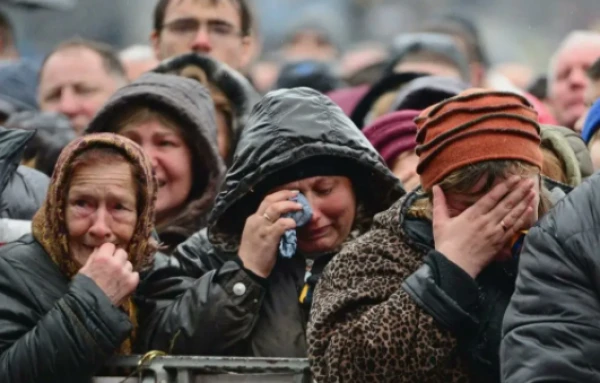
A Significant Portion of Russians is Becoming Practically Destitute
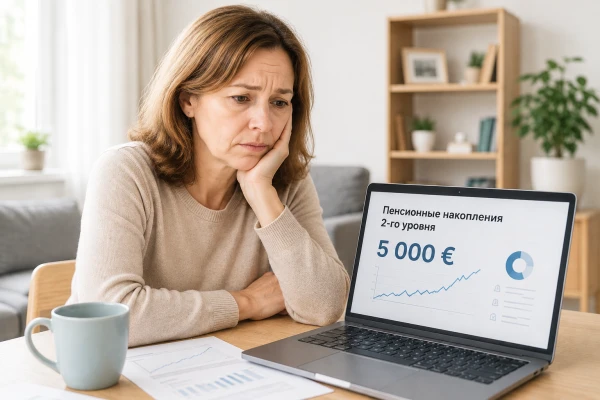
"Even food sales are declining. Overall, the market is shrinking, and there can be no growth. And when prices are also rising, there is a feeling of hopelessness. That is why at the beginning of the year, a spontaneous flash mob appeared: people are posting videos about the high prices they encounter in stores," says Lipsitz. "The situation with medicines is even worse. For example, a pensioner wrote to me: 'How can I live? My pension seems not small - 21,000 rubles. But housing and utilities consume almost everything, even with benefits. For everything else - 7,000 rubles, while medicines cost about 8,000. How to live? Either medicines or food. Without support from children, it is impossible to get by.' And this is a problem for many, and it is practically unsolvable because there can be no significant increase in pensions in Russia right now."
The economist explains this by saying that the federal budget currently has a "huge deficit." At the end of 2025, it amounted to 5.7 trillion rubles. That is, from Russia's budget of 36 trillion, almost every sixth ruble was a deficit.
"Therefore, finding money for regular pension payments will become increasingly difficult. No one will raise them, while the cost of living is steadily rising, and no one is looking out for pensioners. As a result, a significant portion of the population is becoming not just poor, but actually destitute. This is what is happening in Russia right now," concluded the economist.