Four presidents were removed from office through impeachment procedures, while two preferred to resign.
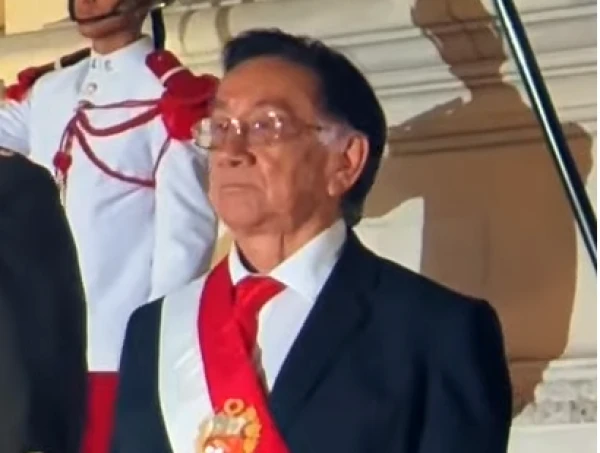
The Parliament of Peru has elected José María Balcázar as the interim president of the country. Following the resignation of José Gerí, who was accused of corruption, he has become the eighth head of state in the last decade, reports France 24.
The parliamentarian was elected as the Speaker of Congress following a vote that was broadcast live. According to the current procedure, the Speaker of Parliament temporarily leads the country, so Balcázar automatically assumed the position of head of state.
Eighty-three-year-old José María Balcázar is a lawyer by education and a former judge. He has become the eighth president of Peru since 2016. His election ended a power vacuum of more than a day—a situation unprecedented in the recent history of the country.
Balcázar will serve as head of state until July 28—the day when a new president will take office. His election will take place on April 12. The previous interim president of Peru—39-year-old José Gerí—became yet another victim of a protracted political crisis. For several years, the country has been experiencing a standoff between a strong Congress and a weakened executive branch, all against a backdrop of chronic corruption scandals and rising violence.
On Tuesday, the parliament voted to remove him from office. The reason was suspicions that several women were appointed to government positions under his administration in violation of procedures, as well as possible corruption ties with a Chinese entrepreneur.
The next day, Gerí published a video address on TikTok, stating that "serving Peru has been and remains an honor" for him. "It is not easy to solve problems that have accumulated over decades in just a few months. But everything we did, we did with conviction, responsibility, and dedication," he added.
Gerí continues to insist on his innocence. However, for many Peruvians, yet another political crisis changes little in their daily lives, which are becoming increasingly unstable.
Over the past ten years, Peru has seen seven leaders change. Four presidents were removed from office through impeachment procedures. Two others preferred to resign to avoid a similar fate. Only one managed to complete the full term.
Gerí himself took office as interim president following the impeachment declared last October against Peru's first female president—Dina Boluarte. Her resignation occurred amid mass protests triggered by corruption scandals and a surge in violence linked to organized crime groups.
Upon taking office, Gerí implemented strict measures to combat crime. This policy received support from part of society; however, it was not enough to keep him in the position of head of state.
On Wednesday, in a statement published on TikTok, he again spoke about the need to "strengthen security as the foundation of a country with order and a future."
Meanwhile, he himself risks becoming a subject of a criminal case. The prosecution is currently conducting an investigation to determine whether Gerí interfered in personnel appointments. This follows reports that nine women were appointed to positions in the presidential administration and the Ministry of the Environment bypassing established procedures.
Additionally, he is accused of secretly meeting with a Chinese entrepreneur who collaborated with the state. The investigation is looking into whether the official used his position to promote the interests of a specific private individual or company.
Besides Balcázar, three other members of Congress were contenders for the position of interim president: former Speaker María del Carmen Alva, socialist veteran Edgard Raimondo, and politician Héctor Acuña, whose party was also involved in corruption scandals.
While politicians are sorting out their relationships and dividing power, the country is living in different realities. Peru has been swept by a wave of extortion, which has already led to several deaths. This is compounded by high post-pandemic poverty, unemployment, and the strengthening of criminal groups, including the Venezuelan "Train of Aragua."
At the same time, as political analyst Augusto Álvarez notes, "there are no guarantees that whoever replaces Gerí will be able to hold onto power until July 2026."