
The Communist Party is losing control, but there is no need to fear Trump's invasion.
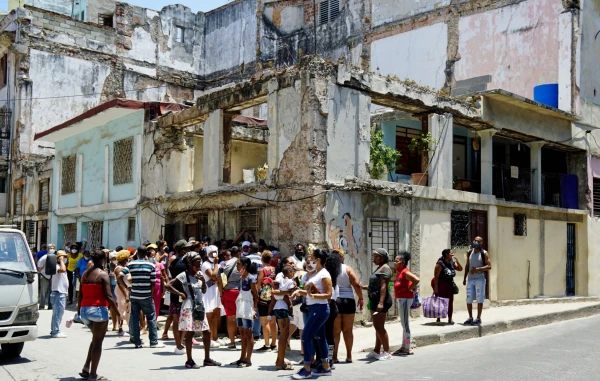
At the end of January, U.S. President Donald Trump declared a state of emergency due to alleged national security threats emanating from Cuba. Subsequently, Washington initiated an oil blockade of the country, achieving an almost complete cessation of fuel supplies to the island. This paralyzed key sectors of life in Cuba and brought it to the brink of a humanitarian disaster. Meanwhile, U.S. Secretary of State Marco Rubio, born to Cuban immigrant parents, does not hide that the goal of the pressure on Cuba is regime change.
As noted by Corresponding Member of the Russian Academy of Sciences Vladimir Davydov, Cuba, under extremely serious and constantly increasing external pressure, is trying to adapt its socialist model to the capitalist world. According to him, Havana is currently in a critical situation, and Trump, seeing this, calls the republic a "failed state."
"Immediately after the victory of the Cuban revolution, its participants said they went to the barricades not because they wanted to seize American property, but because they were tired of the American mafia that had taken over their country... Of course, it is impossible to live on revolutionary romance alone for 60 years, and today's Cuban youth is not like the one back then. Overall, today's events are painfully experienced by Cuban society," Davydov said.
At the same time, local authorities were afraid to repeat the experience of Russia, which went through radical reforms, and therefore chose the path of slow transformation, thus missing a relatively favorable period during Barack Obama's second presidential term.
"Today, Cuba is in a dire situation. Without external assistance, it will not cope with the problems that have beset it. At the same time, Trump has cut off those countries that were ready to help it... One way or another, Cuba is moving towards changing its political face. The Communist Party still controls the situation, but 1.5 million locals are already not covered by party structures. Accordingly, in the future, an organization may emerge in Cuba that will represent their interests," Kalashnikov noted.
Everything is complicated by the fact that the Cuban opposition is fragmented and mostly either abroad or in prison, says Chief Researcher at the Institute of Latin America of the Russian Academy of Sciences Zbigniew Ivanowski:
"In 2021, there were mass protests, but overall, the demonstrations are local in nature. At the same time, the shortage of oil and electricity against the backdrop of Trump's decisions is just one component of the crisis. For example, according to the Cuban Economy Institute, in 2025, Cuba's GDP decreased by 5%, and in total over the last few years after COVID – by 15%. Meanwhile, prices for goods that are freely sold are comparable to those in Moscow, while the average salary is about 30 dollars. Against this backdrop, society has split in its attitude towards the U.S. According to some estimates, up to 70% of Cubans have relatives in America and receive remittances from there. Of course, they do not want Washington to interfere in their country's internal politics, but they cannot ignore the financial assistance either. It should also be noted that in the last two years, as many people have left Cuba as in the previous 60 years – up to 2 million people," Ivanowski reported.
At the same time, by Latin American standards and considering the size of the island, Cuba has a fairly strong army. Its strength is about 50,000 people, and it plays a significant role in the economy. "If Washington and Havana start negotiations, it is unclear what role the Cuban military will play in them," Ivanowski warned.
According to Senior Researcher at the Institute of Latin America of the Russian Academy of Sciences Magomed Kodzoev, Cuba was ready for dialogue with the U.S. as early as the early 1990s. In particular, he recalled that Fidel Castro, from the podium of the UN, offered Washington to end the hostility, as the imaginary communist threat disappeared with the collapse of the USSR. But at that time, the U.S. thought that the Cuban regime would soon self-destruct, so there was no need to talk to it.
"Over time, American elites have formed two poles. Some believe that sanctions do not work, so they need to be strengthened, while others think it is time to normalize relations. Trump is on the side of those who think they need to push harder... For its part, the top leadership of Cuba has made numerous visits to Russia, EU countries, and other states to mitigate American pressure, and until the end of the 2010s, this policy yielded results. But today, Cuba cannot find its place in international relations," Kodzoev said.
Nevertheless, it would be a mistake to think that Cuba is in international isolation and is just waiting for the U.S. to deal with it. Experts noted that Latin American leftists sympathize with the Island of Freedom – this is about 45% of voters in South America. In addition, economic cooperation with Havana is being strengthened by China and Vietnam. The Chinese are working on restoring the sugar industry, while the Vietnamese are focused on rice production.
Overall, experts are confident that U.S. oil sanctions represent the maximum of their capabilities. If Cuba can survive this "ninth wave," it will certainly cope with all other challenges. There are prerequisites for this: the island already independently provides 30-40% of its oil, and, with China's support, solar energy is actively developing. In addition, experts do not seriously consider the scenario of an American military invasion, as it would harm all countries in the region, including the U.S.


Leave a comment