The economy of Cuba has faced insurmountable difficulties.
Throughout the year?
Donald Trump claims that the communist government of Cuba, having lost key oil supplies from Venezuela, will not survive 2026. No one knows whether the U.S. will launch a military strike against Cuba, and in what other ways they will continue to pressure the Cuban regime. Until now, Cuba, an ally of Moscow, along with Venezuela and Nicaragua, has been the main opponent of the U.S. in Latin America, primarily ideologically. However, after the capture of former Venezuelan leader Nicolás Maduro, Havana has found itself in a desperate situation and is experiencing the worst period in its 67-year history of communist rule.
Although in past decades Cuba has repeatedly faced waves of mass emigration, a complete lack of basic goods and services, and sporadic mass unrest, never before have Cubans experienced such a comprehensive collapse of their entire socio-economic system.
Shortly after the capture of Nicolás Maduro by American special forces in Caracas and statements from his successors about their full readiness to comply with all Washington's demands, Donald Trump stated that "the days of Cuba are numbered" and that his administration is now focusing closely on this island nation in the Caribbean, where the ruling and only permitted political force remains the Communist Party.
At the same time, the U.S. president says he does not see the need for an American military operation in Cuba, as, according to him, the local government will inevitably collapse on its own: "I don’t know if they can hold on, but Cuba has no income now. All the money they received was from Venezuela, from Venezuelan oil."
People close to Donald Trump are known as supporters of the toughest line against Cuba, starting with Secretary of State Marco Rubio, an American of Cuban descent, who, during his time as a senator, was characterized by extreme hostility towards official Havana. Rubio has repeatedly expressed confidence that a regime change in Venezuela would deal a deadly blow to the regime in Cuba – which, according to him, would be the most desirable outcome for him.
Hunger and Poverty of Cubans
Cuba's gross domestic product, according to official data, has fallen by more than 6 percent. Hunger, inflation, and poverty have reached a peak. The average real monthly salary of most of the population (in Cuban pesos, CUP, whose exchange rate is continuously devalued) hovers around 4200–5800 pesos. At the market rate (which is much higher than the official one), this amounts to approximately 16–30 U.S. dollars per month. The minimum wage is set at 2100 CUP, which is equivalent to about 8–15 dollars at the real exchange rate.
The income of the average pensioner in the country is estimated by independent calculations to be about 10 U.S. dollars per month, or about 3,000 Cuban pesos. More than 40 percent of Cuban pensioners receive the minimum pension – 1528 pesos per month (5–6 dollars).
At the same time, prices for basic food products, such as rice, beans, oil, eggs, and meat, reach astronomical values regardless of where they are sold: in state stores (by ration cards), "special stores," or in markets and small semi-legal private shops. In this regard, there have always been two realities in Cuba – stores trading in hard foreign currency, and previously in so-called "currency pesos," which sometimes foreigners can access, and the general state rationing system stores "Libreta." Formally, rice, sugar, or oil cost pennies here – however, they are either simply never available, or their availability is extremely limited. And even with money, it is impossible to buy natural cow's milk or beef in a regular store — these products are only found in "currency" special stores of the "MLC" network.
In Havana, half a kilogram of rice today costs between 350 and 375 CUP, a loaf of bread – 300-450 pesos, a pack of 30 eggs – from 2700 to 3500 pesos, and half a kilogram of pork over 1000 CUP. Previously, the most accessible and cheapest products, such as sweet potatoes and bananas, have increased in price almost tenfold over the past two years. Almost all Cubans in recent years receive basic food through ration cards – rice, beans, flour – the limits of which last for a maximum of 10 days. However, now even these cards have become practically useless, as any products in state stores appear extremely rarely.
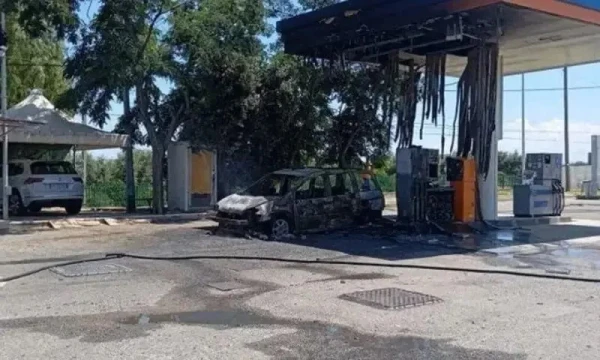
To buy a maximum of 10 liters of super-scarce gasoline or diesel, people need to sign up for a queue at gas stations through a special online application – at least three weeks in advance. The streets of cities are literally littered with garbage, as the lack of fuel has led to irregular waste collection. This, in turn, has caused outbreaks of tropical diseases transmitted by mosquitoes, such as dengue and chikungunya. Almost no medicines can be purchased without relatives abroad who could send them.
Cuba in Darkness
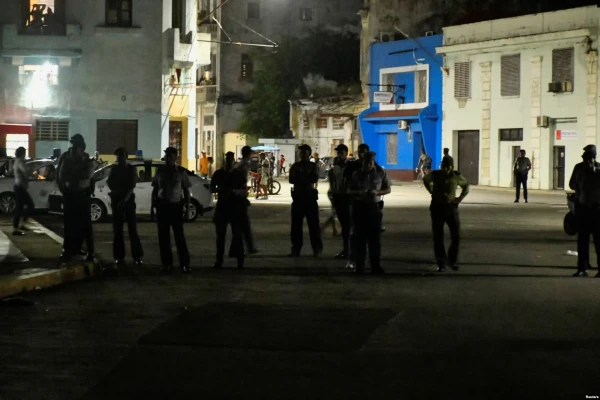
Power outages occur daily in Cuba, especially in the provinces, where electricity can be absent for up to 20 hours a day – and the main reason for this has been the complete cessation of vital supplies of Venezuelan energy resources. More than 20 years ago, then-President of Venezuela Hugo Chávez struck a deal with his ideological ally Fidel Castro for oil supplies and assistance to Cuba in maintaining its viability, although the volume of these supplies has noticeably decreased over the years. When Hugo Chávez was president, he provided Cuba with about 90,000 barrels of oil per day. In the last quarter of 2025, Cuba received only 35,000 barrels.
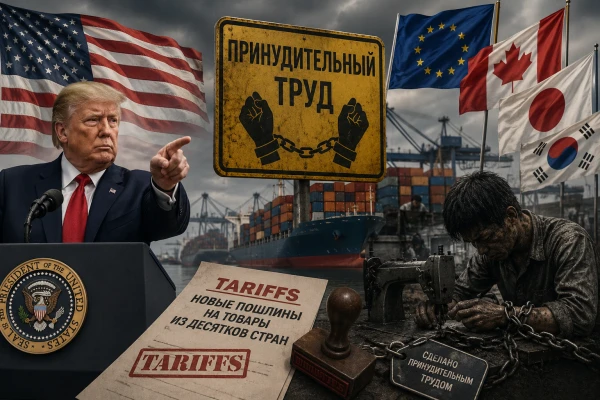
Cuba compensated Venezuela for this assistance by sending a large number of its doctors, nurses, and other specialists there. Officers of the Cuban special services also made up the backbone of Nicolás Maduro's personal security, and thirty-two of them died during the American operation to capture him in Venezuela. But after this raid, Donald Trump stated that oil supplies from Venezuela to Cuba would be completely halted. "NO MORE OIL AND MONEY WILL COME TO CUBA — ZERO! I strongly recommend they make a deal WHILE THERE IS STILL TIME," Trump wrote on his Truth Social network, additionally announcing the imposition of large additional tariffs against any country supplying oil to Cuba.
Almost all Cuban power plants have operated on practically free Venezuelan oil in recent years – and the government in Havana now has no alternative. Furthermore, Cuba has still actively resold Venezuelan energy resources on international markets – thus obtaining hard currency critically needed to purchase basic goods for the population, medicines, and food.