America is more concerned about Iran's nuclear program, while Israel is focused on missiles and support for satellites.
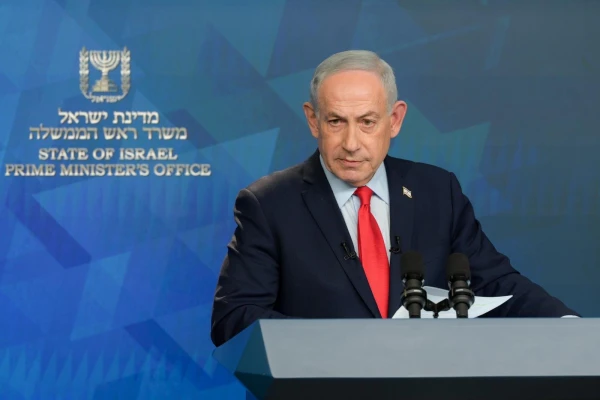
Israeli Prime Minister Benjamin Netanyahu reposted a video on TikTok that describes possible U.S. Navy strikes on Iran involving the aircraft carrier Abraham Lincoln and its strike group, currently deployed in the Arabian Sea.
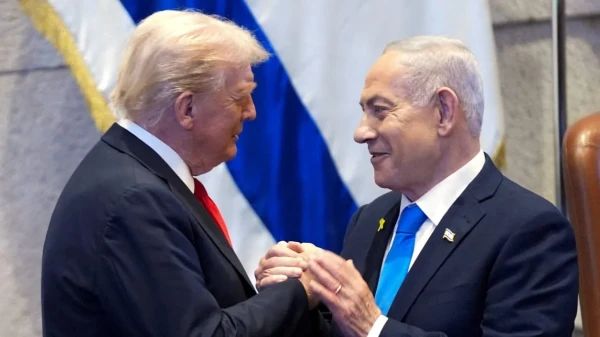
The politician made an urgent visit to the U.S. to, as reported by the media, try to convince U.S. President Donald Trump to abandon negotiations with Iran and attack the country. Israeli authorities allegedly informed the Americans that they are even prepared to strike independently.
Netanyahu was compelled to fly to the U.S. earlier than planned due to statements from the American president that negotiations with Iran are going very well. Recall that the Americans demand that Iran abandon its missile and nuclear programs, as well as reduce the activity of its proxy forces in the Middle East region.
Possible action scenarios were discussed by Newsru.co.il with military expert David Hendelman.
-Benjamin Netanyahu is flying to the U.S., the main issue is Iran. What to expect from this visit?
In the Iranian issue, it is necessary to separate what can be seen and touched from what is behind the scenes. We see the continued buildup of American forces, preparation for an operation. The Israeli army is also increasing its combat readiness. As for the behind-the-scenes part of the process, one can recall June 2025, when there was much talk about disagreements between the U.S. and Israel, about the Americans' disagreement with an Israeli strike, about the fact that there would be another round of U.S.-Iranian negotiations on Sunday, which coincided with the wedding of Avner Netanyahu. However, the Israeli strike was carried out on Friday.
So right now we are engaging in speculation. The simplest version is that Netanyahu is flying to sway Trump to his side, as there is a danger that the American president may agree to terms during negotiations with Iran that Israel does not accept. But Israeli-American negotiations could also be about the military operation itself – with both Israeli and American participation. It is not a fact that what is being presented as the main topic is indeed the main topic. It is clear that it is Iran, but we do not know whether Netanyahu will be persuading Trump not to agree to Iranian conditions, or if this will be a deeper coordination on a specific issue.
-What are the disagreements between the U.S. and Israel?
From what is visible from the outside, Trump is primarily focusing on negotiations regarding the nuclear issue. Israel wants to bring the missile issue and the issue of support for proxies to the agenda. Regarding the missile issue, options have been discussed in the press to limit the range of Iranian missiles to 300-500 kilometers. As for the cessation of funding for Iranian satellites, this is a more vague issue, as in our time, financial support can be provided covertly, making it difficult to pin down – everyone seems to know, but proving it is hard.
Regarding missiles and proxies, Iran states that this is not up for discussion. As for the nuclear topic, Iran publicly declares its rights to uranium enrichment and its refusal to export enriched uranium to third countries, such as Russia. But behind the scenes, judging by leaks to the press, they are considering some intermediate option: a three-year refusal to enrich, and then a return to a minimal percentage.
-What forces do the U.S. need to address the tasks at hand? Has the concentration of forces ended?
To answer the first question, we need to know exactly what they are planning, and here we can only guess. For some parameters, perhaps the forces are already sufficient, for others – not yet. We do not know if there is already an approved operational plan – this depends on what Trump chooses.
-How long can this state of "neither peace nor war" continue?
Theoretically – quite a long time. In the case of Venezuela, we saw a prolonged deployment, including with the involvement of a carrier strike group. In principle, the only thing that hinders the Americans is the costs of maintaining the group's activity, including transportation costs for redeployment. If they wish, they can afford it. The most important thing is for Trump to finally make a decision. And perhaps he has already made it; it just needs some time before it is executed. In principle, they can keep such forces here for at least several weeks – without harming combat readiness and incurring serious financial expenses.
-According to Israeli publications, Israel has informed the U.S. that it is ready to independently address the Iranian missile problem upon crossing the "red line." What is the red line, and is it realistic to do this independently?
Israel cannot solve the Iranian missile problem 100%. It is not certain that the U.S. can do it either. It is more about inflicting serious damage. Some damage was inflicted during the previous round in June, but it was insufficient. Ideally, we needed a few more days then, but Trump decided to stop. It is not a fact that in those few days we would have achieved all the desired indicators; the Iranians have once again demonstrated that their structure is very resilient and adaptable.
It is not necessary to take at face value statements that they have fully restored and even increased their missile capabilities, but the regime is approaching this – and at a pace that, according to our estimates, is too fast. Even without connection to the wave of protests in Iran and possible American intervention, the Israeli army has been preparing for several months for the next round of war with Iran specifically regarding the missile issue.
In principle, this is currently a more pressing issue for us than the nuclear project. With a nuclear bomb – it’s like in the joke about the dinosaur: whether it will exist or not. But their missile arsenal is already powerful; we have already felt it ourselves. Moreover, the main trigger for the previous round was not so much the nuclear threat as the missile threat – according to Israeli intelligence estimates, by the start of the operation, it was believed that they had up to 3000 missiles, and production was at such a pace that in two to three years they could have up to 9000 missiles. This is too serious a threat for our missile defense. Now they are rapidly approaching those same numbers. And before Israel, regardless of the protests in Iran and American plans, stands the question of repeating a massive strike on Iran's missile capabilities in the coming months. Of course, the decision will be political. But from a military standpoint, it is already time.
Regarding the "leaks" from an anonymous high-ranking Israeli source that Israel is ready to do this even without considering the American opinion – the Israeli political leadership is unlikely to go "against" Trump. The green light must be either open or at least behind the scenes. If Trump does not want such a strike, it is hard to imagine that the Israeli leadership will go for it. It is preferable to reach an agreement, and most likely, this issue will also be discussed during the visit. But for us, this is an urgent problem, and ideally, it would be better to solve it together with the Americans. If we do not address it, we will find ourselves in the same situation as before June of last year. And we will also have to address the issue of delaying the Iranian nuclear project again, but perhaps not as soon as the missile issue.
-Essentially, without a regime change in Iran, will we be doomed to repeat such operations every few years?
In principle, yes. The Iranian regime's policy towards Israel does not change. All three main vectors: the missile project, the nuclear project, and proxies will continue. On the proxy front, we have achieved impressive successes over the past two years. Hezbollah is not completely destroyed, but has suffered very significant damage. Hamas and Islamic Jihad are picking up the broken pieces, the Assad regime has fallen, and this has partially resulted from the weakening of Hezbollah. Syria has exited the Shiite ring that Iran was building around Israel. As for the Houthis, they have not suffered very much because they are far away. But still – they have been damaged. So our successes against proxies are quite impressive. In terms of nuclear and missile projects, the successes are not very significant yet, and until the regime changes, we will be forced to periodically repeat this. Again – as long as the regime exists, we cannot completely destroy them. And when the question was discussed in the press after the previous operation about whether we and the Americans had completely destroyed the nuclear project, I said then: even if we returned it to zero, as long as the Iranian regime exists, it will restore it from any point. The same applies to missiles.
-The second topic that will become central in the negotiations between Trump and Netanyahu will be the situation in Gaza. What is happening in the sector now?
The so-called "second stage of regulation" has begun. Mainly in words, because both the "Peace Council" and the technocrat government have not received any real powers and have not taken any real steps on the ground. In reality, as I have already said since the beginning of the war, the alternative is either Israeli occupation or Hamas rule. Essentially, this is what we see. Half of the sector is under Israeli occupation, half is under Hamas rule. Hamas is precisely why it agrees to a technocrat government. It refuses to disarm and can very well continue to rule, using the new government as a facade. As Mao Zedong said, "the gun gives birth to power." It has no intention of parting with the gun. A show ceremony of handing over a few rusty rockets can be arranged – that’s not a problem. It does not want to disarm in reality. And international forces, even if they are created, will not disarm it, as many countries have already stated. Only the Israeli army can do this, but for that, a green light from Trump is again needed, who has repeatedly said that Hamas will be disarmed either peacefully or forcibly. Netanyahu states the same, and according to him, a green light for the disarmament of Hamas by the Israeli army has already been received from Trump. But this green light has not yet been given publicly, although the army has already prepared operational plans for resuming hostilities in Gaza. When they were being prepared, March was mentioned, but in reality, these plans will only be put into action when Trump agrees. As we see, in the Middle East, and indeed in the world, a lot, perhaps even excessively much, depends on what Trump says, but that is the reality. Recall: the second stage provides for the withdrawal of the Israeli army from the territory it currently occupies. And the Israeli government refuses to withdraw troops until disarmament occurs. And without disarmament, Hamas will remain in power there.
-And what do you think is the likelihood of a resumption of large-scale military actions in the sector?
Those who want the disarmament of Hamas, and such regional players as Turkey and Qatar, for example, do not want this, agree that only the Israeli army can do this – even if they do not state it publicly. Everything hinges on Trump, and he may be distracted by another topic: Iran, Greenland, or the midterm elections in the U.S. I would not use the term "probability." Simply, if this does not happen – Hamas's rule will continue. If Trump intends to move from words to action, he will need to give us the green light. But one must not forget that there will also be elections in Israel this year; the resumption of hostilities in Gaza will be viewed politically, whether Bibi is doing this because it benefits him or because it is necessary for Israel. But even if military actions are resumed, it does not mean that we will defeat Hamas in one round of these actions. This will require a complete occupation of the Gaza Strip, and in Israel, many still do not want this, both in the government and in the general staff, and in society. The question is whether Trump will agree and whether Bibi will press the button, so to speak.
-How much opportunity does the Israeli leadership have to push something through the Trump administration and the president himself?
We have already seen that Trump has agreed to things that it was assumed he would not agree to. This includes the green light for operations in Iran and American involvement in raids. This seemed unthinkable. And Trump’s policy regarding the Gaza Strip, if we set aside the projects for the eviction of Palestinians and the construction of luxurious towers in Gaza… He has already shown that he is ready for non-trivial things. Thus, in the previous term, he recognized Israeli sovereignty over the Golan Heights and moved the embassy to Jerusalem. So in the direction of Israel, he agreed to things that other American presidents did not agree to, and his track record regarding Israel is quite positive. So with cautious optimism, one can say that we may again push him in the direction we need.
-What do you think the sector will look like in two years? It is for this period that Jared Kushner promised to restore Rafah, almost promising "New Vasuki."
I have always considered this a project, precisely "New Vasuki." Although in reality, if Hamas decides that it is beneficial for them now and will sit quietly… And Khalid Mashal and other Hamas leaders have already begun to talk about a truce for five to ten years, about not openly showing weapons… They have become so brazen that they already consider this a concession, acting on the principle of "give them a finger, and they want the whole hand."
In fact, if Trump does not agree to the resumption of hostilities, pushes for what Israel has not yet agreed to, namely the restoration of Gaza without disarming Hamas, then we will see the beginning of restoration. But with some optimism, one can assume that this will not happen, and Trump will grant permission for at least one more round of hostilities. Otherwise, Hamas, battered and beaten, but receiving dividends from the restoration of Gaza, will be rubbing its hands. We also have serious disagreements with the Trump administration on this topic, particularly with Kushner. But we have already seen the most unthinkable combinations over the past few years.