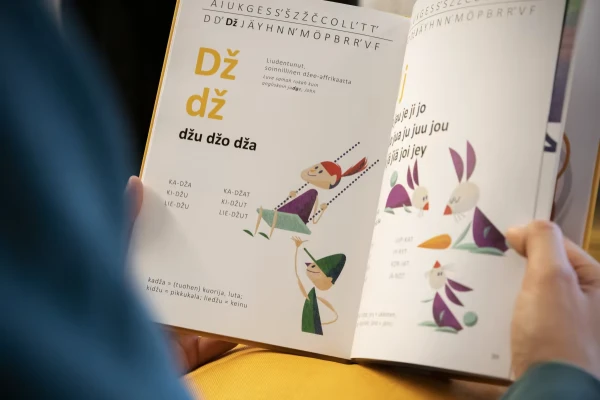
The basic courses in dialects are the most popular.
The commission at the Finnish Language Center - Kotus, will work on the revival and development of the Karelian language.
Previously, similar commissions existed only for Finnish, Swedish, Sámi, sign languages, and the Romani language.
The chairperson of the commission is Professor Riho Gruntal from the University of Helsinki, and the deputy is Ilya Moshnikov from the University of Eastern Finland. Other members include Olga Karlova, Eva-Kaisa Linna, Elena Rapa, Markku Suksi, Martti Talja, and Outi Tansosh.
The University of Eastern Finland is responsible for the development of the Karelian language and practical language work. The university has a nationwide task of researching, teaching, and reviving the Karelian language.
It is estimated that around 10,000 people speak Karelian in Finland. The creation of the new commission does not change the status of the language but ensures stability in language issues and expands opportunities for its revival.
The Karelian language is at risk of extinction, warn Finnish scientists.
"The responsibility on our shoulders is enormous because we are talking about a whole part of the population whose language and culture are currently at risk of disappearing. Our goal is to support and revive the language so that there are still Karelian-speaking Karelians who know their roots and culture," emphasizes Professor Helka Riionheimo, head of the language revival project.
"We aim to pass the language on to new people, as this is critical at the moment. There are few speakers, and they are all elderly. We need tools for the younger generation to learn the language and start using it," says the professor.
She points out that Karelian has been spoken in Finland for as long as Finnish.
Karelian can be studied at the University of Eastern Finland as a minor or at the Open University, where the popularity of the language has increased in recent years. The basic courses in dialects are the most popular.
In practice, the work of restoring the language falls on the shoulders of just a few people. A key role in this process is played by three teachers of different Karelian dialects.
Olga Karlova, a teacher of the White Sea Karelian dialect at the university, admits that the workload is high, as there are few teachers. She feels a great responsibility for those who have been interested in the Karelian language.
"One has to maintain a positive attitude, even though the language is dying," she says.
<iframe width="560" height="315" src="https://www.youtube.com/embed/s-a3g_3rLZk?si=gX-8l0okiB4l2399" title="YouTube video player" frameborder="0" allow="accelerometer; autoplay; clipboard-write; encrypted-media; gyroscope; picture-in-picture; web-share" referrerpolicy="strict-origin-when-cross-origin" allowfullscreen></iframe>