
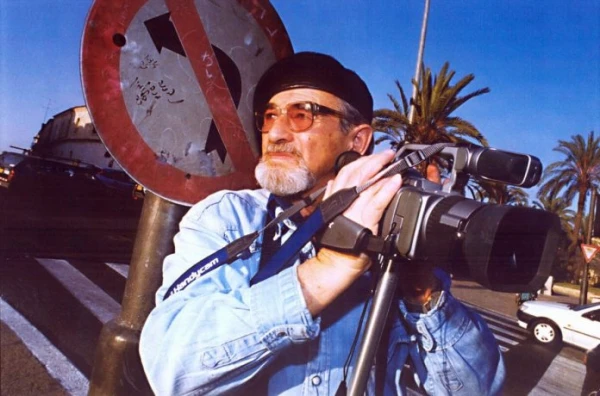
He was born in the small town of Ludza and spent decades creating at the Riga Film Studio. In 1993, he moved to Israel but constantly returned to his homeland. And the most astonishing thing is that almost half a century ago, he became known to the entire world of cinema, despite the existing "iron curtain".
Memorial Evening at the Museum of Cinema
Several films by the classic were shown on Latvian television for the anniversary. The main event took place at the Latvian Museum of Cinema, which moved from Old Riga to new facilities at Miera Street 58a at the end of last year.
The museum is now an excellent branch of the nearby Latvian Academy of Culture, where students of the cinematography course can visit. By the way, for everyone else, entry is completely free, and here you can see many rarities - from personal belongings of Vija Artmane to documents related to the filming of many masterpieces of the Riga Film Studio (for example, videos and photos from the filming of "Mirage" by Aloizs Brenčs are presented separately).
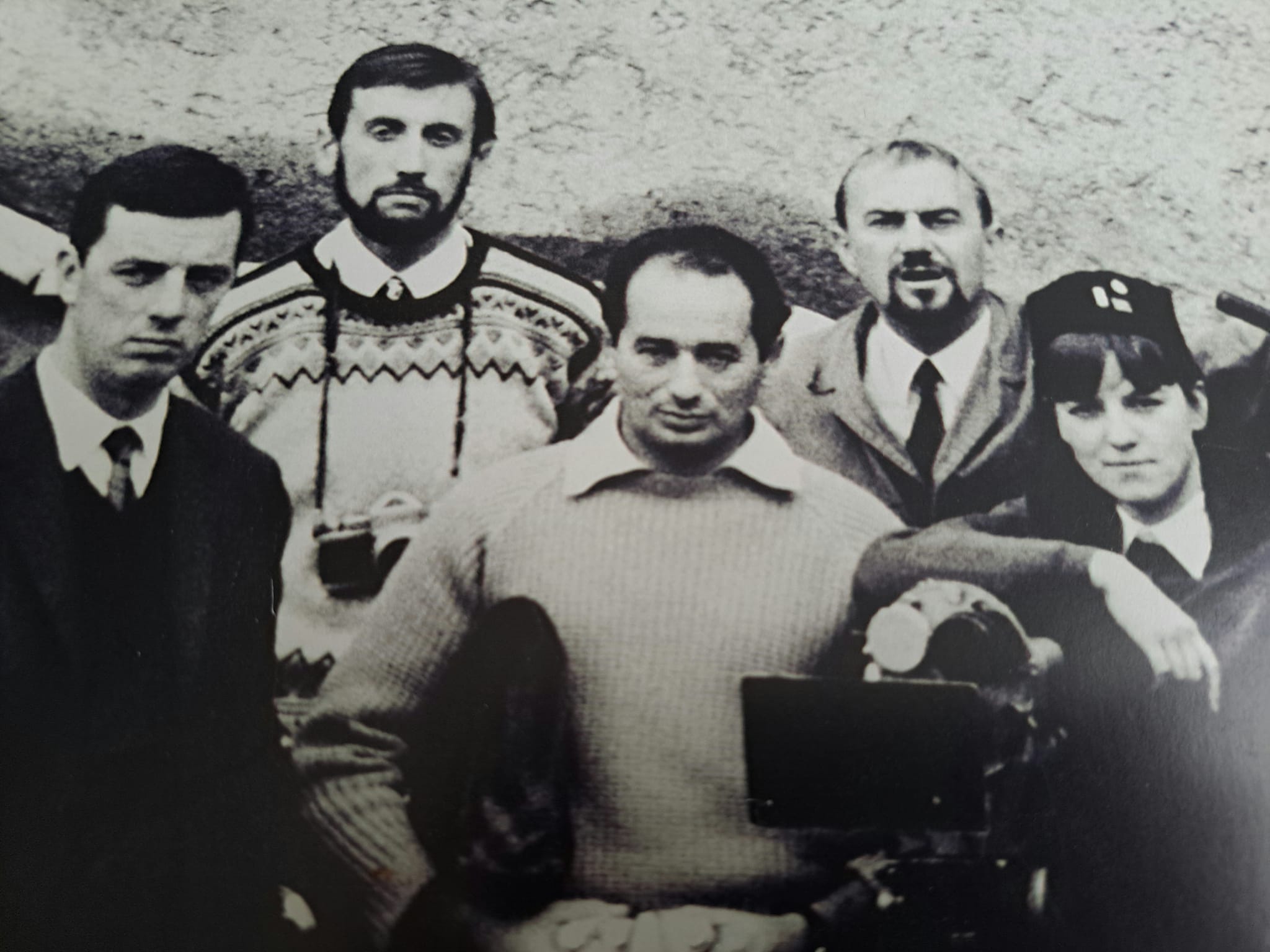
In the front row - Raimonds Pauls, Hertz Frank, and Laima Žurgina in 1967.
On the memorial evening at the museum, there was a meeting with Lithuanian documentary filmmaker Andrius Stonys, who is currently filming "Hertz Frank. Life After Death." The day before this event, the leading living documentary filmmaker in Latvia, Laima Žurgina (who filmed classic portrait films about Raimonds Pauls, artist Džemma Skulme, and poet Imants Ziedonis), made a gift to the museum - photographs from the filming of the film "235 Million." In one of the photographs, she is with Hertz, who then became the screenwriter of this film, which was seen in one-sixth of the land and abroad, as well as Raimonds Pauls, who wrote the music for this feature film. In this photograph, the Maestro is only 31 years old.
It was a documentary story about the simple life of the inhabitants of the then USSR in various corners of the country. And by the way, without any politics and the inherent pathos of that time about the builders of communism, although it was officially timed to the seventieth anniversary of the October Revolution (the film was shot in 1967). Just the lives of people, their cares and joys. Eternal themes, carefully selected by the wise screenwriter Frank.
Laima Žurgina recalls: "I had the historical opportunity to work with Hertz in the same team, which, under the direction of director Uldis Brauns, created one of the most significant documentary films in our cinema - '235 Million.'
Hertz, as a screenwriter, was one of those who created the dramatic structure of the film. He also coordinated the activities of several independent film groups over a vast territory from a command center in Riga. I, then a student of Moscow VGIK, was entrusted with leading one of these independent groups. It was a second university. In the breaks between film expeditions to Russia - Siberia, Georgia, or here in Estonia, we returned to Riga, where the footage was analyzed. Hertz Frank then confirmed his talent as a thinker and life wisdom. All of Hertz Frank's creativity is included in the "golden fund" of world documentary cinema - from the film "Ten Minutes Older" to the autobiographical film "Flashback."
"Hertz Frank turns 100!," announced renowned documentary filmmaker Vitaly Mansky, who will soon dedicate his Riga International Documentary Film Festival to Frank. "Documentarians are mortal, like all people on earth. But it is they who write the chronicle of their time, giving their heroes a chance at immortality."
The Path to Fame
World fame came to Hertz Vulfovich after the short documentary "Ten Minutes Older," filmed at the Riga Film Studio in 1978.
The film, by the way, is included in the Cultural Canon of Latvia. The cinema captured a segment of life filled with the emotional experiences of a child who is a spectator at the Riga Puppet Theatre.
The child manages to gaze in astonishment at what is happening, burst into tears from fear, and then laugh joyfully (they were probably showing a fairy tale about the seven kids or something like that on stage). The film was shot with a hidden camera. According to Frank, "operator Juris Podnieks looked as if he had worked a shift in a mine after the shooting, while it seems that the film was shot easily, with one movement of the camera."
This work won the sympathy of many recognized masters of the screen at the time, and a quarter of a century later, the great American filmmaker Wim Wenders suggested to colleagues from different countries to repeat the idea of the Riga filmmakers by assembling a film almanac from ten-minute short films.
Hertz Frank has more than thirty works to his credit - from small forms to epic documentary canvases of recent years. A significant work was "The Supreme Court" (1984). The story of a man sentenced to death for murder and who filed an appeal for justification (he was still executed). And with whom, while waiting for the decision, Hertz Frank, screenwriter Abram Klotskin, operator Andris Seletski, and photo artist Wilhelm Mikhailovsky conversed.
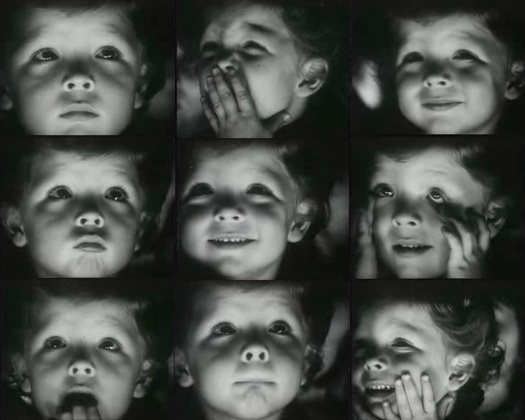
"Ten Minutes Older."
The Last Film
The last two films of the classic are a concentration of classical wisdom and experience. The 105-minute film "Flashback. Look Back at the Threshold" - at the threshold of death, although after the operation shown in the film on his open heart, the director was still granted a decade.
That film began with shots of the director's trip to his native Ludza, where he wanders near a ruined castle. Nothing has remained since that time, the late twenties, from the times when little Hertz lived in the family of a photographer, the owner of a photo studio and decorator of a Jewish art studio. The spoken language in the family was Yiddish, in the religious Jewish school he studied Hebrew, and he knew Latvian from childhood thanks to his studies at a Latvian gymnasium. All the testimonies of that time were swept away by World War II. Fortunately, Hertz Vulfovich escaped the Holocaust, managing to evacuate.
Hertz Frank died and was buried in Jerusalem. He did not have time to finish his last film "On the Threshold of Fear," which was completed by colleagues. The moral is about love for humanity. The story of the assassin of Israeli Prime Minister, Nobel laureate Yitzhak Rabin, who in search of peace found three bullets from Yigal Amir - Rabin's compatriot, who believes that he single-handedly sacrificed himself by acting this way. The result is a life sentence in solitary confinement.
In the second half of the film, an emigrant from the USSR, Larisa, suddenly appears and begins to correspond with Amir. Years later, she manages to meet him in prison, where she applies for marriage to Amir. They have a son...





Leave a comment