The U.S. President is convinced that the new structure that will oversee the reconstruction of the Gaza Strip is the 'greatest' and 'most prestigious' council ever created.
U.S. President Donald Trump announced on Thursday, January 15, the formation of a 'Council of Peace' that will oversee the reconstruction of the Gaza Strip. The establishment of this structure is part of Trump's peace plan for the Gaza Strip, along with the deployment of international forces. The 'Council of Peace' will be led by the U.S. President himself.
"It is a great honor for me to announce the creation of the Council of Peace. The composition of the Council will be announced soon, but I can confidently say that this is the greatest and most prestigious Council ever created at any time and in any place," Trump wrote on the social media platform Truth Social.
The formation of the 'Council of Peace' was reported shortly after the announcement of the creation of a 15-member Palestinian technocratic administration, which has been tasked with managing daily life in the post-war Gaza Strip, notes the AFP agency. The administration will operate under the supervision of the 'Council of Peace.' "As the chairman of the Council of Peace, I support the newly appointed Palestinian technocratic government," Trump stated.
As reported by The Telegraph, the 'Council of Peace' is likely to include representatives from the United Kingdom, Germany, France, Italy, Saudi Arabia, Qatar, Egypt, and Turkey.
The U.S. announced the second phase of the ceasefire in the Gaza Strip
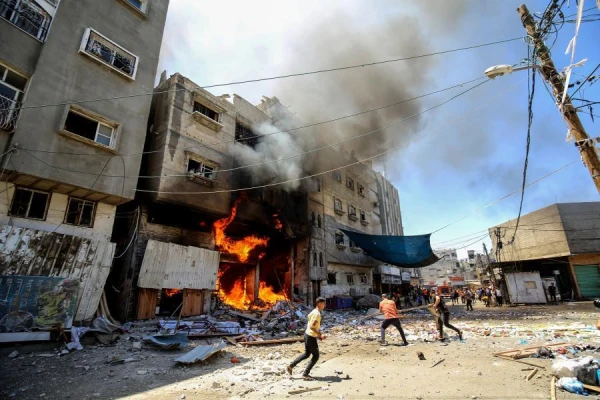
On January 14, U.S. Special Envoy Stephen Whitcoff announced on behalf of Trump the transition to the second phase of the ceasefire in the Gaza Strip. This phase includes, among other things, the disarmament of Hamas and the deployment of International Stabilization Forces (ISF) in the Gaza Strip to support the Palestinian police.
In December, the Hamas movement, designated a terrorist organization by the European Union and the United States, expressed its readiness to lay down arms under certain conditions, particularly the complete withdrawal of Israeli soldiers from the Gaza Strip. "(The presence of our weapons is explained by occupation and aggression. If the occupation ends, these weapons will be handed over to the control of the state," claimed the movement's leader Khalil al-Hayya.