The advisor to the Lithuanian president urged not to ideologize the issue of transit.
The transit of Belarusian potassium, free from American but not European sanctions, through Lithuania may be linked to the placement of additional US military contingents in the country, said the chief advisor to the President of Lithuania on national security issues, Deividas Matulionis.
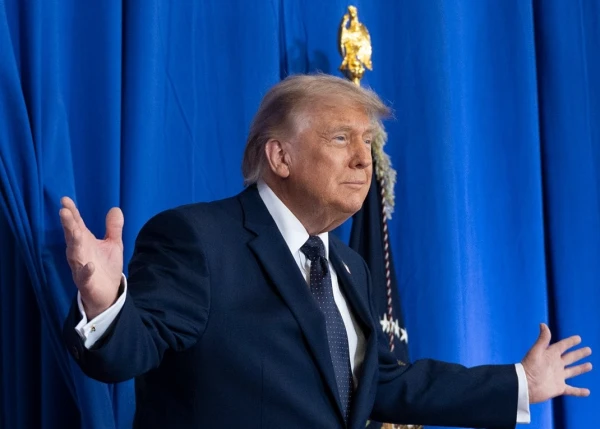
John Cole, Trump's special envoy for Belarus, after negotiations with Alexander Lukashenko, announced the lifting of American sanctions against Belarusian potassium in exchange for the release of 123 political prisoners.
In Belarus, the outcome of the negotiations was announced as a grand diplomatic victory. Potassium is indeed important for the Belarusian economy — before the imposition of American sanctions in 2022, followed by European ones, Belarus accounted for 20% of the global trade in potassium fertilizers. Canada, Belarus, and Russia are leaders in potassium fertilizer production.
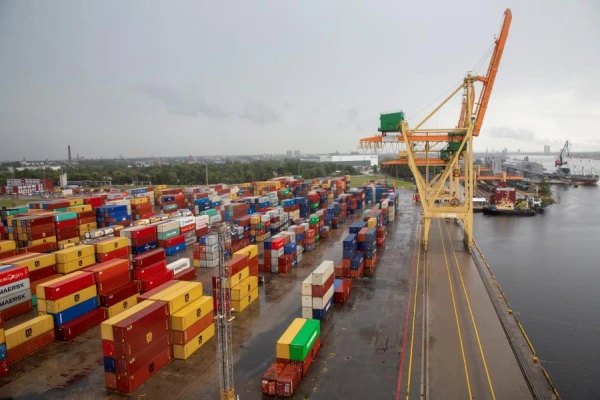
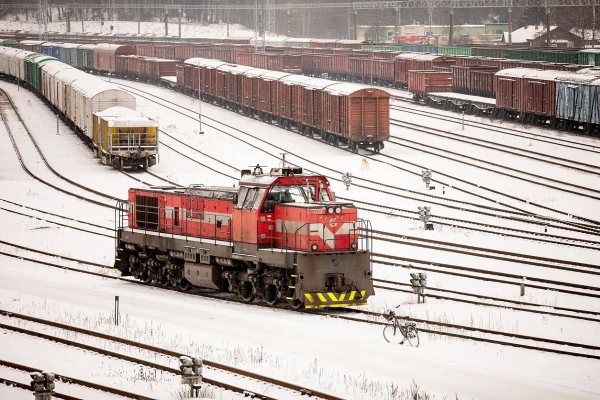
However, without the lifting of European sanctions, the US decision will not bring economic dividends to Minsk. Belarusian potassium was shipped through the Lithuanian port of Klaipeda, which is currently impossible.
However, Lukashenko's press secretary, Natalia Eismont, stated in a comment to the Russian news agency TASS that Belarusian potassium fertilizers could be exported through various routes: "As for potassium. We are ready to export through any ports. The main thing here is the economy, logistics, and economic feasibility. We will transport it wherever it is profitable."
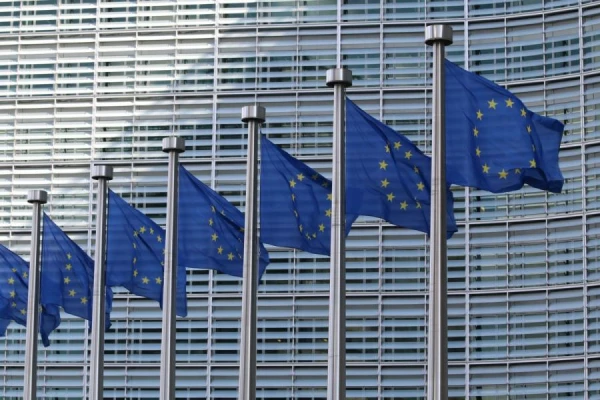
The European Union does not intend to lift sanctions on Belarusian potassium fertilizers following the US, said the EU's High Representative for Foreign Affairs and Security Policy, Kaia Kallas, on December 15.
"We take into account our strategic objectives, one of which remains to exert pressure on the aggressor and its accomplices. That is why we imposed sanctions. This is our policy," Kallas said.
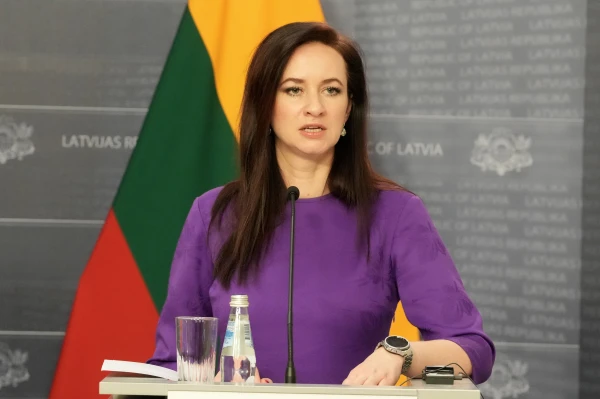
On the same day, Lithuania's Foreign Minister Kęstutis Budrys stated that the easing of American sanctions would not affect Lithuania's position.
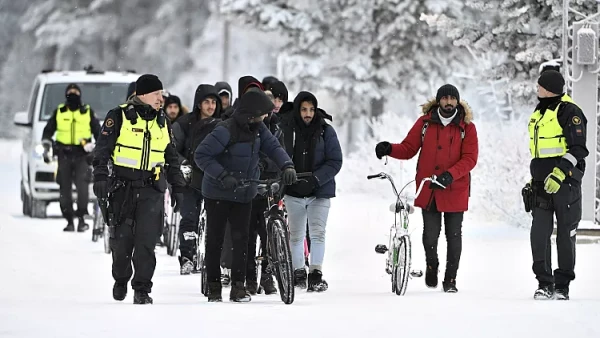
"We cannot take an exclusively begging position, because then we would have to make concessions," Budrys said about the situation with Lithuanian trucks stuck in Belarus due to the border crisis. "One of the levers we worked on was the understanding in the EU of the need to expand the sanctions regime against Belarus. Another lever was our bilateral relations with the US, where we proved that one of the most important allies in Europe is threatened by a neighboring state, and that the US is ready to intervene. We succeeded in that too. Today we are in a completely different situation than a month ago."
The EU Council introduced a new criterion for inclusion in the sanctions lists of "individuals, organizations, and bodies that benefit from actions or policies related to the Republic of Belarus, participate in them, or contribute to them, if such actions undermine or threaten democracy, the rule of law, stability, or security in the EU and its member states."
The decision "followed recent cases of meteorological balloons invading Lithuanian airspace." The new criterion "will allow the EU to impose restrictive measures against individuals who plan, direct, support, or otherwise contribute to foreign information manipulation and interference."
Political scientist Alexander Friedman commented to LRT that the lifting of sanctions on potassium is "potentially a very significant step, as the potassium industry is one of the key sectors for the Belarusian economy." "The other question is practical implementation. For now, all of this is rather at a symbolic level: sanctions are lifted, but even when talking about the American market, a simple question arises — how to deliver the products there? The Lukashenko regime has no access to Lithuanian transit infrastructure and, I think, will not have it in the near future," the analyst believes.
Transit in exchange for troops
But, as it turned out, access to Lithuanian transit, considering Lithuania's "national interest," may soon become available.
US representatives have not yet held negotiations with Lithuanian officials about the possible resumption of the transit of Belarusian fertilizers through the Klaipeda port, but if they return to this issue, such a decision could be linked to an increased presence of American troops in the country, said Deividas Matulionis, the chief advisor to the President of Lithuania on national security issues, on December 16 during a broadcast on Žinių radijas.
"This is correct behavior from the Americans — they are indeed not pressuring us to take additional steps, but if potassium fertilizers from Belarus begin to arrive in America, then the question will arise as to what route to transport them. This is where an interesting point will emerge," Matulionis said. "If we were to take any steps in this direction, it should be linked, perhaps, to additional opportunities for the presence of American forces. If these fertilizers essentially become American, destined for the US market, then we must find ourselves in the field of American interests, but not go against the Americans."
The advisor to the Lithuanian president urged not to ideologize the issue of the transit of Belarusian fertilizers, but to look at it pragmatically: "National interest is a combination of value-based and pragmatic policies."
Currently, about a thousand American soldiers are stationed in Lithuania.
Deividas Matulionis stated that "Lithuania will continue to be a state that pays close attention to the Belarusian opposition."
"Nothing changes here, and I think this does not contradict any of our foreign policy goals, and I believe we will definitely support this. It is important and should be encouraged," said the advisor to the President of Lithuania.
<iframe width="446" height="793" src="https://www.youtube.com/embed/A_nEEZhL70Y" title="Lithuania will not allow Belarusian potassium through Klaipeda" frameborder="0" allow="accelerometer; autoplay; clipboard-write; encrypted-media; gyroscope; picture-in-picture; web-share" referrerpolicy="strict-origin-when-cross-origin" allowfullscreen></iframe>