
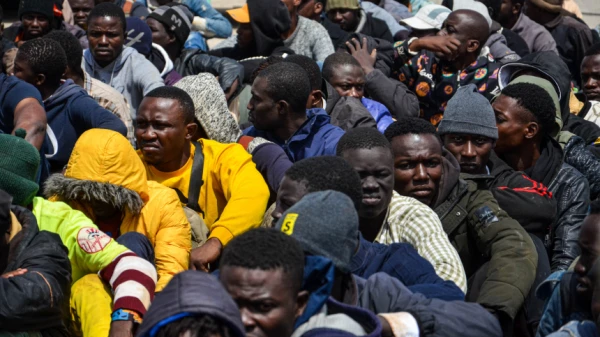
European Union (EU) countries on Monday supported tightening immigration policy, which includes the establishment of special return centers for asylum seekers who have been denied, located outside the bloc.
At a meeting of the interior ministers of EU countries in Brussels, a corresponding package of measures was approved. Governments are facing increasing pressure to tighten immigration policies against the backdrop of a worsening public attitude towards immigrants and the rising popularity of far-right parties.
This year, the European Commission proposed a series of changes that include the establishment of centers outside the EU for the deportation of illegal immigrants whose asylum requests are rejected. The amendments also introduce stricter measures for illegal immigrants who refuse to leave the EU and provide for the possibility of sending migrants to safe countries that are not their country of origin.
For the changes to take effect, they must be approved by the European Parliament.
Despite a roughly 20% decrease in illegal immigration to Europe this year compared to last year, the pressure to develop measures to limit it has not eased.
"We must act faster," emphasized EU Commissioner for Migration Magnus Brunner, adding that "people need to feel that we are in control of what is happening."
Concerns about the proposals were expressed by advocates for the rights of illegal immigrants.
However, at the initiative of Denmark, which currently holds the EU presidency, the process of adopting the amendments has gained rapid momentum.
At the same time, some EU countries have expressed skepticism about the proposals: France questioned their legality and effectiveness, while Spain doubts that the "return centers" will be able to function after failed attempts to establish them in other countries. The proposals are supported by conservative and national-conservative deputies.
On Monday, EU countries also agreed to introduce a new solidarity system that involves redistributing at least 30,000 illegal immigrants among member states.
According to the recently approved reform, to support countries with a high burden of refugees, such as Greece and Italy, EU countries must either accept a portion of the migrants or pay €20,000 for each immigrant to countries experiencing migration pressure.
However, given that the governments of EU countries are calling for stricter immigration policies, taking on additional migrants is becoming politically risky.
As a result, negotiations were lengthy and concluded on Monday, although the details of the decision have not yet been publicly disclosed.
















Leave a comment