
Minsk is leveraging the legacy of the Soviet past.
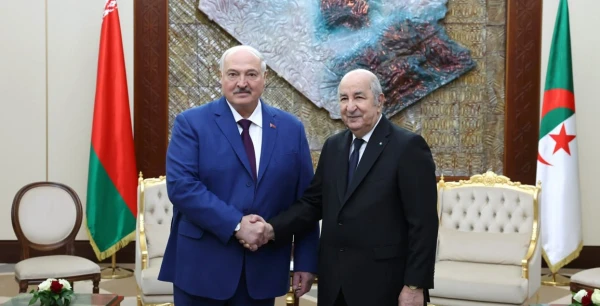
Recently, Alexander Lukashenko completed his visit to Algeria, where he held official talks with President Abdelmadjid Tebboune. A number of documents were signed, the main one being the Roadmap for the Development of Cooperation between Belarus and Algeria for the period of 2026-2027.
However, the purpose of Lukashenko's visit to Algeria goes beyond merely the logic of developing bilateral relations. The Belarusian leader, commenting on the negotiations, noted: "Algeria is a global gateway to Africa," clearly demonstrating Belarus's ambitions to expand its presence on the continent.
Belarus has established diplomatic relations with 51 out of 54 countries on the African continent. Belarusian diplomatic missions operate in Egypt, Zimbabwe, Kenya, Nigeria, and South Africa, with plans announced to open an embassy in Equatorial Guinea. Additionally, honorary consuls representing Belarus are active in Angola, Ghana, Cameroon, Côte d'Ivoire, Morocco, Namibia, Nigeria, Sudan, and Ethiopia. In turn, 8 African states are represented at the embassy level in the Republic of Belarus, while a number of ambassadors, most of whom are permanently based in Moscow, are accredited to Belarus concurrently.
The geography of Belarus's active partnership in Africa has been expanding in recent years, especially after extensive European sanctions were imposed against Belarus. Prior to 2020, cooperation was mainly conducted with North African countries and Sudan, but now, according to the Belarusian leader, significant political capital has been built with Zimbabwe, Nigeria, Ethiopia, and Kenya. Furthermore, Uganda, Botswana, Ghana, and Mozambique have shown interest in intensifying joint work. Additionally, Belarus is known to have close ties with South Africa and Equatorial Guinea. In December 2023, the presidents of Belarus and Equatorial Guinea announced a Roadmap for the Development of Cooperation (2024-2026), which includes 15 priority areas, along with a number of other documents approving 74 projects, including construction in this African country.
Belarus's main strategy on the continent can be described as following its adopted principles of "economic diplomacy," aimed at increasing the volume of Belarusian exports, the main flagships of which are the machine engineering, agricultural, and chemical sectors, providing supplies of agricultural machinery, engines, computing machines and measuring equipment, fertilizers, and food products.








Leave a comment