
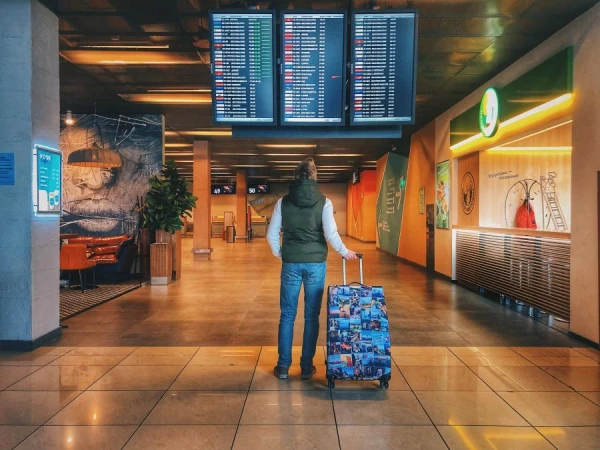
In Europe, it has been a year of significant changes in the travel sector: rules have tightened almost everywhere – from borders to mass tourism.
To maintain peaceful coexistence between locals and visitors, many destinations have introduced new rules and regulations affecting trip preparation, behavior, and prices. Additional checks have been implemented for those entering the EU as the bloc digitizes its borders.
Here is a brief overview of the most significant trends and changes in travel rules across Europe in 2025.
Europe Tightens Border Control in 2025
The EU finally launched the new Entry/Exit System (EES) on October 12. The phased implementation is set to be completed by April 10, 2026.
Instead of passport stamps, travelers from non-EU countries crossing the external borders of Schengen will be required to provide biometric data electronically upon entry – passport information, fingerprints, and a facial photograph.
The system will cover all EU countries except Ireland and Cyprus, as well as Iceland, Norway, Switzerland, and Liechtenstein.
The goal is to identify visa violators and combat illegal migration by verifying travelers' identities, enhancing security checks, and maintaining a record of entries in EU databases.
The new system has faced teething problems – its launch was postponed several times throughout 2025. Issues persist: the November rollout at the British port of Dover has already been stalled for car passengers until 2026 to avoid Christmas transport chaos.
While states navigate this challenging start, travelers should expect delays when entering several Schengen countries – although in the long run, the new system promises to simplify border checks in the EU.
The Launch of ETIAS Delayed Until 2026
ETIAS (European Travel Information and Authorization System) was initially planned to launch after EES in 2025, but it has now been postponed until the end of 2026.
It will require tourists from certain countries that do not need a visa to undergo online authorization before entering the Schengen Area, which will cost most travelers 20 euros.
Once approved, they will receive an electronic entry permit allowing them to stay for up to 90 days within a 180-day period. ETIAS will be valid for three years.
The Electronic Travel Authorization for the UK (ETA) will be strictly enforced starting in 2026
The British Electronic Travel Authorization (ETA) was launched in a test mode in October 2023 but has not yet been strictly applied.
This will change in February 2026: tourists from 85 countries that currently do not require a visa will need to obtain a digital permit for short trips to the UK.
The application currently costs £16 (18.20 euros) and is valid for two years for trips lasting up to six months.
Travel Costs in Europe Rise in 2025
In 2025, the pressure on travelers has increased not only due to permit fees and inflation: tourist taxes, stricter rules for Airbnb, and other measures to curb mass tourism have made travel in Europe more expensive.
Restrictions on short-term rentals have been announced in Paris, Barcelona, and beyond – primarily to combat inflated rental prices for locals in popular tourist cities and resorts.
As a result, there is less affordable budget accommodation available in the Airbnb format.
Nightly tourist taxes introduced in countries such as Iceland, Spain, Norway, and the UK further raise prices – as well as the retention of fees for day visitors in Venice, Italy. These measures aim to fund tourist infrastructure and prevent overcrowding in popular destinations.
All of this aligns with the trend towards so-called "quality tourism" in Europe: many countries are trying to move away from mass budget tourism and instead attract a smaller, more sustainable number of high-spending tourists.
Some destinations are passing increased operational costs onto visitors. Winter sports enthusiasts have been particularly affected: in some resorts, ski passes in Switzerland, Austria, and Italy have risen by as much as 40 percent compared to 2021 due to rising energy bills and maintenance costs.
Europe Tightens Measures Against Bad Tourist Behavior
While rising costs simultaneously reduce visitor numbers and generate revenue, other new rules are aimed directly at curbing undesirable tourist behavior.
San Sebastián is the latest Spanish city to ban smoking on its beaches, while Portugal's Albufeira has announced fines for tourists in overly revealing clothing this year.
A recent ban on boat parties in the Spanish port of Palma aims to relieve infrastructure and address noise issues for locals.
In France, the tightening begins even before landing. As of last month, airline passengers who violate rules or create disturbances on flights can face fines of up to 20,000 euros and even a boarding ban of up to four years.
Passenger Rights in 2025: What Changes?
There are rumors of curbing "money manipulation" by budget airlines. Europeans have been promised enticing changes: free carry-on luggage and better compensation for increasingly frequent flight delays.
However, strong pressure from the aviation industry puts these changes at risk. The EU law aimed at improving passenger rights has been under discussion for 11 years – however, airlines argue that changes will inevitably lead to higher ticket prices.
Some EU member states have even sought to reduce passenger rights, proposing to extend the three-hour compensation rule to four hours.
As no consensus was reached this year, negotiations will continue with mediation in early 2026.
A recent decision by low-cost airline Ryanair to stop accepting paper boarding passes has also raised concerns about rights. One country, Portugal, has warned that the airline's new measures risk contradicting passenger rights.
The Portuguese aviation authority has indicated to the carrier that it cannot deny boarding to passengers with paper boarding passes.















Leave a comment