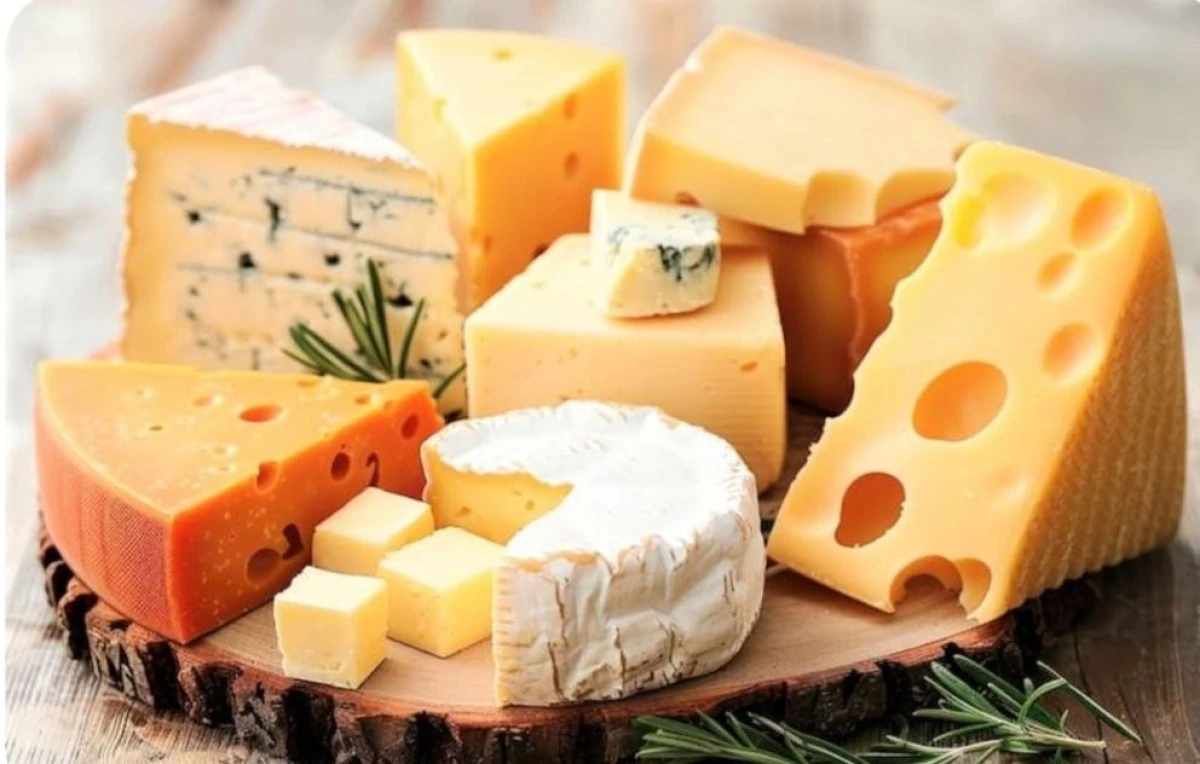
Many believe that cheese must be completely excluded from the menu with high cholesterol. However, specialists consider this approach too categorical. With the right choice of variety and portion control, cheese can remain part of a healthy diet even for people with cardiovascular risks.
Many people with elevated cholesterol levels try to completely eliminate cheese, considering it too fatty a product. However, specialists assure that in most cases, this is not necessary. It is much more important to control the amount of saturated fats in the diet and to choose the types of cheese wisely.
Cardiologists remind us that it is the excess of saturated fats that contributes to the increase in low-density lipoproteins (LDL), known as "bad" cholesterol.
How Much Saturated Fat Can Be Consumed
According to the recommendations of the American Heart Association (AHA), people with high cholesterol should limit their saturated fat intake to 6% of their total daily caloric intake.
If a person consumes about 2000 calories a day, this amounts to approximately 11–13 grams of saturated fat per day.
"It is important not to completely exclude individual products, but to control the overall balance of nutrition. Even cheese can remain part of a healthy diet when consumed in moderation," notes dietitian Anna Belousova.
Which Cheeses Contain Less Saturated Fat
The content of saturated fats in cheeses varies significantly. In a serving weighing about 28 grams, there is:
-
cheddar — about 6 g of saturated fat;
-
Emmental (Swiss cheese) — about 5 g;
-
feta — about 4 g;
-
semi-skimmed ricotta — about 2 g;
-
mozzarella made from partially skimmed milk — about 3 g.
Some studies show that moderate consumption of certain types of cheese does not necessarily lead to an increase in cholesterol levels. However, scientists emphasize that further research is needed for definitive conclusions.
1. Watch Your Portion Size
The main mistake cheese lovers make is serving too large portions.
A standard serving is only about 28 grams. To make it easier to visualize, specialists recommend remembering a simple rule: this volume is roughly equivalent to three dice stacked on top of each other.
"Even a healthy product can become a problem if consumed in excess. Portion control remains one of the key factors in preventing cardiovascular diseases," explains cardiologist Olga Molchanova.
2. Keep a Food Diary
Counting saturated fats helps better control the diet.
For this, you can use mobile apps or simple notes on your phone. This approach allows you to quickly understand which products place the greatest burden on the body.
3. Enjoy the Flavor, Not the Quantity
If you prefer aged or premium cheeses with rich flavors, you shouldn't completely give them up.
It's better to eat a small piece and savor each nuance than to consume large portions of a lower-quality product.
4. Use Healthy Substitutes
Today, many popular cheeses are available in lower-fat versions.
Additionally, specialists recommend using a culinary technique from professional chefs: mixing a small amount of flavorful fatty cheese with less fatty varieties.
This way, you can maintain the rich flavor of the dish while simultaneously reducing the amount of saturated fat by almost half.
An elevated cholesterol level does not mean a complete rejection of cheese. It is much more important to choose suitable varieties, maintain moderation, and control the overall amount of saturated fats in the diet. With a sensible approach, cheese can remain part of a balanced diet and provide the body with benefits due to its calcium, protein, and other essential nutrients.