How to teach children the basics of safety, communication, and counting through play.
Edutainment, or education through entertainment, is one of the main trends in education in recent years, for both children and adults. These are fun games that help children easily remember important and useful information, such as traffic rules and basic etiquette. Let’s look at how to start edutainment with your child right now.
ROAD SAFETY
A child in the city should know the basic traffic rules, especially regarding their status as a pedestrian: traffic light colors, signs, and pedestrian crossing markings, as well as the designation of public transport stops.
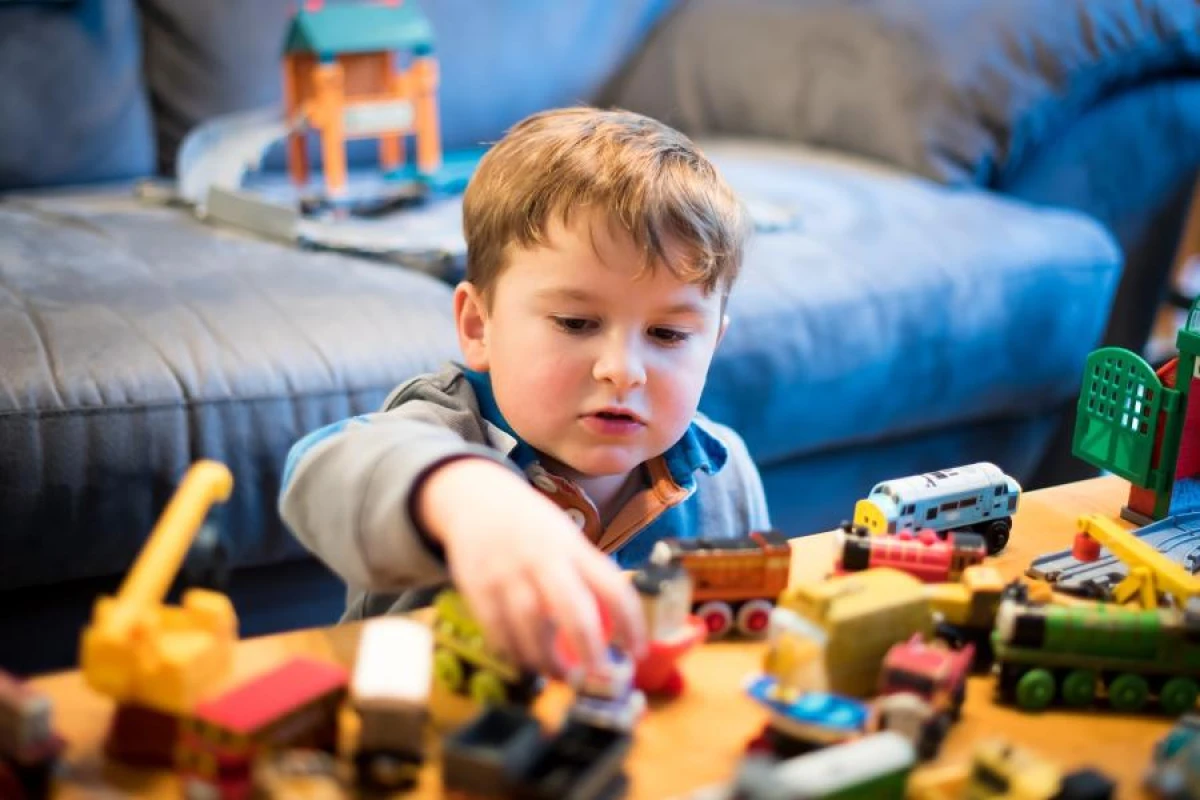
Your involvement and willingness to explain, as well as a play mat and a toy traffic light, will help master these rules. Quality miniature toy cars can be used as vehicles for a miniature city.
To further engage children in learning through play, you can suggest they collect new cars, park them in matchboxes, and create new creative stories. In this way, children will learn in a playful manner whether they need to get off their bicycles when crossing the road, what will happen if they break traffic rules, and whether they need to yield to a fire truck with sirens, even if the green light is on for them.
NAMES, ADDRESS, AND ETIQUETTE
By the age of three, a child can remember and reproduce their name, the names of their mom and dad, the family surname, the address they live at, and whom to contact if they get lost. These pieces of knowledge can be reinforced through play. Build a house out of building blocks and stick a sign with your address on it — make sure to say it during playtime with your child.
It’s better to name the characters after family members. They can say important words like “thank you” and “please,” help each other clear the table, and wash the dishes. It’s important that family members demonstrate the same behavior in their interactions with one another, not just in play.
COUNTING AND MONEY
Counting to one hundred and basic arithmetic operations — addition and subtraction — are easiest to master through money transactions. Ideally, this should be done in real-life situations: with cash and a trip to the store for tasty treats. However, you can simulate the situation at home.
You can start with a store game, and after mastering the basics of counting, continue with economic board games. There are now options for games not only with paper money but also with portable terminals and bank cards. This realistic format engages modern children more strongly, and even at the age of four, a child can maintain interest in the game for 45 minutes, checking balances, transferring money to other players, and buying units.
HYGIENE RULES
Why do we constantly wash our hands, use sanitizers, and wear masks, what is self-isolation, and why am I not leaving the house — these are questions parents face when it comes to health. People have started to pay more attention to hygiene rules and health issues.
If your children are just learning independence, the easiest way to teach them to take care of themselves is through play. Scenarios with an ambulance can be played out in the city with a doctor’s kit, and personal hygiene can be practiced in a building made of blocks. To teach a child to brush their teeth for the recommended three minutes, buy an hourglass. You can find them at the pharmacy. This way, your child will learn to visualize time based on a tangible basis, rather than remaining in the realm of complex and unclear abstractions.